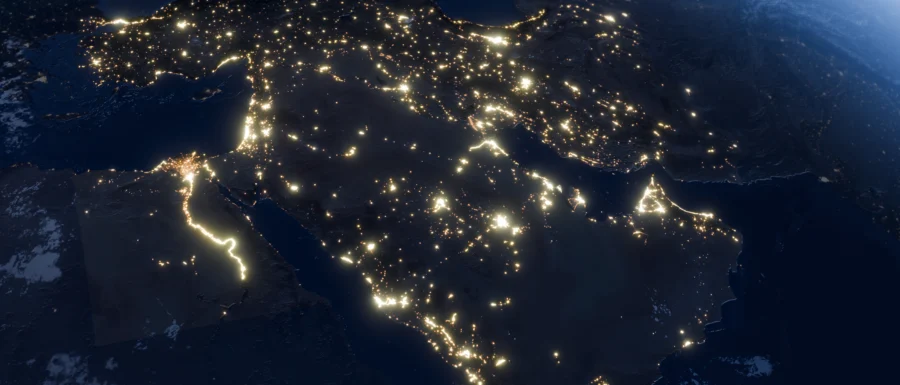
Together, they explore the surge in data center demand, why power has become one of the industry’s biggest constraints, and where infrastructure investors are finding opportunity across digital, energy, and transportation.
Dorrell explains why digital infrastructure has become one of the market’s hottest trades, and where he sees pockets of overvaluation, why the grid could be one of the most compelling ways to gain exposure to both AI and the energy transition, and how infrastructure investors are positioning around major long-term trends without having to predict technology winners.
His central message: the most durable opportunities around AI may not come from the technology itself, but from the infrastructure that makes it possible.
The Bridge Ep 19, Mike Dorrell, Stonepeak – Transcript
COLD OPEN
Sonali Basak (00:00:03 -> 00:00:06)
So, you have a founder mentality going on then ,
Mike Dorrell (00:00:06 -> 00:00:06)
What do you mean by that?
Sonali Basak (00:00:06 -> 00:00:09)
It’s fun for me to meet people who have built their own firms.
Mike Dorrell (00:00:09 -> 00:00:10)
Oh, good.
Sonali Basak (00:00:11 -> 00:00:37)
So, we’re about to talk to Mike Dorrell. He is the CEO and co-founder of Stonepeak, which is a more than $90 billion infrastructure and real assets investor. A lot of people are interested in infrastructure today because of how many data centers are being built around the world. It’s not just about the data centers, actually, it’s about the roads, the bridges, and all the different real asset investments people want to make, given inflation has been so high for so long.
But you’ll let me know when Okay.
Michael Palermo
So here we go.
OPENING TITLES.
Sonali Basak (00:00:57 -> 00:01:22)
Welcome to the latest episode of the Bridge by iCapital. I’m Sonali Basak. I’m iCapital’s Chief Investment Strategist, and today I am joined by Mike Dorrell. He’s chairman and CEO of Stonepeak, which has more than $90 billion in assets under management. It focuses on what’s really the topic of the day. Infrastructure investors around the world are looking to increase their access to infrastructure investments in an era of higher, for longer interest rates. Mike, thank you for joining us here.
Mike Dorrell (00:01:22 -> 00:01:24)
Hi Sonali. Thanks for having me.
Sonali Basak (00:01:24 -> 00:01:35)
Infrastructure is popular today. It hasn’t always been popular. It’s been hard to describe to investors, but realistically speaking, it should be one of the easiest things to describe. It’s the airports you’re in. It is the roads you drive on.
Mike Dorrell (00:01:36 -> 00:01:39)
It’s nothing complicated about it, is it? It’s really our everyday lives.
Sonali Basak (00:01:40 -> 00:02:01)
But at the same time, what’s interesting about it at this moment that’s maybe different than the past is how much private capital is able to come into it. I think about this as a mega trend because the fiscal has really started to dry up in a lot of parts in the world, right? Governments are strapped. This used to be an area that was particularly financed by municipal bonds, but now you’re able to enter in a much bigger way.
Mike Dorrell (00:02:02 -> 00:02:40)
So that’s a great description and that’s exactly how the asset class started. Not here in the us Funnily enough, the US is usually ahead of Australia, which is my accent, but we were ahead of you in terms of government difficulty. Uh, so our governments got into difficulty in the late eighties and the nineties. And so, the Aussie state governments started to sell off these infrastructure assets, these toll roads and airports and utilities and things of this nature in the, in the, uh, well I guess the nineties and the early two thousands. And so, there was a firm in Australia called Macquarie, uh, that was happened to be…
Sonali Basak (00:02:40 -> 00:02:40)
Where you started
Mike Dorrell (00:02:40 -> 00:03:02)
…where I started. And I was a young whipper snapper when all this was going on. And infrastructure was the, uh, uh, asset cluster du jour there. They invented that asset class, a very, very entrepreneurial group of people and had such success with it in Australia. They brought it internationally. And so, I’ve followed it my whole career as a consequence.
Sonali Basak (00:03:02 -> 00:03:28)
Right. Your career really evolved with the entire asset class, didn’t it?
Mike:
Mm-hmm .
Sonali:
And you fast forward to today, you founded Stonepeak back in 2011, correct?
Mike:
Yeah.
Sonali:
In the wake of the global financial crisis and the asset class today. I’d love for you to really split it up into, if you, if you will, here.
Mike:
Yeah.
Sonali:
Because when people get excited about infrastructure today, often they’re thinking about data centers, they’re thinking about AI-enabled infrastructure. But how do you think about that in the context of the total opportunity set?
Mike Dorrell (00:03:28 -> 00:04:18)
So, we normally would divide it into three categories. So digital, which you’re commenting on, is one of the big categories. So that’s category one. Category two would be power and energy. So that’s, that’s a whole raft of assets. It’s generating assets. It’s, uh, and both traditional gas, for example, and, uh, new age energy, so solar and wind and batteries. It’s also all the gas pipelines and the oil, uh, pipeline infrastructure. Then you see the big LNG export facility. So that would be category number, uh, two. And category number three is transport and logistics. So, it might be ports, toll roads, airports, food, logistics, things of that nature. So, there’ll be a few assets that fall outside those categories, but that would cover 90% of the, of the territory.
Sonali Basak (00:04:18 -> 00:04:20)
What’s taking up most of your time now, of the three?
Mike Dorrell (00:04:21 -> 00:05:34)
It’s pretty evenly split now, which is a funny thing to say because digital is obviously the hottest topic on the, on the planet, but you don’t want all your eggs in one basket. And I think that of all the categories we look at, digital is arguably the one where there’s a little over exuberance at the moment. And to be clear, you know, I’m a big believer that this AI is a very unique technology and I’m a big believer that we’ll be using it more in 10 years’ time and there’ll be more data centers in 10 years’ time, et cetera, et cetera, et cetera. But, um, it’s not to say that things can’t get overvalued. And I think we’re at a time in digital where there is a little bit of it in pockets, maybe big pockets of overvaluation. And so, you’re trying to find areas in digital where, um, you think you can get good value, but then you’re also trying to diversify away from digital as well. So digital is maybe a third of what we do, but we see Great because you’ve also got a mega trend in energy. You know, you’ve got, uh, the move to green energy. And despite all the political discussion in the U.S. that’s, you know, a little negative at the moment on green energy, we built more green, when I say we, the U.S., built more green energy in 2025, and we’ll do it again in 2026 than any other year in history.
Sonali Basak (00:05:34 -> 00:06:07)
I’ll definitely get into all of it, data centers, power, energy. But I want to first cite back to you some of the stats I’ve heard about Stonepeak. I’ve heard you say before because they’re pretty, pretty amazing. I mean, they’re pretty intense. 30% you’ve said before of all refrigerated food goes through cold storage that is backed by Stonepeak.
Mike:
Yeah.
Sonali:
You’ve also said that 23%, almost a fourth of all internet traffic in the US goes through data centers that Stonepeak has investments in
Mike:
Yeah.
Sonali:
So, your footprint is quite large.
Mike Dorrell (00:06:08 -> 00:06:55)
It’s huge. Yeah, it’s, it is incredible. And what we’re trying to do is we’re trying to find, um, trends that are, uh, reliable and predictable and buy businesses that if you like, get to clip, clip a little ticket, clip a little toll along the, uh, along the way. So, food is a wonderful example. So, food consumption in the US it’s not an exciting trend. It grows at 2 or 3% volumes per annum, and then you get inflation, you know, pricing on top of that. That’s not, you know, it’s not going to, as Warren Buffet likes to say, it’s a get rich slow scheme as opposed to a get rich quick scheme. But that’s what we like, we like these trends that are just Steady Eddie, uh, trends. And you know what, we tend to consume as much food in good times as we do in, uh, bad times. So, you’re not really reliant on the economic cycle being one way or the other.
Sonali Basak (00:06:55 -> 00:07:08)
You know, it’s interesting, you’re pointing at something that is really the reason a lot of people are talking about infrastructure today. This idea that we’re in this very uncertain macro environment with elevated inflation trends
Mike:
mm-hmm .
Sonali:
And how much are you seeing people turn to you with that backdrop?
Mike Dorrell (00:07:09 -> 00:08:18)
I always think there’s uncertainty in, in, in macro, if you like. And we often talk about the uncertainty of the times, but I kind of always think it’s difficult to really know what’s going to take place ahead of us. And what I’ve seen over my career is just a steady uptick in the interest in infrastructure over time. Uh, that probably only the last year or two with all that’s gone in AI has become maybe a roar to the public, uh, in public’s perception. But, you know, an example I like to use, uh, quite often, uh, oh, I shouldn’t say often, but whenever I’m asked is you look at Warren Buffett’s portfolio insurance is his biggest holding, but his next one is infrastructure. His biggest holdings are, um, the BNSF railroad, for example. And then, uh, he’s, he’s, he’s got huge energy exposure. I think you might call it Berkshire Energy now, but it’s a, it’s a whole bunch of different, uh, mostly electrical utilities around the US. So, it’s not like this asset class was sort of discovered, uh, overnight and, and suddenly everyone’s looking at it, it’s been hidden in plain sight somewhat, but it’s hard to ignore what’s going on in data centers at the moment. So, it’s garnered a lot more attention, uh, because of that.
Sonali Basak (00:08:19 -> 00:08:34)
So, let’s then jump right to the data center story, because you said something a little interesting earlier about how the pricing is changing.
Mike:
Mm-hmm .
Sonali:
What does that look like for somebody who is deploying capital today? Where are areas that look frothy and where are areas that still look attractive to you?
Mike Dorrell (00:08:34 -> 00:08:45)
There’s a whole tech side to AI, of course, that you can play through Google or, uh, SpaceX or, you know, Microsoft or a bunch of smaller players.
Mike Dorrell (00:08:47 -> 00:10:09)
That’s not our, that’s not our game folks who invest in that part of the spectrum. Uh, that is a get rich scheme if it goes the right way for you. And we’ve seen people who went and took SpaceX shares and it’s gone up, I don’t even know, but a hundred or a thousand x since they got into it. Um, that, that’s not our game. I don’t, uh, uh, I’m not smart enough. I’m not on the detail enough to know where that tech will end up and who will be the winners and who will be the losers. But I also just step back and look at where the valuations on the S&P 500 are at, at the moment, and from a, uh, what I call normalized PE. So normalized PE is just taking average earnings over a period as opposed to just earnings here and now this quarter. But on a normalized, uh, earnings basis, the PE of the S&P is back where it was more or less in the dot com era. And it’s never been close to that level, uh, before or since. And so, you don’t need to be a particular financial genius to feel that maybe things are pretty heated at the moment. So, I don’t know quite where exactly, but they’re pretty heated. So, what we’re trying to do is we’re trying to give investors a more, uh, boring way to play that trend. And so, for instance, what we’ll do is we’ll go and build a data center, but we won’t break ground and we won’t put a whole bunch of money into that data center until we’ve got a customer contract with someone, we consider to be a reliable customer.
Sonali Basak (00:10:09 -> 00:10:10)
So how long does that contract have to be?
Mike Dorrell (00:10:10 -> 00:11:58)
So, it’s really interesting. So, if you went back to before AI, the contract length for data centers were pretty short, five to seven years say, which is, we don’t like that. That’s not something we are that eager to go and, uh, invest in. But what happened is, when AI came about, it, up ticked the demand so much for data centers that all of a sudden, the balance of power between a data center owner and the tech companies changed. And the reason it changed is that we all of a sudden had a power shortage in the US. So, you go back before AI, there’s no power shortages. All you have is a data center owner is a warehouse with pretty good cooling and access to power. They were ubiquitous. And so, when that particular party is negotiating with Microsoft or Google or Amazon, the, the negotiating power sits with the big tech player. They dictate terms. But now we’re in this world where, um, there’s a power shortage and the data center players are really the conduit to getting power. It’s a more even negotiating dynamic. And so, what used to be a five-to-seven-year contract where the data center company is taking a lot of risk on contract renewal, that’s now a 15-to-20-year contract, that’s a lot more comfortable pace to be for us. So, uh, uh, and I’m sure we’re not the only one, but we became interested in the hyperscaler data centers only after the contract length, uh, extended. So now these contract lengths for 15 to 20 years, well, you’re taking something of a Microsoft or a Google or an Amazon or a Meta credit bet, which I’m quite happy to do over a 15-year timeframe. So, we’re playing it, we’re, we’re doing it in a very boring way. We’re not going to get the, uh, the skyrocketing returns that the winners in AI tech will get, but we’re also not going to be the rocky road that the AI losers might give you, uh, in tech.
Sonali Basak (00:11:58 -> 00:12:17)
I have a controversial way of looking at this, okay,
Mike:
please.
Sonali:
So, if you are a public credit investor, and you are worried about the US government bond, right? 20, 30 years
Mike:
mm-hmm .
Sonali:-Is duration risk in private markets in some ways actually safer than taking it on in government debt?
Mike Dorrell (00:12:18 -> 00:13:10)
So that’s a really great question. So, I feel that one of the greatest risks we’ve had in investing the past decade is exactly what you call duration risk. And just to be a bit specific on what you, and I mean by that, it’s the risk that you say you go and buy the US 30-year treasury at whatever they got down to. I think the 10-year got under 2%, and the 30-year was down at, I can’t remember, 3% or so. The problem with that, of course is, is that, um, you can go and buy this 30-year government bond, which in theory is supposed to be the risk free asset, but as soon as inflation comes about and the Fed puts up interest rates, that 30-year bond that you bought at a hundred cents on the dollar, all of a sudden it’s trading at 50 or 40 cents on the dollar because it’s no longer a 3% interest rate that the market wants. It’s a 6 or 7 or 8% interest rate that the market wants.
Sonali Basak (00:13:10 -> 00:13:11)
Right, a lot happens in 30 years.
Mike Dorrell (00:13:11 -> 00:14:15)
You got it. So that’s duration risk. It’s the, it’s, you’re not, you’re going to get the cash, but it’s not worth as much because people want to higher, uh, the interest rates have gone up, so people want to higher return than just 3%. So, one of the most terrible places to invest the past, uh, five years or so is in fact, longer-term, US government bonds. Not because you’re not going to get the paid, but the interest rates have killed you. So, we think about infrastructure investing along very, very similar lines, especially when it’s contracted investing. So, when you go and get a 15-year contract from Microsoft or whoever, Nvidia or whatnot on your data center, you’ll get typically 3% annual step ups in rent, but they’re fixed. So, if inflation is 2%, you’re still going to get a 3% annual bump in your rent. If inflation is 7%, you’re still only going to get a 3% bump in your rent. So, what you’re trying to do, therefore, is you’re trying to get returns from that long-term contract that give you a big margin of safety relative to where interest rates are at the moment. So, you know, the 10-year bond at the moment is, again, off the top of my head.
Sonali Basak (00:14:15 -> 00:14:21)
For the day we’re talking, it’s about 4.66%.
Mike:
There you go.
Sonali:
It’s one of those things I, every morning check.
Mike Dorrell (00:14:21 -> 00:14:50)
Tick over four point a half. So, if the 10-year government bond is four and a half, I mean, I don’t want to give you an exact number, but you probably want to get low to mid-teens. Uh, ideally in your base case for your equity returns on a long-term contract, uh, with a Microsoft or a Google on the equity, there’s going to be debt on that as, as, as well. So, um, we think about duration risk all the time, and, you know, to, to put a pin in it. I just want a nice margin on my returns versus where the long-term bonds are.
Sonali Basak (00:14:51 -> 00:15:13)
So, let’s talk more about data centers, because I really want people to understand the economics here. Um, there’s a lot of conversation, you were talking about the relationship to hyperscalers, being comfortable with the 15-to-20-year horizon, but what do you make of the re-levering of the system? Does that introduce a level of risk that you’re still comfortable with? Does it change the profile? Big picture? What’s the thinking?
Mike Dorrell (00:15:14 -> 00:15:19)
By re-leveraging the of the system? You mean putting debt on data centers? Is, is that, is that what you’re
Sonali Basak (00:15:19 -> 00:15:22)
Debt on the hyperscalers and also on the data centers?
Mike Dorrell (00:15:23 -> 00:16:09)
So well, your key bet, well, there’s, there’s two key bets. Your most key bet is that your counterparty’s going to be credit worthy. And, uh, I’m not worried about Microsoft or, uh, Nvidia or Meta, or I feel Google, I feel very good about those as credits. They’re obviously spending a lot of cash flow at the moment, but if there was any sort of, uh, capital market hiccup or what have you, they could just turn off the spending and they’ll be hugely cashflow positive and, and all will be. Well, I think for the AI labs, uh, not to comment positively or negatively, but it’s just a harder bet because they’re younger companies. Uh, I don’t know how many winners there’s going to be in terms of Frontier AI models, but they, they’re so expensive. I can’t imagine. It’s like a whole bunch of them.
Sonali Basak (00:16:09 -> 00:16:17)
Their margins are much thinner than the hyperscalers. We did an analysis. Hyperscalers are taking 30 cents of every dollar. The Frontier labs are losing money.
Mike Dorrell (00:16:17 -> 00:16:44)
And, you know, it costs, geez, like there’s a trillion dollars of spend from between the, the hyperscalers next year forecast. How long can that go on? And, and what happens is to get the AI models more and more sophisticated, like the amount of spend, it goes up exponentially. And, and, and so maybe my point being there is that, uh, the bigger companies, I’m fine taking the bet. The other ones, there’ll be some winners there, but there’s probably going to be some losers as well. And I don’t want to make a bet on who will win and who will lose.
Sonali Basak (00:16:44 -> 00:16:45)
Especially over 15, 20 years.
Mike Dorrell (00:16:45 -> 00:18:02)
You got it. Uh, you’re debt on the data center. Same story. If you’ve got a great counterparty, you’ll be able to service your debt on the data center. If your customer goes, you know, uh, uh, belly up, you have a little bit of difficulty. So that’s, that’s, that’s point 1, point 2, which I think is a little less important, but also very important is where is your data center? If your data center is, um, in or around one of the major cities in the US where the customer base is, where it’s difficult to cite these things, and it’s only getting more difficult. Like you can see the regulatory resistance to data centers just going up and up and up and up. You know, if your customer does happen to get into some trouble, you’ll find another customer for that data center. On the other hand, a lot of the training data centers are in the middle of nowhere because the training data centers, they don’t need proximity to customers. These are the data, I should say, these are the data centers where you’re training models. So, they need access to cheap power. Uh, they need access to cheap land. So, they tend to be in areas where, you know, land is cheap, power is cheap, which is, tends to be in the middle of nowhere. If your customer there goes belly up or you get to the renewal point, you’ve really got nowhere else to go. There’s not an, there’s not an obvious next customer to slot into that data center. So, um, you know, and again, I, I don’t think I’m the lone ranger saying this, but you want to be in data centers with very strong credit worthy counterparties, and ideally in and around the big population centers as well.
Sonali Basak (00:18:02 -> 00:18:50)
So, it’s interesting because you kind of took a few different buckets of infrastructure investing. You separated this AI theme from the power, but they’re also linked in this massive way. And the thing that’s really overlaying all of this is that you had grid constraints already
Mike:
Yeah.
Sonali:
Even before you were looking at data centers coming into different cities, right? This is why we’re seeing so many, um, states or cities be concerned about the, uh, the power generation for data centers in particular. How do you look at this as a mega trend, actually, because clearly there is a need for more robust infrastructure around power. Um, I lost power twice this summer, so, you know, you feel it if you’re running a household. Mm. Um, so what are, what are the numbers? What are the trends behind this, even with or without AI?
Mike Dorrell (00:18:50 -> 00:20:45)
Before AI, there were big queues to get on the grid just from the renewable, uh, players. And now that’s obviously skyrocketed. I’ve always felt that the grid investments have been a very good way to play AI and to play green energy as well. You can get big licks of capital to work in the grid, uh, companies. The regulatory regime for grid is, I think, pretty attractive in the US and around the world. I think it’s a very nice way to play both of these, uh, mega themes. A really interesting statistic I read just the other day was that if, um, if data centers were able to shut down for 40 hours a year on demand, you’d double the amount of grid, um, capacity for data centers. You could, you could take what we’ve got and build it over again without, without trouble, which tells you that the bottlenecks are pretty concentrated. Um, if, if you like, um, one of the biggest challenges in the US relative to say China is the permitting challenge here to get a, you know, a grid investment permitted in the US, it’s up upward of a decade, like it’s a long, long, long, long time. And it’s true of any advanced societies. As we get more advanced, we tend to give more power to the individuals to stop projects as opposed to the other way around. There’s a pretty strong groundswell of opposition to AI just from the general population at the moment. Power prices, you know, are being driven up, which is obviously very, very unpopular. But on top of that, I just think there’s a general sentiment of like, this is moving pretty quickly, and I don’t know what it means for me and my job and my kids’ jobs, et cetera. So, I think we are watching in real time the politics and the, um, I’m not sure what the right term is, but maybe the social contract that the tech companies have with society, I think that’s going to be changing in real time over, over the next, you know, coming months and years.
Sonali Basak (00:20:45 -> 00:21:28)
Yeah, I completely agree. And it’s interesting because, you know, we think about infrastructure and we’re talking about, you know, do you invest in a data center when, you know, your roads in your city are all full of potholes, right? I think that there’s this real tension that you can kind of see very visibly on the ground, which is why I wanted to ask also, you know, on one hand what’s interesting to me about just kind of this broad theme of infrastructure, you see the needs, right? You can be almost anywhere in this country and see the needs for infrastructure spend on the backdrop as we started, of governments that can’t spend actually anymore, right? It’s particularly local governments. So, when you’re thinking about the money you put to work, how much of it has nothing to do with AI at all these days?
Mike Dorrell (00:21:28 -> 00:22:03)
I want to say two thirds, because two thirds of our capital goes into the other two sectors I mentioned. But a little bit of that energy, money that we put to work will have an AI bent to it a little bit, I don’t think too great. Uh, and, and look, if we’re building a power asset that’s supplying a data center, that’s one thing that’s clearly very AI driven. But if we’re investing in, um, gas infrastructure, for example, there’ll be some AI element of that because, you know, AI is driving a bunch of power that’s using gas, but, but overall, I don’t see that as an AI driven, um, investment.
Sonali Basak (00:22:03 -> 00:22:36)
There are some other areas that you’re invested in, like energy, for example, that are really related to other big mega trends too. We’ve seen major disruptions to oil and gas globally. Um, we’ve seen major disruptions not because of geopolitics, weather and otherwise to ports across the globe too. How is all of all, all these confluences of, in, of, of situations really impacting what you do? Because really, it’s kind of creating a new need in every area for fresh investment.
Mike Dorrell (00:22:36 -> 00:24:24)
Overall they’ve been unbelievably helpful trends from our standpoint. I’ll give an example. So, on the tariff front, trade is not diminishing. In fact, trade is continuing to grow, but it’s becoming less efficient. So instead of China sending goods directly to the us, they’re often now going through Vietnam or they’re going through Brazil, wherever it happens to be. So, um, trade is less efficient. And so, if you’ve got less efficient trade, but more of it, you need more infrastructure to deal with that trade because you’re not doing it the most efficient way anymore. So, for example, um, we are one of the largest owners in the world of, um, shipping containers. The containers that you, all the goods come on in ships, all the demand for those at the moment are at record highs. Again, because trades become less efficient on the energy side, kind of similar, like the more disruptions there are in energy, it tends to send the price of, uh, oil and gas and oil and gas assets higher. Now, if you own oil and gas assets in that region, of course, that are disrupted, that wouldn’t be a great thing. But that’s not where our, or I would, I would suggest not many people have in the western world exposure, uh, to that part of the world’s energy assets. They tend to be government owned and, and, and locally. So, um, it’s, it’s, I almost think of energy investing as a long-term call option on energy disruption. So, you’re getting paid along the way. So, if things are just working along as normal, you’re getting paid along the way because you’re owning these energy assets and assets and getting your normal dividends, et cetera. But when you have disruption, it tends to, um, trigger the value of that call option if you like, because it is putting a premium on energy prices and, um, energy related assets.
Sonali Basak (00:24:24 -> 00:24:45)
Right. Especially because you look at kind of the bouts of time that have seen energy disruption and you kind of have needed experience to see your way through those times. I think back to kind of the mid two thousands, for example
Mike:
mm-hmm .
Sonali:
When a lot of private investors tried to make their way through a lot of energy disruption and
Mike:
mm-hmm .
Sonali:
You really, the ones that are the ones that came out the other side are the ones that are still existing today.
Mike Dorrell (00:24:45 -> 00:26:05)
I think that’s exactly right. But I also think that, you know, hopefully if we’re doing our job the right way, we’re, we’re somewhat, um, separating ourself from the commodity price risk when it comes to energy, for example. Or as we went through the data center example, we’re somewhat separating ourself from whether, you know, AI is, you know, winning on the S&P 500 or is, or is, sentiment is against it. And we’re doing that by, um, getting the right contracts with the right customers. And we, we, we want to be a boring, you know, toll booth to an interesting trend, if you like. So, you know, on, on a, on the gas side, like we own a bunch of gas pipelines, for example. And as long as the volume is running through our pipes, we’re happy with that. You know, we’re building, I’ll give you a great guess example. So, we’re building with Woodside, an LNG export facility in Louisiana. We’re just getting a toll on all the gases getting, um, uh, exported. In fact, whether it’s exported or not, we are getting a toll, uh, we call that a take or pay contract. Now, if gas prices are super high in Europe or super high in, uh, Asia, the folks who own the gas and are transporting the gas, they’re going to do out, they’re going to make it very, very well. And if the reverse is true, it’ll be tougher for them. But that’s not the bet we want to make. We want to make the boring toll bet, if you like, as opposed to the exciting commodity price bet.
Sonali Basak (00:26:05 -> 00:26:13)
So, tell me then, from your perspective, you know, what is something that keeps an investor like you up at night? You know, what are the biggest risks to the thesis that you have?
Mike Dorrell (00:26:14 -> 00:28:32)
You mentioned a great one, which is duration risk for many, many years. That’s the one that I focused on the most, because you can’t diversify away from that. So, if we’re buying, um, these assets that are fairly cash flow predictable, so they do look a lot like long-term bonds. And if we are buying those with, I mean, just to put some numbers to illustrate, you know, when, when long-term bonds were, say on the 10-year 2%, if we’re buying levered equity at say, 7 or 8% returns, and then long-term bonds go from two to where they are today, four point a half, um, we have to add an extra two point a half percent discount rate to our equity returns we want. And so, if you’ve bought something in an eight, in a low interest rate world and all of a sudden people should be getting a 10 or 11 for that, that really crushes your present value of your investment. And I hope that’s not getting too technical, but I know you’ve got a bunch of smart listeners here. The point being, you can’t diversify away from that. When interest rates go up, they’re going to hit every single different asset class. And so that’s one where that did keep me awake at, say, kept me awake at night, but I thought about it a lot. And so, you invest accordingly. You probably buy things that are less looking like long-term bonds. You buy things that have a little more operating levers on them where you can get away from just a long-term bond appearance. Now that, uh, interest rates have gone higher, actually leaning into things that look like long-term bonds at the moment, because I like to take that duration exposure and interest rates are a little bit, uh, higher. So that’s something that we think about a lot. Um, another one of course is where is the AI risk that you talk about. And I’ve got little doubt that if we do see a pop in this AI bubble, it’s going to affect data center valuations. Data center valuations today are 20 to 25 times earnings. Um, you know, if the S&P comes right back, because, you know, AI spending slows right down and capital markets shut down to these big AI companies, I don’t know what the new multiples will be, but they’ll come down. And so, we think about that when we go into a data center investment. We, we take the view, we may well be holding this a lot longer than we, uh, had planned to or thought we might. Are we okay with that? It’s questions like that we would ask ourselves.
Sonali Basak (00:28:32 -> 00:28:51)
I do have a question about the data center financing thing. I think everyone in the market today is sitting around looking at, wait a minute, is there eventually going to be a bit of a buyer strike? Um, we call it the AI CapEx vigilantes. Are they around the corner? Do they want to stop spending? Uh, what would happen in that scenario if you start to see the capital markets be less forgiving?
Mike Dorrell (00:28:52 -> 00:29:54)
That’s the, you’re asking great questions. That’s the right, that’s well, I was going to say that’s the right question. It’s certainly question I would, I would ask as well, um, debt I think is what is going to put a, uh, wrench in the works of this whole situation. And so, the pretty easy answer to that is to look at which companies are going to be in real difficulty if the, uh, tap gets turned off from a capital standpoint. So, um, clearly all the companies will have to slow down their AI spend because even, even Google is in a cashflow negative position, or certainly is forecast to be for its AI spending, which is pretty hard to believe, isn’t it? So, um, Google and Microsoft and Amazon and Meta, they’re so cashflow positive in a normal world that they’ll be fine. They’ll, they’ll turn off the CapEx, and you know, that will, that will obviously slow down some of the economic growth the CapEx is generating. But as companies, that’ll be totally fine. The folks who are going to be nervous are the, you know, Anthropic’s and the OpenAI’s and companies like that. They’re obviously the better known ones.
Sonali Basak (00:29:54 -> 00:29:55)
And they need money to keep spending.
Mike Dorrell (00:29:55 -> 00:31:02)
They need money to keep spending. And it’s really interesting that, um, uh, you’ve got Nvidia in the background who has the greatest vested interest in making sure that they have more customers than just the big four or five folks I keep mentioning. So, in just, that’s why you see Nvidia giving, uh, they just gave a bunch of money to, oh geez, was it OpenAI recently? One of, one of the two. They just, they just did a big investment, um, into, so there is a big brother who is there who has a pretty strong vested interest in keeping these other players going. But the money is also so great that I wouldn’t maybe bank on that as a for sure, fail safe. And what’s become, well, more than evident, they all talk about it, is these frontier models, they improve so quickly that if, if one of these AI labs had to shut down spending for a year, you’d presumably fall way, way behind, say Google who’s got a frontier model, who would keep spending on that frontier model because it doesn’t need capital markets. It’s a fascinating, uh, situation.
Sonali Basak (00:31:03 -> 00:31:08)
Right, in fact, it’s, it’s kind of far more insulated from the situation because it has so many levers to pull.
Mike Dorrell (00:31:08 -> 00:31:09)
A hundred percent.
Sonali Basak (00:31:09 -> 00:31:30)
So, then what about, is there something that’s actually kind of healthy? We’ve seen so much money go towards the trade that if we did see a pullback in capital markets, wouldn’t that actually be kind of great for somebody like you? Wouldn’t it kind of make sure that prices for new dollars to enter in to a lot of these investments would start to correct?
Mike Dorrell (00:31:31 -> 00:32:05)
That’s a great question. I, I would look, things are pretty good. For folks who can build data centers today, things are pretty good. Like, I’m, don’t get me wrong, we want all the returns we can get, but I’m pretty happy with the returns we get on building data centers. And there’s not that many folks out there who are experienced skilled at building data centers. And I don’t just mean putting them up. You got to be able to access power. You got to be able to bring your own power solution. You got to be trusted by the big hyperscalers to be their data center operator. And the data, like, there’s not many folks who, who fit that description.
Sonali Basak (00:32:05 -> 00:32:10)
Okay, give me like a top, give me a top three. You want to build a data center today?
Mike:
Mm-hmm .
Sonali:
What are the three things you need to have?
Mike Dorrell (00:32:11 -> 00:32:34)
You’ve got to be very, very good at convincing the landowners to sell to you. And you think, oh, that’s easy, but everyone knows all the tracks of land that you want to buy because they’re in and around all the major population standard. So how good is your land person and going at going and charming the farmer or the family or whoever it is that owns that land? because everyone’s willing to pay the price. Who’s going to win the social battle? That’s very, very important.
Sonali Basak (00:32:34 -> 00:32:37)
Who’s going to be the trusted shepherd of that land?
Mike Dorrell (00:32:37 -> 00:33:03)
You got it, you got it. Who do they trust? Who’s the family trust? Who’s the farmer trust? That’s very, very important. Um, second one is, can you bring power? Like if you can’t bring a power solution to that land, like what’s the, what’s the point of you? That’s probably the hardest of all of them. So how much experience do you have developing power around the world? So that’s, that’s number two. And that’s a total, by the way, that’s a totally different skillset from what any of these data center operators had historically. It’s like all of a sudden power is what we need. Where do we go to get that?
Sonali Basak (00:33:03 -> 00:33:06)
I mean, I would imagine not having it is probably the number one reason a data center would fail.
Mike Dorrell (00:33:07 -> 00:33:29)
Exactly. Exactly. So, so bringing a power solution is number probably the hardest of all. But that’s, that’s called that number, uh, uh, two. And the last one is how trusted is your data center company by Google and Microsoft and Anthropic and et cetera, et cetera, et cetera. So, there are three skill sets and they’re all quite different, but you got to have all three or you won’t be able to do what you want to do.
Sonali Basak (00:33:30 -> 00:34:06)
So, tell me about, you know, you’ve mentioned the social dynamic a couple times here. I mean, what is the best place to build a data center knowing that, to your point, it, there was this school of thought, uh, let’s say a year or two ago where people thought that they could build data centers anywhere in the world. And now there’s a perception that that can’t really easily be done insofar as well, this is a matter of national security. I, if I’m in the US it’s harder for me to imagine all my data centers being built everywhere else, right?
Mike:
Mm-hmm .
Sonali:
But at the same time, there are problems building there anywhere you want to at home. How do you think about that tension?
Mike Dorrell (00:34:07 -> 00:36:18)
It’s a moving feast. Again, a great question. So, what we’ve seen the last 12 months or so is a lot of the spillover in US data center demand from the hyperscalers has gone over to Asia. So, I would say that anyone who owns an independent data center business in Asia just sold every single thing that they had in their pipeline in the space of the last 12 months or so. And I say that because we own an independent data center company in Asia, that’s one of the largest that we built from scratch. And we sold five years of our pipeline. And what I mean by that is you go and you get land and you get access to power, and you do that so that you think you’ll have enough land of power for the next five years. We sold that in six months, and we’re invested, uh, through a structured preferred position in a second very large independent data center company. Same thing. They sold everything they have in their pipeline in the space of six months. We were just starting to see the same thing take place in, uh, the Gulf countries. Um, I’m very, very interested to keep watching that because it’s a, it’s a natural place to build data centers. That’s another I think, very, very obvious spillover, uh, destination. In the US, it is literally a week by week, uh, proposition. So, um, I was on, your old channel last week,
Sonali:
Bloomberg.
Mike:
Yeah, and, was asked the question about this New York moratorium, how concerning is that? And New York is not all that concerning because there’s not a bunch of big data centers in, uh, in, in New York. It’s not where people are building big data centers. Um, but I said, look, if Texas or Ohio or, uh, Arizona, uh, uh, to mention three, had moratoriums, that would start to become a problem. And then lo and behold, Texas came out on, uh, late last week and said they’re going to put things on hold for a while. Um, I don’t, I don’t quite know how strict or, or exactly what that is involving, but, um, it is very, very clear that, uh, there’s a big groundswell of opposition to AI generally in the US and the AI companies are going to have to move quickly to present the other side of that.
Sonali Basak (00:36:18 -> 00:36:28)
The difficult question then is, you know, where does all this go? Does it just mean fewer data centers, or does it mean that there will be just, you know, a slower build out?
Mike Dorrell (00:36:29 -> 00:37:24)
So, sitting here today, there’s, there’s, there’s no slowdown in buildout, like all this moratoriums and stuff, it’s happening in real time. And the AI race is on full fever. Anyone who’s got access to powered land is going to get a, uh, contract from one of the big tech companies. There’s going to be a really interesting policy question here. We’re at it right now where national security is going to meet popular opposition to AI. And I was talking to, I won’t go into detail, but I was talking to, um, someone who’s in discussions with, uh, the, one of the utilities that is in the midst of some of these moratorium discussions. And that utility, uh, uh, feels that power prices will go down for its customers by 30% because of all the contributions that the AI players are going to make to the grid. In other words, the AI players are going to build so much power.
Sonali Basak (00:37:24 -> 00:37:25)
Do you believe that?
Mike Dorrell (00:37:27 -> 00:37:32)
I, well, I don’t want to comment specifically on that utility because I haven’t looked into it in, in, in, in depth.
Sonali Basak (00:37:32 -> 00:37:37)
But broadly speaking, is there scenario that actually the build out can be more productive for…?
Mike Dorrell (00:37:37 -> 00:38:52)
They’ll have to, I think there’s no choice because we’re in this cost-of-living crisis, putting power aside. So, the idea that, um, uh, the, we’re going to be able to like build all these data centers to drive power costs up, you know, for moms and dads, it’s just not going to happen. You, you read and you hear what the big tech companies are saying. They understand that. And so, what you’re seeing more and more is the big tech companies around these projects are having to enter into what they call community benefit agreements, which are, okay, if you’re going to build a data center, what are we getting out of this? It is just accepted, I would say, increasingly accepted, maybe is a better way to say it, that there’s going to have to be contributions, for example, to the grid to get power prices down for people. Not just to keep people even to get, get people down. So, if I need 200 megawatts of power for some huge, uh, data center campus that I’m building, I have to turn up with 300 megawatts of power. So, I’ll take a, I’ll take 200 and we’ll contribute 100 into the grid. I think it’s going to have to go in that direction and you hear a little bit of opposition, or you did at least from some of the cashflow negative, um, smaller players because geez,
Sonali:
it’s expensive.
Mike:
That’s just more capital I need to bring. But to me it just seems plainly obvious that that’s the direction that it’s going to have to.
Sonali Basak (00:38:53 -> 00:38:58)
When was the last time you saw any build out that had this many ramifications?
Mike Dorrell (00:38:59 -> 00:39:58)
I don’t know that there’s been a build out of this scale before. I can’t think of one. I was thinking back to the dot com era and because it’s, it’s an obvious comparison with, with what’s going on now. And you know, one question that I ask myself is, if we do have this capital shut down and therefore AI spending stops, what’s that do to the economy? And I look back at the dot com era and we had a mild recession when the dot com spending stopped, but the dot com spending even adjusting for inflation was tiny relative to the spend we’ve got currently. I saw a report come out last week that AI spend is something like 3 or 4% of GDP at the moment. So, you know, I mean, to take an extreme, if that stopped, that’s 3 or 4% of GDP that you just, uh, lost. Now it never works that way. It’s not going to be a stop. But if there was a slowdown and we halved it, for example, that’s a pretty big chunk out of, uh, economic growth for a year to use.
Sonali Basak (00:39:59 -> 00:40:11)
I mean, this is such a small reference relative to the scale that we’ve been talking about, but people do talk about this kind of like the fiber build out, right?
Mike:
Mm-hmm.
Sonali:
Does that comparison strike you as accurate?
Mike Dorrell (00:40:12 -> 00:42:08)
I, I see why people make the comparison, but no, not, not, not really. And the reason I say that is that the fiber back in the day was built on spec. And all I mean by that is it wasn’t built with long-term contracts in mind. It was built in the, with the, with the hope I suppose, or the planning that someone would use that fiber. And, and the other, uh, point about fiber I would make that’s quite unique is the capacity of fiber is almost, it’s not, not limitless, but it’s almost close to limitless. And so, if two people build, you know, fiber conduits serving the same customer, that customer can choose whichever one they want and it’ll almost never run out of capacity. I, I liken it to, you know, when a, when a when an airline is sending a plane from New York to LA and there’s spare seats, you almost sell those seats for free because you make $10 on that seat; that’s $10 you wouldn’t have made otherwise. And that’s what fiber is like. It’s this, once it’s in the ground, like, like I can use any, any fiber that’s near me and there’s almost limitless capacity on it. It’s not a great economic model for the owners of that fiber. So it’s quite different to data centers where, uh, you know, if it’s done the way I think it ought to be done, you’ve got these long-term contracts that give you revenue, uh, close to certainty unless your customer goes bankrupt for 15 or 20 years and you’ve also got this, uh, uh, barrier to entry from the power. You know, like I’ve got this, whatever you want to call it, like this, this, this magic, uh, uh, connection to the grid that you just can’t go and get. And, and so once I’ve got that connection, it’s very, very valuable. Now, in 10 years’ time, will it be as valuable? That’s a really tricky question to answer because I don’t know how the grid is going to evolve and, and, and I don’t know how the, um, intensity of power for a data center is going to evolve, et cetera, et cetera, et cetera. But I feel pretty good that, uh, power scarcity is going to be around for some time. So, I think it’s quite different from the, uh, and very, very different from the fiber of the dot com era.
Sonali Basak (00:42:08 -> 00:42:21)
It’s interesting because you, you mentioned power, and we were talking about power and energy sources, when it comes to AI, um, it, it is reigniting this interest around alternative energy sources. To you, what’s the most promising?
Mike Dorrell (00:42:22 -> 00:43:48)
It’s been remarkable at how much particularly solar and batteries have improved over time. I was listening, this is going back a while now, but we had an energy, Energy Secretary and he gave a fascinating podcast where he was saying when he was first appointed energy secretary, they put a moonshot, um, uh, figure for where they wanted to get the cost of solar, uh, down to, by the time they left office. He said they smashed through that moonshot within a year or two. He couldn’t himself, uh, believe it. And, um, it’s been absolutely remarkable what’s happened in solar. And he’s seen the same thing in batteries. Now, people will often talk about solar being cheaper than, uh, other forms of power, which I think is, uh, a little bit cheeky because, um, it is true that if you have the sun shining and a solar panel, that will be cheaper than the equivalent of a gas fired generating unit. But the truth, truth of it is the sun is not always shining on your solar panel. And so, you need to build other equipment to make up for the fact that, you know, the power may not be there when I want it, because the sun may not be up when I want it. And so, I, I think when you take that, that into account, you know, call it like a combination of solar and batteries, that’s still more expensive than the cheapest carbon burning power.
Sonali Basak (00:43:48 -> 00:43:50)
And not always as green as people say.
Mike Dorrell (00:43:51 -> 00:44:55)
And not always as green as people say that that is true as well. But I will say this, that it is, uh, and I have no dog in this fight like I’m just, if I’m, if I’m just doing it from a pure, um, whatever you want to call it, common sense, and, and, and knowing these, like I, I have reasonable knowledge of, of, of, of global warming, and I have reasonable knowledge of what goes on in power markets. I think if people looked into it, they’d be pretty happy with the return on the spend on green energy in terms of where this tech has evolved to it. It is truly remarkable. And it’s also the quickest way to the grid. Like, you want to get power to your data center. Solar is the quickest way to, to do that. So, I’m in all of the above person. We’re also a big oil and gas infrastructure investor, uh, as well. And it’s also, you know, to my, uh, green energy friends, it’s very important to keep in mind just how I can’t overstate what a contributor, uh, oil and gas has been to the way we live. It’s, it’s, it’s, you cannot believe how we would live, but for oil and gas. And so, I’m, I’m a big believer in all of the above.
Sonali Basak (00:44:55 -> 00:45:08)
Yeah, I’m sure this is kind of a hard question for a person with a broad portfolio, but I’m going to ask, of late, what’s your favorite investment? I mean, what are, what are one of your portfolio companies that’s teaching you the most about the world right now?
Mike Dorrell (00:45:09 -> 00:45:11)
That’s a really, really hard.
Sonali Basak (00:45:11 -> 00:45:13)
Right, I’m asking you to choose your favorite child
Mike Dorrell (00:45:13 -> 00:45:19)
Which I’m not going to do. I’m going to tell you, I just going to tell you a few recent things we’ve done that, that I find interesting.
Sonali Basak (00:45:19 -> 00:45:19)
Sure, I’ll take it.
Mike Dorrell (00:45:20 -> 00:46:12)
We just recently invested in a, uh, port joint venture with the world’s second or third largest shipping company called C-M-A-C-G-M. It’s a French shipping company. They have a wonderful portfolio of ports, uh, all around the world, but 40% of their ports are here in the US and it’s the, it’s the great ports of the US. It’s in LA and, uh, New Jersey and New York. And then 40% of the portfolio is the port of Santos in Brazil. That’s the biggest container port in Brazil. It’s very, very constrained. You like a constrained port when you’re the port, um, owner. So that’s something we did in the midst of all the tariff, uh, battles and noise. And we liked it because I mentioned earlier that we liked the trends in trade, despite what’s going on with the tariff,
Sonali Basak (00:46:12 -> 00:46:17)
It’s giving you a front row seat to how the world is changing its economic relationships.
Mike Dorrell (00:46:17 -> 00:47:09)
You got it. Yeah. Yeah. So that’s a, that’s a recent one, uh, as well. And then maybe the final one I’ll mention for those people who are, uh, rev heads and enjoy, uh, motor racing,
Sonali:
is that you?
Mike:
No, it’s not me. I’ve got a lot of friends who are, but it’s not, no, I don’t get me wrong. I enjoy it, but I’m not, uh, my friends will see any car on the street, and I’ll tell you that’s a Porsche, whatever it, whatever it is. And you know, I can’t, I can’t do that. But we bought Castrol, which is the, uh, um, I think certainly one of, but I think maybe the leading brand for lubricants, uh, around the, uh, the, the, the globe. So, a very steady Eddie, uh, business. I think we bought that in partnership with BP, who the current owner will, will have a joint venture interest in that. Um, but that’s another business I’m incredibly excited about and, and a brand, probably the only thing we’ve ever bought where I knew the brand name as a kid because they’re a big sponsor of cricket.
Sonali Basak (00:47:09 -> 00:47:27)
That’s the beauty of infrastructure. It’s stuff you can see and feel unlike a lot of other types of investments that people are, um, you know, are more theoretical, let’s say.
Mike:
Yeah.
Sonali:
Mike, thank you for joining us. That is Mike Dorrell. He is the chairman and co-founder of Stonepeak, a more than $90 billion infrastructure and real assets investor. And you’ve been watching the Bridge by iCapital.
END