
Key Takeaways
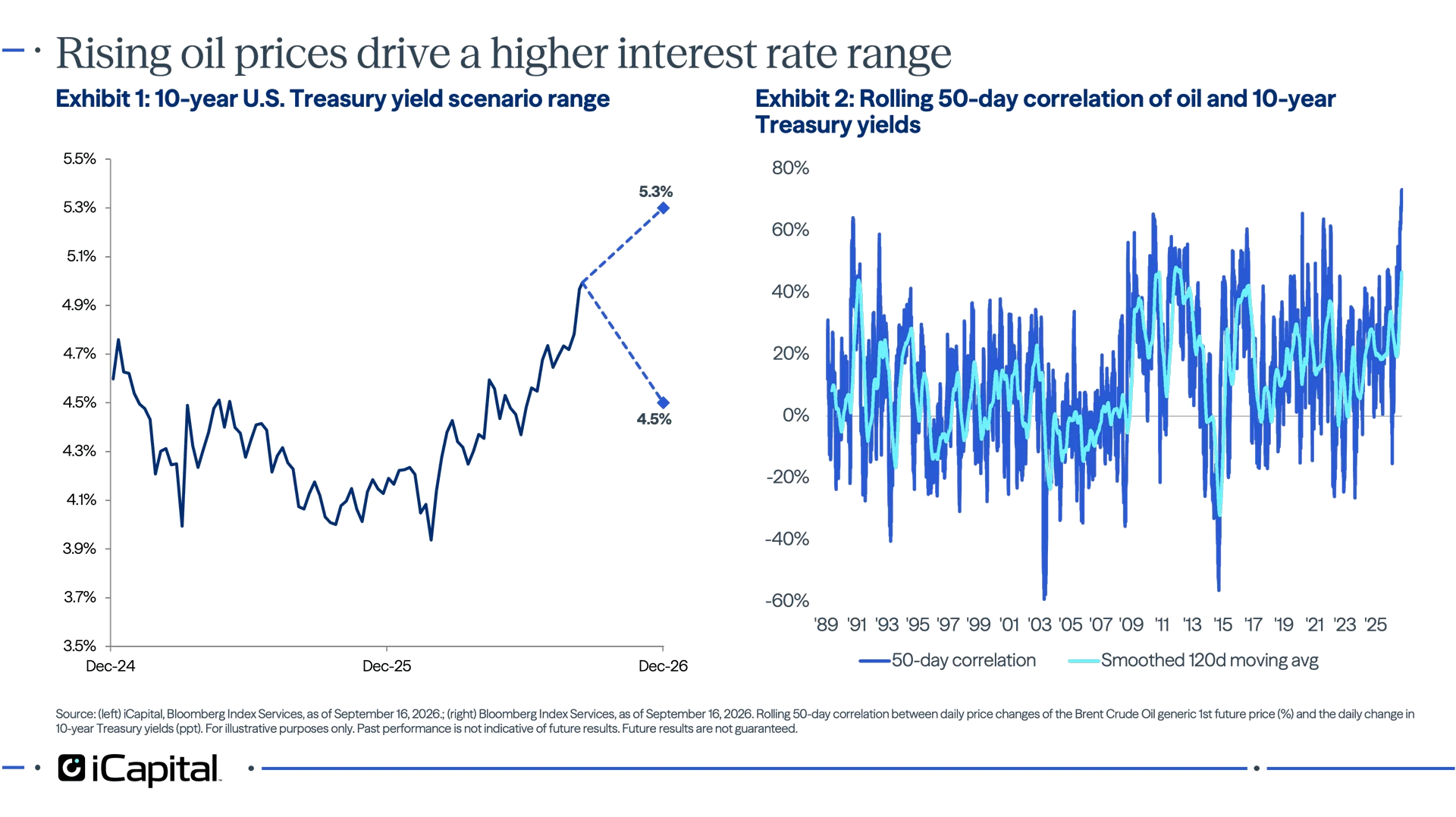
- A prolonged oil-supply disruption is likely to cause inflation to re-accelerate and push the 10-year U.S. Treasury yield toward the upper end of our revised 4.5–5.3% year-end range.
- The Federal Reserve’s new hiking cycle is driven less by domestic demand than by the duration and severity of the oil shock.
- Deglobalization, fiscal pressure, and geopolitical constraints point to structurally higher rates and volatility, increasing the value of diversification, inflation protection and duration management.
Raising our interest rate outlook
In our 2026 Mid-Year Outlook, we set a target range of 4.0–4.8% for the 10-year U.S. Treasury yield. A longer-than-expected disruption to oil supply has already driven yields above the high end of that range, and we now see a meaningful risk that supply will remain restricted for several more months. If it does, inflation would likely stop moderating and begin to reaccelerate. In response, we are raising our year-end target range for the 10-year U.S. Treasury yield to 4.5–5.3% (Exhibit 1). The correlation between interest rates and oil prices has never been higher (Exhibit 2), making oil the main factor determining whether interest rates finish the year near the low or high end of our range.
 The Fed hiking cycle has begun
In our July 27 FOMC preview, we forecast that if oil prices remained elevated, above $80 per barrel, through August, the U.S. Federal Reserve would likely begin a rate hiking cycle. With yesterday’s policy rate increase, the Fed has entered its first hiking cycle since 2022–2023, joining the European Central Bank and the Bank of Japan. The Fed has raised its policy rate range by 25 basis points (0.25 percentage points) to 3.75–4.00%, and the market is pricing in another hike by the end of the year and two more hikes by the end of 2027.1 In our view, the duration and magnitude of this hiking cycle also depend on how long the oil supply disruption lasts. Unless global oil supply meaningfully recovers by mid-November, we expect the Fed to raise rates at both remaining meetings this year, in October and December.
Higher for Longer, by Design
Deglobalization raises the floor
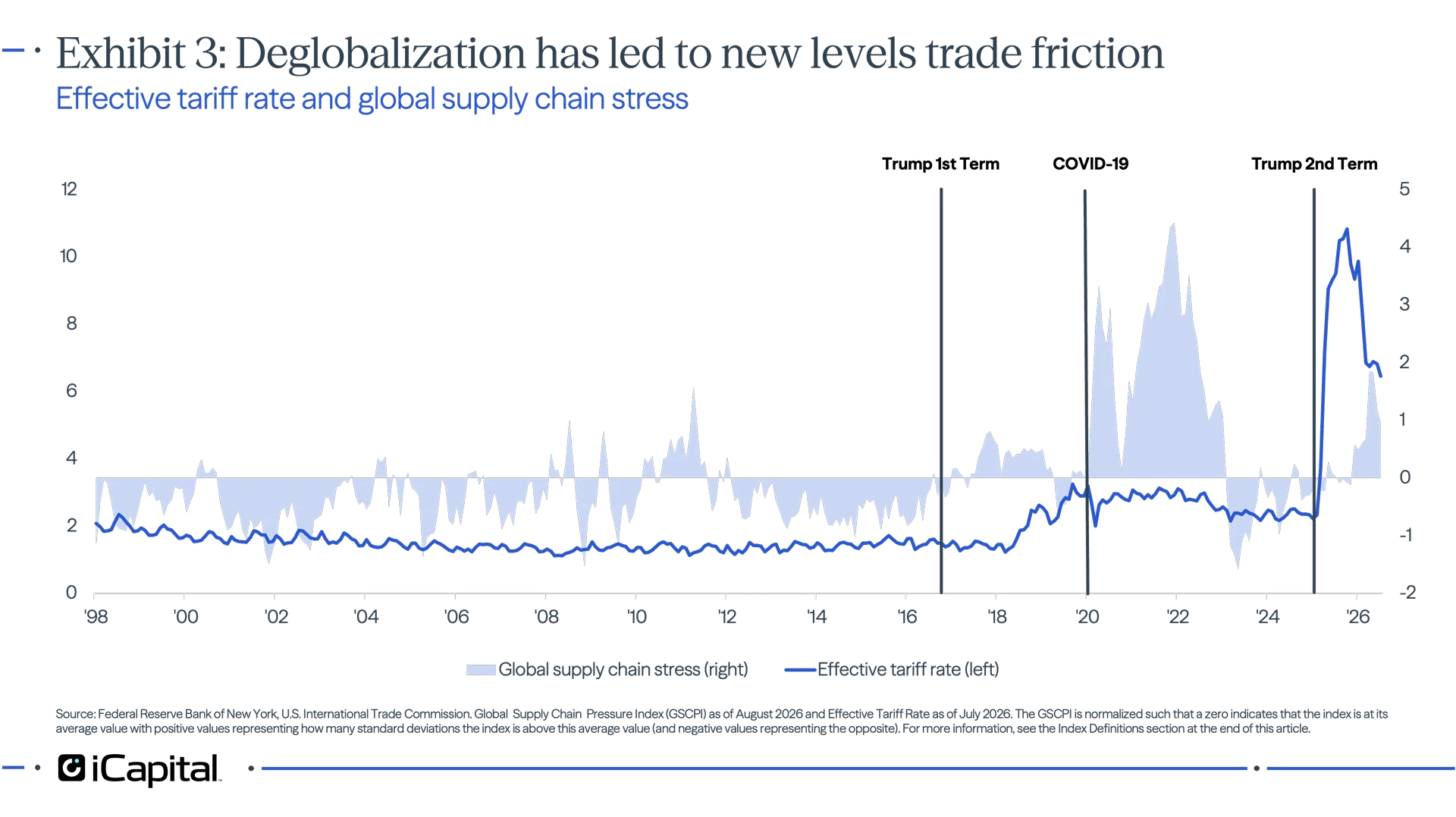
The reversal of the multi-decade globalization trend is inherently inflationary. The most visible driver is trade friction: a decade of rising tariffs, quotas, and cross-border fees has pushed input costs higher (Exhibit 3). But that is only part of the story. Labor mobility has declined. Supply-chain security now outranks cost in corporate sourcing decisions. Military conflict and tighter regulatory scrutiny of cross-border deals and joint ventures have narrowed the field of viable partners and routes. Add the erosion of U.S.-guaranteed shipping security, with critical chokepoints increasingly monetized or controlled by others, and the scramble to lock up oil, critical commodities, and rare earths. The result is a persistent cost premium that did not exist a decade ago. Efficiency was the organizing principle of the old system. Resilience is the organizing principle of the new one, and resilience costs more.
 Fiscal policy reinforces the higher-rate story
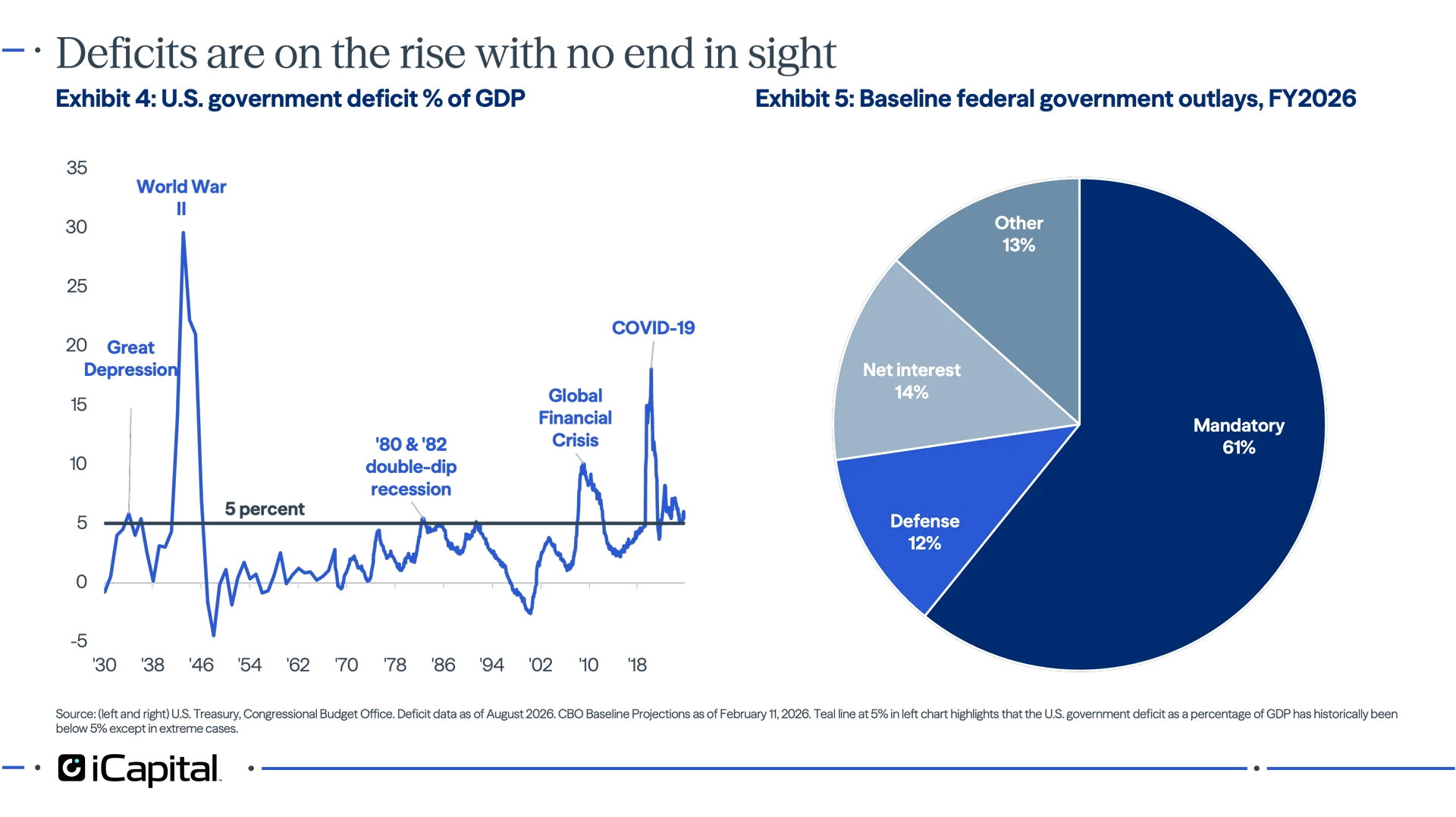
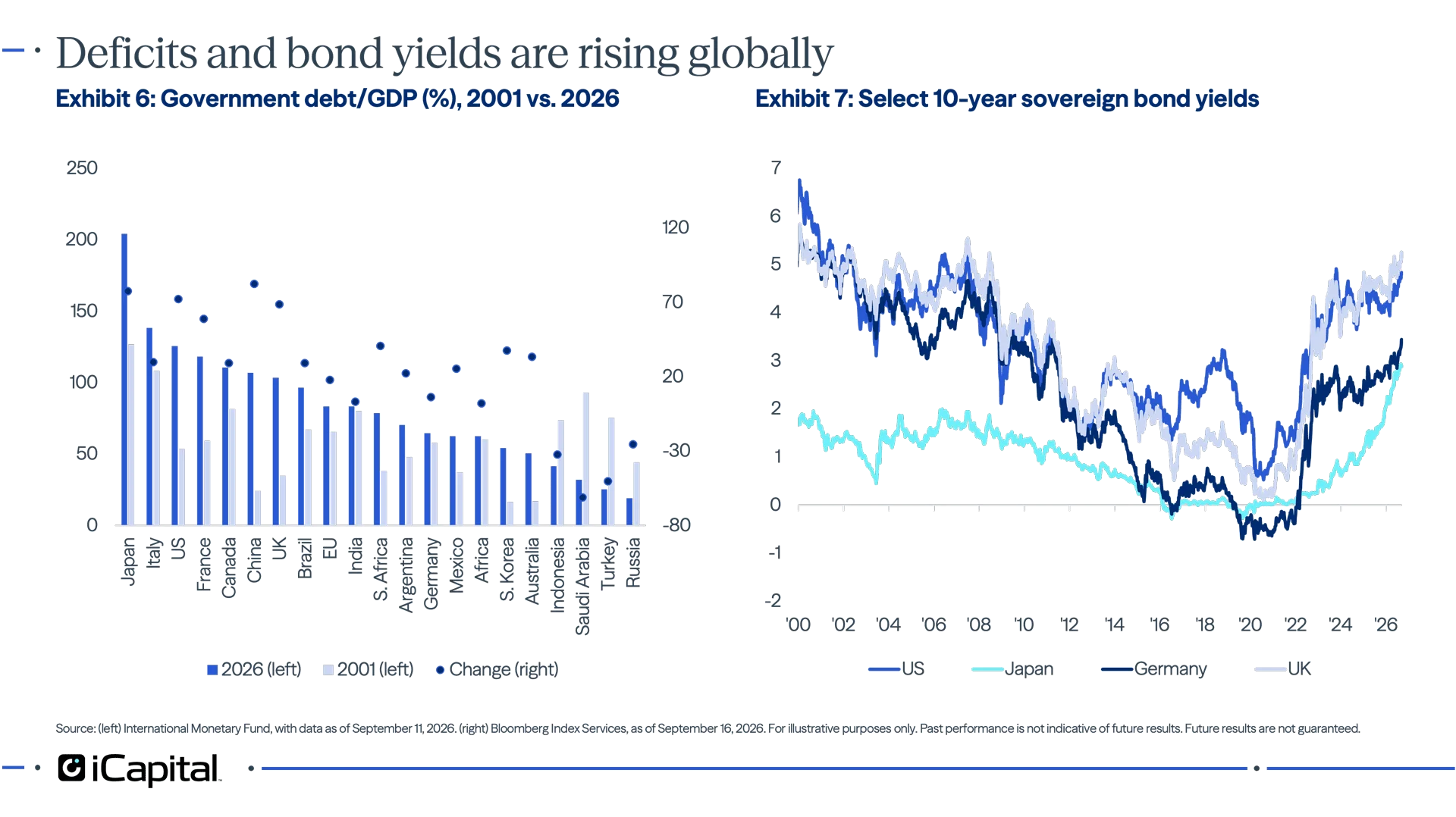
The rise of populism has coincided with the declining influence of deficit hawks, across party lines and national borders. U.S. federal debt recently surpassed $40 trillion, driven by a deficit that has rarely been larger outside periods of major war or recession (Exhibit 4). The options for reducing this debt burden are straightforward: spending cuts, tax increases, or inflation. But with mandatory spending, net interest expense, and defense together accounting for more than 85% of government expenditures (Exhibit 5), meaningful cuts will be difficult to achieve, as the DOGE efforts demonstrated. That leaves tax hikes and inflation. In the near term, inflation is the more likely lever given the absence of deficit hawks. Over the long term, however, higher taxes may prove difficult to avoid. This is not just a U.S. phenomenon (Exhibit 6). Widening deficits abroad are pulling global interest rates higher in tandem (Exhibit 7).
 Two Wildcards for the Rest of the Year
Liquidity is strong but fading
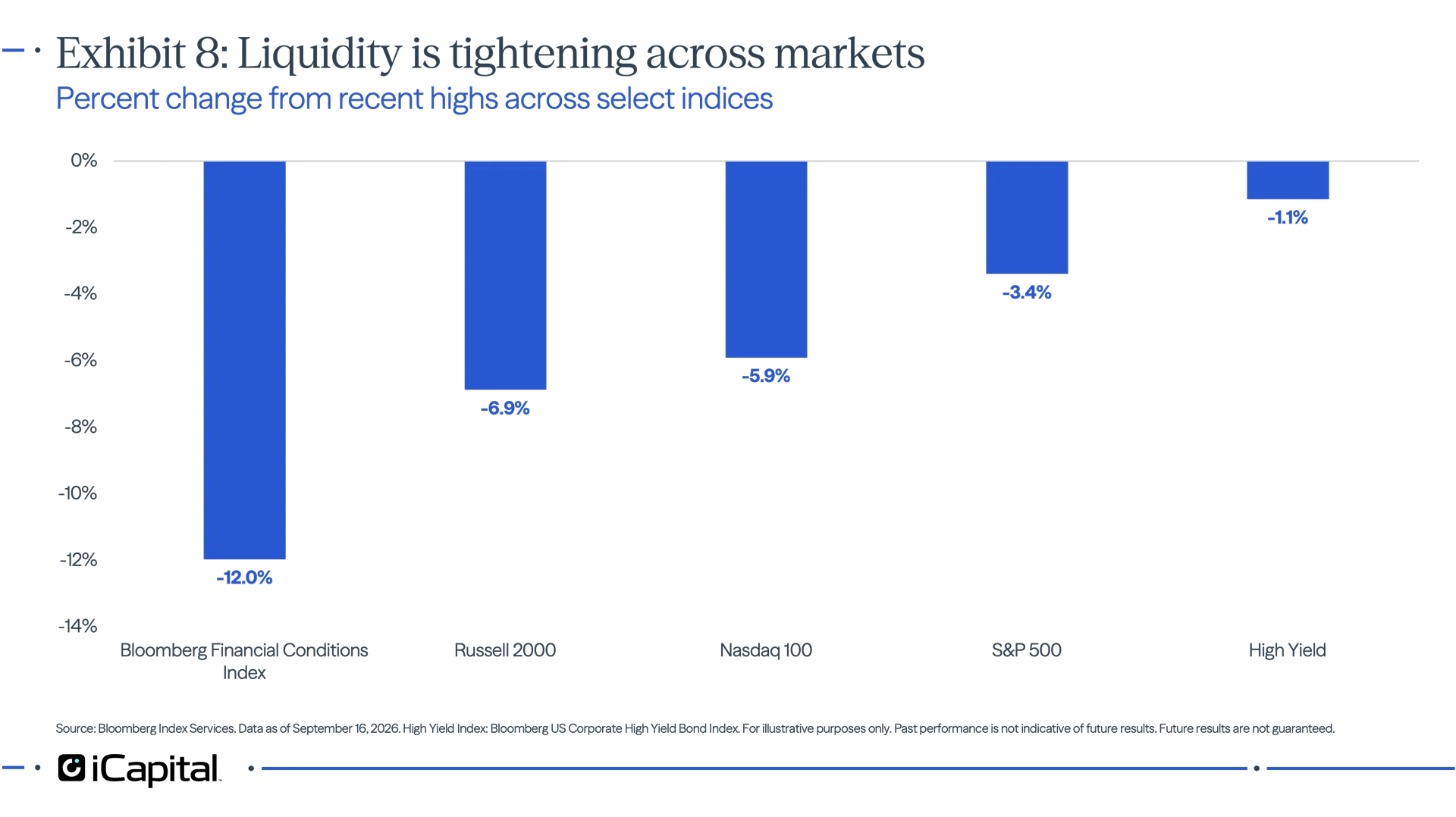
Economic and corporate profit growth has been strong, but the tailwinds are beginning to fade. Lower real incomes, slower earnings growth, and possible fiscal tightening all point to greater vulnerability to demand destruction and tighter liquidity against the backdrop of accelerating inflation and higher interest rates. Liquidity remains robust, but as we noted last month (Peak Liquidity?), some key drivers of record liquidity are moderating as rates rise. Meanwhile, the Nasdaq 100 and small caps are well off their highs and U.S. high yield corporate bonds have begun to sell off amid widening credit spreads (Exhibit 8).
 Geopolitics: the key swing factor
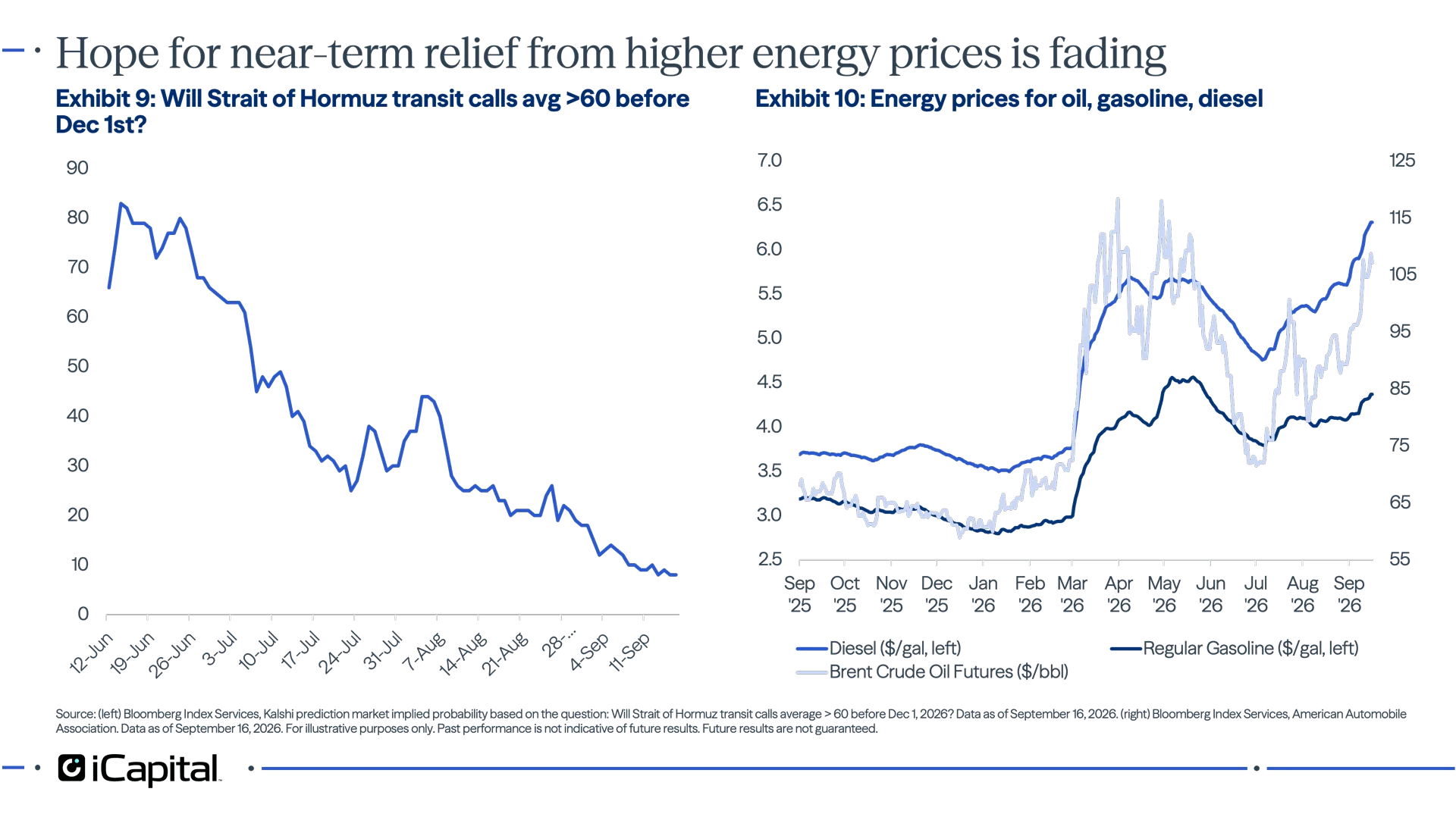
With so much hinging on oil prices, the developments in the Middle East are likely to be the main driver of interest rates through year-end. President Trump has indicated that he does not expect the Strait of Hormuz to reopen until after the midterm elections, and Kalshi betting markets suggest the probability of significant Hormuz traffic by the end of the year has fallen to just 9% (Exhibit 9).2 The situation has been exacerbated by Houthi control of the Bab el-Mandeb access to the Red Sea (another critical waterway), drone strikes that damaged Saudi Arabia’s East-West pipeline (used to bypass the Strait of Hormuz), and sharply reduced refining capacity in Russia amid its war with Ukraine. As a result, U.S. gasoline prices are well above $4 per gallon while diesel, which is heavily used by trucks and heavy machinery, is well above $6 per gallon.3
 What It Means for Portfolios
Portfolio resilience in a higher-rate environment
Given the structural drivers of higher inflation and interest rates, we expect rate volatility to remain elevated. Investors may want to consider adjusting portfolio exposures to better accommodate this backdrop.
- Reduce interest rate risk. Income-seeking investors can consider public dividend-paying equities and alternative investments such as private credit, real assets, and structured investments that can provide alternate sources of income and offer some combination of less interest rate risk (through duration) or greater inflation protection. Investors seeking more resilient total returns could consider multi-strategy hedge funds, which tend to thrive during periods of high or volatile interest rates.
- Actively manage duration. In an environment of structurally higher interest rates, managing duration allows investors to be more tactical in their exposure to interest rate risk.
- Combine income with downside protection. In addition to providing income, structured investments also offer the benefit of defined downside protection.
- When in doubt, diversify. Diversified portfolios are generally better positioned to weather large swings in inflation or interest rates.
SOURCES
- Bloomberg Index Services, as of September 16, 2026.
- BBC, Iran war won't end until after crucial November elections, says Trump, September 10, 2026.
- Bloomberg Index Services, as of September 16, 2026.
INDEX DEFINITIONS
Bloomberg Financial Conditions Index: The Bloomberg U.S. Financial Conditions Index is a Z-score tracking the overall level of financial stress in the U.S. money, bond, and equity markets to help assess the availability and cost of credit. A positive value indicates accommodative financial conditions, while a negative value indicates tighter financial conditions relative to pre-crisis norms.
Bloomberg U.S. Corporate High Yield Bond Index: The Bloomberg US Corporate High Yield Bond Index measures the USD-denominated, high yield, fixed-rate corporate bond market. Securities are classified as high yield if the middle rating of Moody's, Fitch and S&P is Ba1/BB+/BB+ or below. Bonds from issuers with an emerging markets country of risk, based on Bloomberg EM country definition, are excluded.
Global Supply Chain Pressure Index: The GSCPI tracks the state of global supply chains using data from the transportation and manufacturing sectors. The index is updated at or shortly after 10:00 a.m. on the fourth business day of each month.
Nasdaq 100 Index: An index comprised of equity securities issued by 100 of the largest non-financial companies listed on the Nasdaq stock exchange. It is a modified capitalization-weighted index.
Russell 2000 Index: Measures the performance of approximately 2,000 small-cap US equities. Stocks in the Russell U.S. indexes are weighted by their available (also called float-adjusted) market capitalization.
S&P 500 Index: The S&P 500 is widely regarded as the best single gauge of large-cap U.S. equities. The index includes 500 of the top companies in leading industries of the U.S. economy and covers approximately 80% of available market capitalization.
IMPORTANT INFORMATION
The material herein has been provided to you for informational purposes only by Institutional Capital Network, Inc. (“iCapital Network”) or one of its affiliates (iCapital Network together with its affiliates, “iCapital”). This material is the property of iCapital and may not be shared without the written permission of iCapital. No part of this material may be reproduced in any form, or referred to in any other publication, without express written permission of iCapital.
This material is provided for informational purposes only and is not intended as, and may not be relied on in any manner as, legal, tax or investment advice, a recommendation, or as an offer or solicitation to buy or sell any security, financial product or instrument, or otherwise to participate in any particular trading strategy. This material does not intend to address the financial objectives, situation, or specific needs of any individual investor. You should consult your personal accounting, tax, and legal advisors to understand the implications of any investment specific to your personal financial situation.
ALTERNATIVE INVESTMENTS ARE CONSIDERED COMPLEX PRODUCTS AND MAY NOT BE SUITABLE FOR ALL INVESTORS. Prospective investors should be aware that an investment in an alternative investment is speculative and involves a high degree of risk. Alternative Investments often engage in leveraging and other speculative investment practices that may increase the risk of investment loss; can be highly illiquid; may not be required to provide periodic pricing or valuation information to investors; may involve complex tax structures and delays in distributing important tax information; are not subject to the same regulatory requirements as mutual funds; and often charge high fees. There is no guarantee that an alternative investment will implement its investment strategy and/or achieve its objectives, generate profits, or avoid loss. An investment should only be considered by sophisticated investors who can afford to lose all or a substantial amount of their investment.
STRUCTURED INVESTMENTS ARE CONSIDERED COMPLEX PRODUCTS AND MAY NOT BE SUITABLE FOR ALL INVESTORS. Please note that there is no public secondary market for structured investments. Although the issuer may from time to time make a market in certain structured investments, the issuer does not have any obligation to do so and market making may be discontinued at any time. Accordingly, an investor must be prepared to hold such investments until maturity. Any or all payments are subject to the creditworthiness of the issuer. Before investing in any product, an investor should review the prospectus or other offering documents, which contain important information, including the product's investment objectives or goals, its strategies for achieving those goals, the principal risks of investing in the product, the product's fees and expenses, and its past performance.
iCapital Markets LLC operates a platform that makes available financial products to financial professionals. In operating this platform, iCapital Markets LLC generally earns revenue based on the volume of transactions that take place in these products and would benefit from an increase in sales for these products.
The information contained herein is an opinion only, as of the date indicated, and should not be relied upon as the only important information available. Any prediction, projection, or forecast on the economy, stock market, bond market, or the economic trends of the markets is not necessarily indicative of the future or likely performance. The information contained herein is subject to change, incomplete, and may include information and/or data obtained from third-party sources that iCapital believes, but does not guarantee, to be accurate. iCapital considers this third-party data reliable, but does not represent that it is accurate, complete and/or up to date, and it should not be relied on as such. iCapital makes no representation as to the accuracy or completeness of this material and accepts no liability for losses arising from the use of the material presented. No representation or warranty is made by iCapital as to the reasonableness or completeness of such forward-looking statements or to any other financial information contained herein.
Securities products and services are offered by iCapital Markets LLC, an SEC-registered broker-dealer, member FINRA and SIPC, and an affiliate of iCapital, Inc. and Institutional Capital Network, Inc. These registrations and memberships in no way imply that the SEC, FINRA, or SIPC have endorsed any of the entities, products, or services discussed herein. Annuities and insurance services are provided by iCapital Annuities and Insurance Services LLC, an affiliate of iCapital, Inc. “iCapital” and “iCapital Network” are registered trademarks of Institutional Capital Network, Inc. Additional information is available upon request.
©2026 Institutional Capital Network, Inc. All Rights Reserved.