

They discuss:
- Why more company value is being created before businesses reach the public markets
- How secondaries are becoming an increasingly important source of private market liquidity
- Why evergreen structures are broadening access for both individual and institutional investors
- + more
Hirsch also explains why greater access doesn’t eliminate the need for selectivity. In an increasingly large and complex private market, understanding the manager, the asset, and the structure remains critical.
The Bridge, EP 28, Hamilton Lane – Transcript
Sonali Basak (00:00:01 -> 00:00:05)
We wanted to make like a comfortable setting. I
Erik Hirsh (00:00:05 -> 00:00:05)
Like it. I like it.
Sonali Basak (00:00:05 -> 00:00:10)
I like it. Um, yeah, a lot going on in Europe right now, huh? Uh,
Erik Hirsh (00:00:10 -> 00:00:12)
A lot going on. Just in general right now. Yeah.
Sonali Basak (00:00:12 -> 00:00:15)
Yeah. It’s kind of like you wake up on a Monday and it’s like more Yeah.
Erik Hirsh (00:00:16 -> 00:00:18)
It’s just, there’s no rest for the weary.
Erik Hirsh (00:00:18 -> 00:00:19)
It’s just
Erik Hirsh (00:00:20 -> 00:00:24)
Whether it’s headline or change or Yeah. Geopolitical. I
Sonali Basak (00:00:24 -> 00:00:28)
Think we have a, oh, I think you can have that for that, but can we make sure he has the right water?
Erik Hirsh (00:00:29 -> 00:00:33)
Yeah. So we use that, this fresh water in here. Great. Perfect. Um, put this here, mark. Take it. That’s great.
Sonali Basak (00:00:35 -> 00:00:43)
Um, so I think because you’ve been talking a little about dispersion, maybe we even start there. Great. On kind of why do you think, can your fire
Erik Hirsh (00:00:43 -> 00:00:44)
Control room, uh, sure.
Sonali Basak (00:00:44 -> 00:01:18)
Great. Is starting to form across managers, um, and different strategies. What strategies, uh, investors are getting excited about at this part of the cycle. Also, I figured we could have a deeper commentary about private equity also. Great. And then, um, on secondaries, and we should, we should talk about secondaries. We should talk about evergreens broadly speaking. Okay. Um, I think the evergreen market was thrust into the spotlight, what was happening in private credit. Yep. But maybe even cannabis step back and say, well, okay, let’s think about Evergreens as a structure and then broaden out. Mm-hmm . Good.
Erik Hirsh (00:01:19 -> 00:01:19)
That all
Sonali Basak (00:01:19 -> 00:01:23)
Sounds good. We’ll wanna get your advice, um, about a year ago. Can you take
Erik Hirsh (00:01:24 -> 00:01:24)
Sure.
Erik Hirsh (00:01:25 -> 00:01:25)
Thank you.
Sonali Basak (00:01:26 -> 00:01:27)
Erica’s used to media.
Speaker 1 (00:01:29 -> 00:01:32)
Camera two needs to be hooked up. Yeah. Where can I,
Sonali Basak (00:01:34 -> 00:01:41)
Have you gone on with Danny yet? I saw you did a couple hits with, um, uh, Roman and Katie. Mm-hmm . Yeah. You gotta do the deal show.
Erik Hirsh (00:01:41 -> 00:01:50)
Yeah. I haven’t done that yet. Yeah. How many of these are you doing? Like one a week? One a week? Okay. Yeah. That’s good. Mm-hmm .
Sonali Basak (00:01:50 -> 00:01:54)
It’s been a nice way of kind of keeping the conversations going. Yep. And
Erik Hirsh (00:01:54 -> 00:02:01)
Yeah. And then are you doing any other sort of medium here or like this is the medium for
Sonali Basak (00:02:01 -> 00:02:11)
On the, so we have the bridge, we have another podcast called Beyond 60 40. Okay. Which we use for kind of continuing conversations. It’s a higher frequency. Okay. You know, kind of lighter lift
Erik Hirsh (00:02:11 -> 00:02:13)
And mostly outside guests or internal?
Sonali Basak (00:02:14 -> 00:02:43)
Mostly outside. Okay. We’ve done a couple internals for like, kind of the heat of the private credit crunch. We increased the volume of episodes about that in general. Okay. Um, we’ll hear frequently that our I, CIO o CEOs and CIOs will send this to their entire advisor for us. Okay. So it’s kind of one of those things that people love. Perfect. For that reason, you know, it’s efficient. Yeah. It’s efficient. Exactly. Advisor education’s in high demand as you know.
Speaker 1 (00:02:47 -> 00:02:48)
Sorry,
Sonali Basak (00:02:50 -> 00:02:53)
What is latest a UM? Just to make sure I’m getting the right one.
Erik Hirsh (00:02:54 -> 00:02:54)
Uh,
Speaker 1 (00:02:55 -> 00:02:55)
Okay. Good.
Erik Hirsh (00:02:57 -> 00:02:57)
Lucy
Speaker 1 (00:02:58 -> 00:02:58)
.
Erik Hirsh (00:02:59 -> 00:03:00)
I think we’re like 160 billion.
Speaker 1 (00:03:01 -> 00:03:07)
Got it. Sure. Usually I have,
Sonali Basak (00:03:10 -> 00:03:17)
I I was trying like the best way to like get into you guys because I think also you’re a leader in Evergreens, right? Like it’s kind of, you have,
Erik Hirsh (00:03:18 -> 00:03:42)
I mean we’ve got, we’re at 20 billion of Evergreen, right. And I think in 12 products. So I think from a volume standpoint, right. We’re certainly not the biggest or Blackstone is bigger from a pure a UM standpoint. But I think that sort of manager of manager models mm-hmm . Allows us to have more strategies mm-hmm . Because of the co-investment nature. Right. And so I think that sort of solutions provider piece is, has been kind of the differentiator for us.
Sonali Basak (00:03:42 -> 00:03:46)
Okay. Got it. Mm-hmm . But it’s certainly fair to say, one of the largest managers I’ve evergreen vehicles
Speaker 1 (00:03:47 -> 00:03:56)
To the market. Yeah. We’ve been, yep. Yeah. Make sure I’m on, on this one a little bit more on the
Sonali Basak (00:03:56 -> 00:03:56)
Secondaries
Speaker 1 (00:03:56 -> 00:03:59)
And, sorry, I didn’t mean to even clap that. Good. Alright, here we go.
Sonali Basak (00:04:02 -> 00:04:09)
You guys had some really interesting research that we’ll go back to Lucy about, um, on, uh, valuations in secondaries. Yep.
Speaker 1 (00:04:11 -> 00:04:19)
Chanel, Hmm. Hi. 1.1 trillion assets under management and supervision. Got it. A UM is 146 billion.
Sonali Basak (00:04:19 -> 00:04:23)
146 billion. Okay. So same as bad Nick. Alright.
Speaker 1 (00:04:24 -> 00:04:25)
I’m in the control room listening,
Sonali Basak (00:04:25 -> 00:04:27)
So, great. Thank you, . Thank you. Thank you.
Speaker 1 (00:04:28 -> 00:04:29)
We are ready when you are.
Sonali Basak (00:04:29 -> 00:04:31)
Very nice. Whenever
Speaker 1 (00:04:32 -> 00:04:33)
You
Sonali Basak (00:04:33 -> 00:04:34)
Ready to, we’re actually ready. You let me know .
Speaker 1 (00:04:35 -> 00:04:37)
Well, no, I am, I’ll go kind you in if you’re ready. Yeah.
Sonali Basak (00:04:37 -> 00:04:38)
Yeah. I’m ready. Mm-hmm . Alright. Cool. Great.
Speaker 1 (00:04:38 -> 00:04:40)
Mm-hmm . Close the door. Yep. We can close.
Sonali Basak (00:04:44 -> 00:04:48)
But I’m glad to see you using podcasts as a medium, especially on the Batnick show actually.
Erik Hirsh (00:04:48 -> 00:04:55)
I think it’s just as you know, better. I mean it’s, it’s just become, become much more of how people are consuming. Yeah,
Speaker 1 (00:04:55 -> 00:04:55)
I think so.
Sonali Basak (00:04:58 -> 00:05:00)
Does that mean we’re ready for me, Michael?
Speaker 1 (00:05:01 -> 00:05:01)
Yep.
Sonali Basak (00:05:01 -> 00:05:02)
Okay. Got
Speaker 1 (00:05:03 -> 00:05:05)
I count one more time. Five, four. Great. Three.
Sonali Basak (00:05:07 -> 00:05:42)
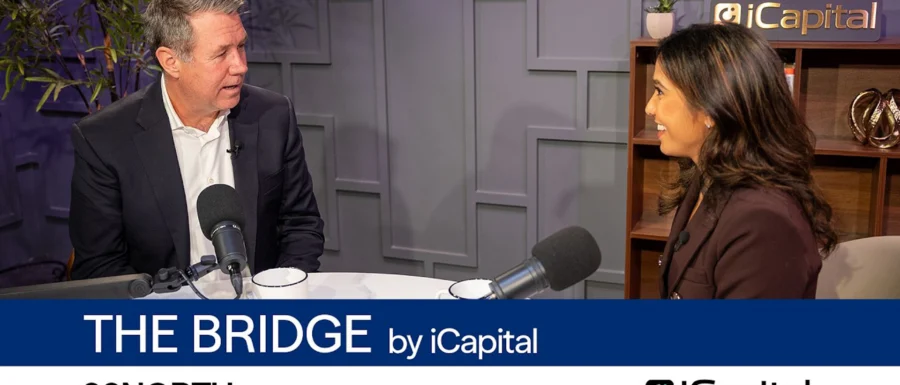
Welcome to the latest episode of the Bridge by iCapital. I’m Shanel Baek, the Chief Investment strategist at iCapital. And today I am joined by Eric Hirsch. He’s the CO CEO of Hamilton Lane, which has 1.1 trillion in assets under management and advisory. And then you also have them with 146 billion of assets under management. Eric, thank you for joining. There’s a lot we can get through today, but first I wanna get your thoughts on what’s happening across asset classes in the market. You’ve been traveling the world, clearly you’ve closed some interesting funds this year. Where is investor interest heading to from an asset class perspective?
Erik Hirsh (00:05:43 -> 00:06:23)
Ali, always fun to be with you. I think what’s interesting right now is that there’s not one flavor for everybody. And I think it’s nice that the industry is continuing to diversify out. We certainly are from a product offering standpoint because investors are realizing that the private markets can solve for a multitude of issues that they’re looking to deal with. Whether that might be yield or that might be a lower risk or a lower vol or a higher risk, higher return. The private markets, like the public markets have all of those different flavors. And so depending on the client and depending on what their portfolio objectives are, you see them accessing just different parts of the private markets. And I think that’s a good thing.
Sonali Basak (00:06:23 -> 00:06:54)
You know, it’s interesting you had a survey and it had a almost identical outcome to one of the surveys we recently had done, which is more than 85% of advisors are looking to increase allocations to private markets. You cite one of the reasons that Hamilton Lane is access. And I think when you look at what happened in the late stage venture environment this year, it really created a lot of reasons as to why. But how much is that sustainable? Especially when there’s so many questions around growth in private equity.
Erik Hirsh (00:06:54 -> 00:08:45)
So I think there’s a few pieces there. One, most advisors are looking to increase because the vast majority of individual investors have little to no exposure to the private markets. Their, their retirement portfolios are just dominated by public equities or public fixed income. And I think what people are realizing now is that the public equity market, while it’s growing from a market cap standpoint, it’s not growing from an opportunity standpoint. The number of public companies, if we look at that over the last several decades has been on a slow decline. Fewer companies are going public. And that leads to your next point, which is, well, where’s all that value being captured? It’s not being captured in the public market, it’s actually being captured in the private market. And so I think recent examples like SpaceX or anthropic soon to be coming or open AI investors are seeing these eye popping IPO valuations and it’s sort of dawning on them that, wait a second. Had I been in the private markets and I had gotten into that business in series A or series B or even series C or D, it was at a fraction of what the IPO price was. And so this is very different. If we go back a few decades, what you would see is companies went public quickly, so there wasn’t a lot of value creation in the private cycle. It actually largely occurred in the public cycle. So think about companies like Amazon, very little value creation as a private company ’cause they went public very quickly. And then over the last many years, huge value creation. But that’s completely inverted today where private, private, private, private, private, huge value creation and then public. Where do you sort of believe that SpaceX is gonna generate a 10 x return from this IPO price? Well, if you were in early, it’s already generated a 60 x return, you know, for the private investors. Well
Sonali Basak (00:08:46 -> 00:09:04)
I, you know, I, you’re a private markets person for the most part, but I do wonder if you have a view on what this means ultimately for markets writ large. Because if companies are waiting so long before they ever go public, and actually m and a is a much bigger component of private market activity Absolutely. Than what does this mean for what the public markets even look like down the
Erik Hirsh (00:09:04 -> 00:10:03)
Road? Well, I think the public markets are gonna continue. Market caps can continue to grow as they have. The public markets have been on a tear for the last several years. So total market cap continues to rise quite substantially. But again, the number of companies is not rising. And increasingly what we see in this environment is a very concentrated, highly correlated public market where you know very well returns are being dominated by a small number of companies that are all effectively playing the same theme, which today is, is ai. The private markets are just much, much bigger. Most companies are just not big enough to be a public company. And so the reality is, is that most companies around the world, whether it’s in the US economy, Europe or Asia, they’re private, they’re not public. So the public companies are kind of the land of giants and the private companies is sort of the land of everything else. But that’s a big part of our economy. It’s the everything else. And so I think it’s important for investors to have their foot in both worlds because both worlds exist and both worlds are important.
Sonali Basak (00:10:03 -> 00:10:26)
It’s interesting because we’re sitting here speaking at a time where, uh, we just had one rate hike from the Federal Reserve. So the cost of financing is higher. There’s expected to be more rate hikes ahead and a lot of people have questions about what this means for private equity in particular. Um, on balance doesn’t make private equity less attractive relative to other types of private market asset classes.
Erik Hirsh (00:10:26 -> 00:11:10)
It makes things harder and it makes things a little bit more expensive. So what are we seeing in the private side right now? Deal doing is fairly robust. Not record levels robust, but it’s pretty robust. And the exit environment, despite some of the headlines, has actually been very robust as well. The problem is, is that the industry is kind of growing faster than the exit environment. So if you look at exits on an absolute dollar basis, 2025 was the second highest year of liquidity ever in the industry’s history. But if we take that as a percentage of the industry’s net asset value, it was a lackluster number. So the industry’s growing quicker. And that’s a problem the industry has gotten a little bit too quick. It grew too quickly, too, too fast, too wide, too broad.
Sonali Basak (00:11:10 -> 00:11:11)
And this is just private equity,
Erik Hirsh (00:11:11 -> 00:11:35)
Just private equity. And frankly it can, we can say the same thing about parts of private credit. We can say the same things about parts of real estate where you’ve just seen this explosion of the number of managers that exist. So you’ve been around this industry a while. I’ve been around this industry a long time. We went from a couple hundred to a thousand to 2000 to 5,000 to 8,000. The number of managers has just widened out
Sonali Basak (00:11:36 -> 00:11:41)
And the number of companies held are now more than 13,500. Like it’s the very large amount of, it’s
Erik Hirsh (00:11:41 -> 00:12:11)
A huge number of businesses. And so all of that sort of requires more volume. But it also shows you that dispersion of performance is pretty wide for a reason because the talent set is pretty diverse. Not every manager is amazingly talented or doing amazing things. And so that is one of the issues in the private side is a little bit of that buyer beware of you gotta carefully navigate through that world. It’s one of the reasons why we get to exist as a company. So buyer
Sonali Basak (00:12:11 -> 00:12:25)
Beware. Talk to me about what you’re seeing under the hood in that dispersion. Do you expect it to get more profound given that we still have that meaningful backlog? Uh, you know, what happens here for managers to truly differentiate themselves?
Erik Hirsh (00:12:27 -> 00:13:56)
So the thesis had always been, well, as industries mature and as industries grow up, you kind of see this reversion to the mean from performance that has not happened at all with the private markets. So if we go back to the 1980s or the nineties or the two thousands, and we look at sort of the spread of best to worst across equity managers in, in the private side, we see a really big spread. And that spread hasn’t changed. It’s been incredibly persistent. Why? Because this is not a fair asset class. This comes down to what do you do with the asset once you own it? So you and I could both take turns being the CEO of the hotel across the street here and we would make wildly different choices. And so you might do a better job with the reservation system and the room upgrades and the restaurant and have a great success as a CEO. And maybe I foolishly make the mistake to sort of open up a different gym to try to attract clientele. And none of it works. And I’m, I’m, I do a bad job. Well it’s the same asset purchased at the same price, with the same cap structure, et cetera, et cetera, et cetera. But the what you did is what determined the results of that. And that’s why you see such wide dispersion because it purchase price matters. Yes. And the leverage matters. Yes. But those things aren’t huge differentiators because the market’s competitive and the lending market kind of is what it is. It’s what you do with that asset once you control it. And that’s a skill.
Sonali Basak (00:13:56 -> 00:14:27)
You were talking about this idea of buyer beware and you know, only in the last year or so did we really see that capital distributed because of all that deal making that you were talking about start to surpass how much capital in the industry has been called. And one question I have on this is we still haven’t even seen those vintages, those 2021 vintages where there was still a lot of risk assets bought at high valuations Yep. That still record low interest rates that have not really left the system yet. Correct. What happens when they do?
Erik Hirsh (00:14:27 -> 00:15:31)
Well, I think it’s gonna be a mixed bag. I think we’re back to the dispersion issue. So in some cases you had managers who had good discipline coming out of COVID, uh, and weren’t hugely taking risk and weren’t kind of making assumptions that some of the COVID era behavior would continue forever. And those managers are having good performance and good exits and good returns. And then we see the other side of the equation, which is really high purchase prices, faulty assumptions on what the growth rate would be for the asset. And those assets are struggling and they’re struggling to sell them. And what you’re seeing is that the holding periods for managers is elongating and it’s elongating both because do they have a buyer and because they’re trying to kind of grow their way out of mistakes, some will do it, some will grow their way out of that overly high purchase price and they’ll end up being fine. Yeah. It’s a lower IRR ’cause the hold period, but the multiple will be totally attractive. Investors will be, you know, relatively satisfied. But we’re back to dispersion. Not everyone makes the same choices and not everyone is operating in kind of this equilibrium.
Sonali Basak (00:15:31 -> 00:15:47)
I reckon you’d be able to see a really meaningful amount of this deal flow right now because if you think about Hamilton Lane’s place and the idea that some of these assets could still exit through continuation vehicles, sure you’re in a position where you get to say, yes, I want that and no, I don’t want that.
Erik Hirsh (00:15:47 -> 00:16:38)
Well this is the secondary market, right? So today investors are trying to create liquidity for themselves in a variety of different ways. In some cases they’re pushing on the fund manager to actually do the liquidity themselves. And in other cases the limited partners are taking it upon themselves to try to generate their own liquidity. And they’re doing that via the secondary market. So if you’re a firm like ours and you’re very much in that world, you get to see assets every day and you get to have disclosure on who bought what, who owns what, who owns it, at what price, how’s the growth occurring or not. And you can see what’s happening on trading multiples and prices and you can see what’s sitting inside of this manager’s portfolio or that manager’s portfolio. And yes, ultimately at the end of the day, part of our job is deciding I do want this or I don’t want that. So
Sonali Basak (00:16:39 -> 00:16:58)
When you’re looking at the pool of assets coming into the world right now, um, how much of this behavior is really healthy, right? This idea that it’s a good asset being held for longer in a secondary vehicle versus well you just have managers trying to find exits. How often are you passing is another way to maybe ask the same question. So
Erik Hirsh (00:16:58 -> 00:17:41)
In the secondary business, we pass about 99% of the time. That’s incredible. Now that doesn’t mean that those 99% of the deals are all bad. It doesn’t mean that what it means right now is that the volume of what we’re seeing is extremely high. And despite having a large pool of capital that we’re managing, we can still be that picky. It also means that there’s some bad deals. Yeah. So it’s not 99%, but it’s also not only 1% are good deals. And so this is back to the buyer beware. This is back to why the private markets can be difficult to navigate unless you’ve got the size and the scale and all the tools and the access to data, et cetera, et cetera, et cetera. That’s, that is, that is the reality of how this market operates.
Sonali Basak (00:17:42 -> 00:18:08)
You have a really interesting chart that Hamilton Lane had put up recently. This idea of how cheaply an asset or a fund interest is trading, uh, hands depending on how old it is, right? Some of these discounts are also simply because some of these assets were held 10 years, 12 years or more than 13 years. And if an asset was held more than 13 years, that fund could be trading at a 29% discount.
Erik Hirsh (00:18:08 -> 00:19:16)
Sure. Because if the asset’s been held that long, I think there’s real concern of why, why, why will it ever be sold? What’s the motivation or lack thereof of the manager themself? I think one of the other realities that we’re seeing in the secondary market today is this fundraising is hard. And a lot of managers have raised their last fund, whether they know it or not or whether they accept it or not. They’ve raised their last fund. The, the industry is beginning to start the shrinking process. That process is gonna take a long time because again, these are long pools of capital and it’s hard to sort of kill off a manager. But we’ve begun that journey. We’re gonna start to sort of rationalize the industry and you’re gonna start to see the number of managers shrinking over time, not rising. So if you’re one of those managers, you don’t have a huge incentive to sell off the asset that is the source of your management fee if there’s no new management fee coming on, that’s a structural problem that the asset class has today. And it’s one of the reasons why that secondary market is continuing to rise because again, investors are sort of taking matters into their own hands. Right.
Sonali Basak (00:19:16 -> 00:19:25)
I mean it’s interesting, it sounds like you’re saying that it’s almost like an asset hoarding going on too, where some managers wanna keep the good stuff so they might just sell piece or
Erik Hirsh (00:19:25 -> 00:19:26)
Just keep any stuff
Sonali Basak (00:19:26 -> 00:19:29)
. They just might sell a piece of it to remarket really in
Erik Hirsh (00:19:29 -> 00:20:37)
New hands. I think it’s a mix of behaviors. So you’ve got some assets that are just not good assets, not surprising. It’s again huge industry. So is everything great? Of course not. So there’s a group of assets that are just bad assets, hard to find any home for them, hard to find a buyer, fine. So that’s a bucket. The second bucket is the assets owned by managers who again aren’t an ongoing concern. And so they just don’t have the motivation unless they’re gonna sort of get some big carried interest payment. But to sell an asset where there’s no carry and it takes away their management fee and there’s no new fund coming, that’s not a great motivation. And then you’ve got another bucket, which is I the manager love this asset. I’ve held it for five years, but it’s growing 20% pre annum. I like the management team. I’m familiar with the asset. I don’t really wanna let that go, but my clients do want liquidity. That’s what they pay me for. And so I’m gonna head down the continuation vehicle route where I’m gonna try to offer liquidity for those that want it a rollover for those that don’t. And I’m gonna create a new vehicle with a new backer to let me, the manager continue to run that asset again for another X number of years.
Sonali Basak (00:20:38 -> 00:20:57)
So let’s also just talk for a moment on how big the second mar dairies market has gotten. Because we talk about it in the vein of what’s happening in private equity, but realistically it’s starting to expand across different asset class types. Um, we’ve been operating under this thesis that that secondary market is really necessary. When you look at that backlog
Erik Hirsh (00:20:57 -> 00:20:58)
Of necessary
Sonali Basak (00:20:58 -> 00:21:10)
Company, you know, it, it just seems to me that companies will continue to stay private for longer given the growth of the secondaries market that we’ve seen. From an investor perspective, what’s the case for secondaries?
Erik Hirsh (00:21:11 -> 00:22:33)
I think there’s a variety of things. One, I think you go back to your health comment, which I agree with. As industries get bigger, they need to have multiple layers of liquidity functionality in order to stay healthy. The public markets have that in in infinite ways and that’s a good thing. The private markets have been slow to develop more of those mechanisms, but you can see that that’s changing and I think that’s good. Again, what do investors want? Investors want to make their own choices. Investors want control. Investors want to kind of be responsible for their own fate. And so the more choice they have, the better. What’s the benefit to investing in secondaries? Well it’s taking away the blind pool that private markets are known for. It is buying some assets that are aged. And so you’re accelerating that path to liquidity. It’s the look through basis and the chance to actually reprice assets. And then you’ve got the portfolio management piece of it’s allowing you to either under or overweight sectors or geographies or, or whatever elements you’re trying to solve for. If you look at a risk adjusted basis, secondaries have actually been one of the best parts of our asset of our entire asset class on a performance basis. That’s a good thing. And I think it’s all the reason why the investor interest in that space is continuing to rise along with the space itself.
Sonali Basak (00:22:33 -> 00:22:55)
So it’s interesting because I think a lot of investors are trying to wrap their head around what is the return profile of a secondaries fund? Because what happens is when an asset is acquired, there is that markup, but then after there’s a markup of that initial asset that’s bought, how does that secondaries fund ensure that there is continued performance within the fund? Yep.
Erik Hirsh (00:22:55 -> 00:23:02)
So let’s talk about that for a second. ’cause I think there’s been a lot of press about this and I think not all of it has been this idea
Sonali Basak (00:23:02 -> 00:23:03)
Of a sugar
Erik Hirsh (00:23:03 -> 00:24:43)
High. Yeah. Easily understood. So is it surprising that illiquid assets trade at discounts? I would say that’s not surprising. Uh, if you’re in a 12 year illiquid fund vehicle and you want to exit that position earlier and you find a willing buyer to step into your shoes, is it surprising that that buyer is going to pay you something less than par knowing that your only other choice is to wait the 12 years to ultimately get full liquidity? Not surprising. So what do the accounting rules say? Well, the accounting rules say that you’re coming in as a passive LP into a fund managed by a general partner and you’re gonna take the marks that they provide to all investors. So if you were able to buy that position at 90 cents on the dollar, it is gonna come onto your books at the reported dollar value. That’s the way that the accounting works. That’s not surprising. But to your bigger point, returns can’t simply come from discount because if we’re buying bad assets, even if you’re buying them at a big discount, ultimately they’re still a bad asset. And so that discount gets eroded over time and you’re still reliant on is the asset good or not good? So I think for successful secondary buyers, we would think we’re one of those. It’s a mix you’re doing, there’s some skillset in the purchase and getting assets at good attractive prices and creating opportunities where you are that provider of liquidity and you’re able to kind of earn that discount. That’s a good thing. But the vast majority of returns come from the underlying fundamental appreciation of the asset itself. It’s both.
Sonali Basak (00:24:43 -> 00:25:02)
So you’re basically hoping two things that, or underwriting two things rather, that you are buying an asset that will grow and therefore grow into greater valuations. Correct. And also buying it cheap to begin with below the nav that has been reported because you’re providing liquidity for that asset.
Erik Hirsh (00:25:02 -> 00:25:52)
So no different than you going to look for a new apartment, uh, here in Manhattan where if you’ve got a seller that really wants to move that apartment right now and you’re able to get a great deal on that and sort of buy sort of below market because you had an in or an angle or something with the building or with the buyer, good for you. But you still want a really good apartment that isn’t full of a bunch of problems. So it’s gonna matter to you that the construction is good and the insulation is sound and the floors are done well and the plumbing it’s got, it’s both. You wouldn’t want to just be like, well I got a good deal on this and then your friends go, yeah, but it’s a horrible apartment. What were you thinking? And you say, well I got a good deal. It was, you know, below market value. It’s both. You’re looking for good assets at good prices. So
Sonali Basak (00:25:53 -> 00:25:57)
I, I mean is it fair to ask then, are these accounting rules that you think are here to stay?
Erik Hirsh (00:25:58 -> 00:26:52)
So the secondary market’s been around for a long time. I mean we were one of the early investors and and doers of secondaries. We did our first transaction in 2000. So the industry has been around for over 25 years and has been scrutinized because you’re sort of back to what’s the better option. The fund manager who controls all the assets is the one that’s going through a valuation process with a third party accounting firm and they’re setting the values. What happens over here that you sort of got a good deal on the asset doesn’t fundamentally alter the asset. Just like you got that condo in that in that building and you got a good deal. It doesn’t mean that everyone’s apartment is now worth less because you got some one off kind of off market transaction that’s just a good for finale. But that doesn’t mean everyone should sort of mark their apartment down in the building. The market is still the market and the assets are still the assets.
Sonali Basak (00:26:52 -> 00:27:17)
So then when you think about the growth of the secondaries market from here, there’s a lot of question about how secondaries and evergreens go together as well as they do. Um, what are some of the reasons you think that this makes so much sense? Um, people cite different reasons, the volume of assets, for example, that are within a secondary’s, um, evergreen vehicle. What is it about the two that make first such a match that’s been made in heaven? Really, I think it’s
Erik Hirsh (00:27:17 -> 00:28:07)
A few pieces. One, it’s trying to create a quicker, better, healthier experience for the investors. So buying assets that have some age on them that can generate earlier liquidity. That’s a good return profile for a lot of investors who are, to our earlier point, just starting their journey in the private markets. The diversity of being able to buy lots of different assets also is a nice foundation inside of a broader evergreen. And as you know, with evergreen, you’ve got flows coming in usually on a monthly basis and you don’t wanna be sitting on huge amounts of cash because cash drag bad. And so your ability to smartly deploy with a pacing that’s kind of matching or maintaining the sort of speed that the assets are flowing in is also a good thing for evergreen structures.
Sonali Basak (00:28:07 -> 00:28:30)
How do you feel about that pacing question? You know, with the proliferation really of evergreens that we’re starting to see, and you guys have been in this space for so long that you’re seeing now new entrants, right? Sure. Um, and there are a lot of questions about the behaviors in the market. Let’s just start with pacing. I mean, when you look at the volume of funds being raised, how do you feel about the deployment opportunities that exist in any given market relative to how much funds have been raised? Well,
Erik Hirsh (00:28:30 -> 00:29:15)
I think you’re seeing it in the performance, which is even though the evergreen world is a much, much smaller world, so fewer funds, fewer fund managers than the broader private market side, it’s a much smaller world. You still see wide dispersion of performance because not everyone has the same access to deal flow. Not everyone is taking capital in a measured way. Not everyone is building portfolios with the same view of risk or diversification. So again, we’re back to choices. So even when we say, well evergreen, there’s not that many, it’s a few hundred funds out there, you’re still back to the same buyer beware issue, which is, hey, in a very actively managed industry, you need to be very careful at who, which manager you’re sort of choosing to entrust with your capital.
Sonali Basak (00:29:16 -> 00:29:53)
It’s interesting ’cause I’m glad we’re talking about this distinctly as evergreens because I think when you looked earlier in the year, a lot of people were nicknaming these semi-liquid funds. Mm-hmm . And semi-liquid turned out to be a little bit of an unhelpful way of talking about it because of what we saw in private credit. This idea that people thought that they would have liquidity. But these are illiquid funds, uh, generally speaking, uh, with a 5% liquidity sleeve. Yep. So all onset is done in 2026. We’ve seen redemption queues starting to moderate, get closer to that 5% limit. That’s always existed. Really what’s been learned through all this in terms of evergreens and liquidity.
Erik Hirsh (00:29:53 -> 00:31:42)
Well, I think part of this is we need to straight talk and I think part of this is our own industry’s fault, which is you had some managers who again, in eager to sell their product, I think were overstating or not being direct or candid enough about the liquidity feature. So there are liquidity mechanisms, but to your point, they are limited. These are private assets, they are longer hold periods. And so educating investors as to all the benefits of the private market and why having some part of your portfolio and something that’s not fully liquid is a good thing. The institutional world has shown you that very clearly that that’s a good portfolio construction, that’s the education that’s needed. Trying to portray this as very liquid and no problem and not to worry about it caused some panic and you saw it. So there were some, I think, irresponsible headlines in the media around what private credit problems were or may or may not have been happening. Turns out we haven’t really seen a lot of problems and performance continues to be pretty good. But that caused a bit of a run where investors, again, new to the space, not really sure about how all this works. And then you started seeing a wave of headlines of this fund manager is gating and this fund manager is gating. Well, again, if you’re a newer investor in this space, that doesn’t make you feel great. And so what do you expect that they’re gonna do? They tend to get more anxious, uh, and they’re looking for more liquidity. And so that cycle continued. And you’re right, it’s generally abating. It’s not abating for every manager, but it’s generally abating. And I think the education function continues thanks to people like you. And so all that is starting to get better, but it’s still a journey.
Sonali Basak (00:31:43 -> 00:31:49)
So then what would you say standing here today is the best way to explain the evergreen value proposition?
Erik Hirsh (00:31:50 -> 00:32:50)
I think it’s the easiest way for individual investors to simply access the private markets. If you’re accessing through a closed end fund, there’s a few problems with that. One, the minimums remain very much out of reach for the vast majority of humanity. So that is really the land of ultra, ultra high net worth individuals. The second part is just the, the sort of the cumbersome nature of the drawdown. Dealing with capital calls and dealing evergreen is a much cleaner, easier, simpler structure with much lower minimums and it does at least have a partial liquidity feature. So we’re back to the macro. The macro is there’s tons of good reasons to be in the private markets. And so once as an investor you’ve made the decision that yes, I should participate in this. I shouldn’t just be in the public markets, then the next question is, well, how do I best do it? And for most individual investors, the evergreen world is, is by far the right choice for them to go at it. It
Sonali Basak (00:32:50 -> 00:33:22)
Feels to me that as the industry evolves, there’s still a few unanswered questions about evergreens and what the standard industry practices are gonna be. For example, um, how do we think about valuation frequency evaluation? What’s the right amount of times in any given year to value a fund and uh, the underlying marks. Um, another question is, uh, how do you know what’s an evaluation? How do you start talking to investors around the questions around valuation and the differences and practices that that exist in this industry?
Erik Hirsh (00:33:22 -> 00:34:41)
I think you just have to be transparent about it. I think in your materials you need to just explain, here’s what we’re doing, here’s why we’re doing it. Here’s the resources that we’re using to do it. Right now we see frequency spread. So depending on the vehicle, depending how it’s registered and depending on what was told to investors, we see some quarterly, we see a lot of monthly, and right now we’re seeing a small number of daily. Is one of those the right way? I don’t think so. I think it’s different, you know, sort of situations for, for, for different structures. But again, transparency is the key and investors just need to understand what they’re in and why they’re in it and whether that’s a good match for them. So I think you’ll continue to see a multitude of valuation time periods. You could argue that in the private equity world, it would be hard to say that a lot is changing daily for something that you’re likely to hold for years. But again, if investors demand over time that they want that, or if you’re ultimately operating in a 401k world where that’s gonna be required, then you’re gonna see the pressure or the requirement to move to daily pricing. So part of this is gonna be the regulatory environment dictating, and a lot of this is gonna be the customer. The customer is going to ultimately tell the managers what it is they want because they’re gonna be voting with their wallet.
Sonali Basak (00:34:42 -> 00:34:51)
It’s interesting, um, you really point to something that’s important here that actually the type of investor who’s entering the space is part of what’s driving these changes in valuation practices.
Erik Hirsh (00:34:52 -> 00:36:02)
Absolutely. And I think that’s not surprising. I mean, at the end of the day, aren’t we all kind of in a customer service business in some way, shape or form? And so the customer’s, right, the customer is ultimately the one who controls the dollar and the customer will will dictate this. Now what’s interesting in the evergreen world is while we’re talking about this very much from an individual perspective for our firm, 25% of our flows are coming from institutional investors into evergreen. So it’s not exclusively a world of individual. You’re seeing institutional investors who also see the benefit of the evergreen structure. Even though they could operate solely in a closed end world, they see that that fully invested ability to sort of diversify ability to be more tactical in their asset allocation, they see real advantages from Evergreen. And so you’re seeing capital migrating in there. This is one of the reasons why when we talk about fundraising and you say, well it looks like fundraising’s way down and it is, it’s down. But those fundraising dollars that we all cite all the time are really only capturing the closed end fund fundraising. It’s not recognizing that more and more institutional LP capital is migrating into the land of evergreens.
Sonali Basak (00:36:02 -> 00:36:09)
It’s interesting to see institutions and high net worth investors, even retail investors starting to migrate more and more you
Erik Hirsh (00:36:09 -> 00:36:44)
And sharing the same space. Yeah. As they do in the public equity world. It’s not like the public equity world is simply the domain of one or the other. The public equity world for eons has been shared. You’ve got individual investor who is trading on their phone, sitting right alongside of a sovereign wealth fund who’s also trading and they’re trading the exact same thing. They might be trading partial to each other. And so I think when we, there’s a bit of a notion of like, oh, can this world, you know, be good for both, but well it’s the public equity world’s completely fine for both. The private world will be fine for both as well
Sonali Basak (00:36:45 -> 00:37:10)
From your seat. I think one thing that a lot of people are wondering is when we saw the most recent wave of redemptions across the private credit industry, for a lot of people what you saw is kind of an outsized amount of redemption notices coming from a small group of investors. If you have more institutions living alongside individual investors, how do you make sure that there is not an an imbalance when somebody tries to pull capital?
Erik Hirsh (00:37:10 -> 00:37:50)
Well, part of the benefit of the institutional customer coming in is it’s making the vehicles bigger, which should allow for more liquidity because if it’s that 5% number that’s 5% off of a much bigger base. And so all of that helps. The other thing that you see with institutional behavior and, and it’s early, we’ve only seen them in this spot for a couple years, they tend not to be as reactive and they tend not to be an all or nothing. So when you see institutional investors looking for liquidity, what we’ve observed is more measured over a longer period of time, not, oh my gosh, I changed my mind. I want to be out of this next Tuesday.
Sonali Basak (00:37:50 -> 00:37:58)
And to the point you’ve been making institutions kind of dove right into the private credit opportunity when we saw a little, a little exit from few.
Erik Hirsh (00:37:58 -> 00:38:26)
That was interesting. You know, that, that was interesting. At the same time, I mean, I’ll just use us as an example ’cause I I know it, which was at the same time that you were dealing with just an array of headlines and concerns about Oh, private credit. Private credit. We were launching a brand new private credit fund that was actually seeded by a large sophisticated institutional investor who was keenly aware of what was being said around the industry and was making a longer term choice, uh, to be in that space.
Sonali Basak (00:38:26 -> 00:38:31)
It’s interesting. What, what, what is the private credit opportunity now that rates are higher than they were at the beginning of the year?
Erik Hirsh (00:38:31 -> 00:39:53)
Well, I mean, it’s interesting because again, a lot of the wailing and gnashing of teeth about all the problems that are coming, performance for private credit remains very strong. And if you look at the last literally 20 years, private credit has beaten its public benchmark every one of the 20 years. That’s not to say that every private, private credit manager is amazing and that there are no problems out there, but I think the notion of the systematic problem, I think was misunderstood, overstated for a whole variety of reasons. What we see fundamentally is there are more companies getting created every day around the globe. Those companies need financing to grow. Regional banks and banks in general had historically been a big provider of that. If you and I back in the day wanted to build a new manufacturing facility in Toledo, we would’ve gone to our local bank where one of us probably had a relationship and we also had our checking account there, and we would ask for a loan and our local banker would be the one that ultimately provided that so that you and I could get our manufacturing business growing. Those really don’t exist as much anymore. They’re not in the business of lending. And so private credit has kind of filled that gap. It’s very necessary because again, number of companies in the US and Europe, like they’re all kind of up into the right and they need financing and lines of credit and loans are part of that. And that’s coming from private credit providers.
Sonali Basak (00:39:53 -> 00:40:33)
It’s interesting. I, I do wanna spend some time before I let you go, to wrap back to where we started. You started talking about concentration and equity markets and the, the need for access in private markets. One of those desires for access is also this idea that, well wait a minute. To your point, we, we are so overweight and so few names in our other accounts, our retirement account. But now you look at AI kind of pervading every type of investment strategy, right? How do you think about the role of AI as it pertains to existing portfolios and new money that you wanna put to work? Is it in everything or do you start to have to separate what’s AI related and what’s not anymore?
Erik Hirsh (00:40:34 -> 00:41:25)
I think it’s very blurry to your first point on, I think most investors ultimately don’t know what they own. And that’s a problem. You should actually use AI to help you actually be a better personal investor. Literally on Sunday, I spent time with a friend of mine, uh, who is not a finance person and had asked me to look over their retirement accounts. Quite literally, this is what I was doing on Sunday afternoon. And I said to him, uh, you own the same handful of stocks in four or five different fund vehicles. And so your exposure to Nvidia or to Apple or to Amazon, which were all in there many, many, many times was way, way bigger than this person had had envisioned. I think that’s normal for a lot of investors today, as in as we’ve all been sort of told, don’t go active, be passive in the public markets, go cheaper now don’t
Sonali Basak (00:41:25 -> 00:41:25)
Look at your
Erik Hirsh (00:41:25 -> 00:42:20)
Retirement account. Right, exactly. Let it let it go. Clients then investors just don’t realize how concentrated. So as the markets have gotten concentrated, they’ve gotten even more concentrated as it relates to ai. I think there’s a mix. There’s in the private side, there’s some very direct investing in AI where it’s like, no, I’m investing in this AI oriented company that is the business. And then you have the, it’s sort of everywhere. So AI is powering the manufacturing facility or it’s making, uh, the widget manufacturer more efficient or it’s helping the supply chain logistics person be better. And so I think as an investor, understanding how it’s being used, understanding how it’s advantaging the company, how it’s advantaging the company relative to the expense that the company is, is incurring around it. Those are just all parts of the due diligence piece and part of the investment question.
Sonali Basak (00:42:21 -> 00:42:26)
But how much is growth equity and private equity starting to blur in terms of the lines that exist?
Erik Hirsh (00:42:26 -> 00:43:24)
It varies by manager. There are certainly managers that are sort of, if we were to draw the sort of the wedge chart, you’d sort of see that middle group where they’re kind of touching each other, uh, you know, frequently where they’re all kind of investing around large sort of tech oriented growth pieces. And some call themselves growth equity and some are private equity, but for the most part they operate in very different worlds. A lot of the private equity managers are still very much non-tech centric. It is back to that private manufacturing, that private service, that shipping company, the SOC manufacturer, whatever that thing is. A lot of those companies are, again, they’re small, they’re private, and they’re owned by private equity. So if you think about who’s, you know, your dry cleaner or the pers the gra the grass clotting business or the HVAC business, a lot of businesses that we interact with daily, the dentist, a lot of those are probably owned by private equity. They’re part of a, you know, multi conglomerate and they’re, and they’re part of a private equity world. So it’s everywhere and it’s a, it’s part of our daily lives. So
Sonali Basak (00:43:24 -> 00:43:39)
For you, do you have a preference then? Do you prefer now to say let’s, you know, follow the venture dollars that have been, you know, surpassing records in 2026 already? Um, or do you say actually maybe it’s time to put more money towards that real economy?
Erik Hirsh (00:43:40 -> 00:44:22)
I think it’s both. I don’t think this is an all or none. So if you look at our portfolios today, we absolutely are putting capital, meaningful capital into venture oriented pieces. Whether that’s venture backed defense companies, drones, and anti drone. That’s the whole sort of, uh, the whole way of war is evolving dramatically. And a lot of that is being financed by venture. That’s interesting. Higher return, higher risk. And at the exact same time, the grass cutting business, the HVAC business, the plumbing supply chain business, non-sexy businesses that are still growing are still essential to consumers. We think that’s also very attractive as well.
Sonali Basak (00:44:22 -> 00:44:44)
Eric, it’s been so nice to talk to you today. That is Eric Hirsch. He’s the CO CEO of Hamilton Lane. And you’ve been been watching The Bridge by I Capital. Okay. Did that end too abruptly or do I need like a better transition? I think so. No, I think it was good. Okay, good. I I thought that was a good, kinda like wrap back around the whole thing. Yeah. Defense is interesting lately. Really
Erik Hirsh (00:44:44 -> 00:44:45)
Interesting. Yeah.
Sonali Basak (00:44:45 -> 00:44:46)
Um, Michael was coming
Erik Hirsh (00:44:46 -> 00:44:59)
In for pictures. You, you know, that it wasn’t that long ago where institutional investors kind of had like the no syn, you know, no porn, no gambling, no alcohol, no weapons. Now
Sonali Basak (00:44:59 -> 00:45:01)
It’s oil and defense is, but oil,
Erik Hirsh (00:45:01 -> 00:45:09)
But, but the defense piece, I, I mean, again, I think what’s been happening in Ukraine, in Iran has, has been eyeopening for people. Yeah. And I think there’s a recognition that.