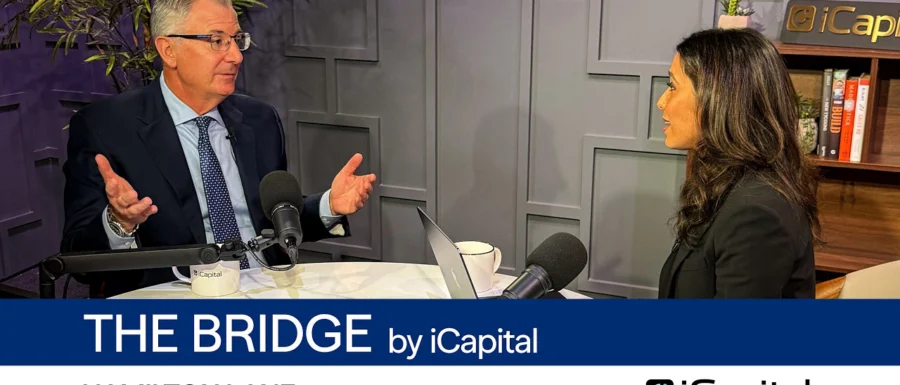


They explore why rising Treasury yields may reflect stronger growth expectations rather than inflation fears, how changing Fed dynamics are contributing to market volatility, and why commonly cited inflation measures may not tell the full story. The conversation also examines housing affordability, supply constraints, global trade shifts, and what investors should watch as governments, central banks, and businesses navigate a rapidly evolving economic landscape.
The Bridge EP 25, Stephen Miran, Hudson Bay – Transcript
Stephen Miran (00:00:00 -> 00:00:06)
What’s driving inflation and how sticky do we think that those drivers of inflation are going to be?
Sonali Basak (00:00:06 -> 00:00:22)
It’s a really interesting time to talk to Steven Miran, who was previously the chair of the Council of Economic Advisors and on the Federal Reserve Board of Governors. And if it were him, he says he would’ve done it differently when it comes to the interest rate strategy in the U.S. right
Stephen Miran (00:00:22 -> 00:00:28)
Now, you know, it’s pretty clear that hiking to keep the long end down, I, you know, I don’t, I don’t view that as a successful enterprise.
Sonali Basak (00:00:29 -> 00:01:24)
So, we’ll find out what he thinks about the underlying economy. Thank you all for having us. This is also a live taping of our podcast for iCapital called The Bridge. I hope you check it out on YouTube. Spotify, Apple. Steven, thank you so much for joining us. You’ve returned to Hudson Bay after a tour in Washington, CEA, Federal Reserve, as we were just talking about, you know, um, it’s hard to not start with the current interest rate environment. Before we go to what the Federal Reserve looks like and is doing right now, I do want to get your opinion on what is going on in the long end of the curve, because arguably, this is the much more important benchmark to be looking at.
Stephen Miran (00:01:25 -> 00:03:00)
Sure. So first of all, thank you for having me, and thank you all for, for being here. Um, so I, I think it’s useful to divide the, his recent history in the long end is two periods. And first one would be the period up to the most recent, uh, Federal Reserve decision where they raised interest rates. And if you do this division, the two, two segments of time, um, really up to mid-September, the increase in bond yields had been driven entirely, almost entirely by an increase in growth expectations. So, if you divide long yields into three components, the growth component, the inflation component, and the risk premium component, and of course in, in, you know, treasuries, we call this term premium the three components, right? Inflation had been very well behaved. In fact, uh, you know, it was extraordinarily well behaved. There was no doubt whatsoever in the, in the, in the inflation market’s mind about the path of inflation returning to the fed’s target. In coming months and years, uh, the, um, risk premium or term premium component had also been very well behaved. And in fact, it was at slightly lower levels than it was at the start of the year. And all of the increase had been in, in the real growth component. Now, to me, that’s actually a really good growth story, right? That’s a good increase in bond yields and not an increase in bond yields that I think that needs to be fought either by the monetary or the fiscal authority in terms of the level. Because if bond yields are going up, because growth expectations are going up, that’s a great fiscal story. When the economy is doing well, revenues grow faster than outlays and they grow faster than the increase in interest payments, and that brings the deficit down over time now. So, I think it was actually a really good story, the increase in bond yields up to
Sonali Basak (00:03:00 -> 00:03:06)
And we’ll double click. To be clear we’ll double click on inflation and term premium, but growth was good. What’s happening now?
Stephen Miran (00:03:06 -> 00:04:26)
Well, so I think if you look at what’s happened since the Fed, I think we, since the Fed meeting in September, I think we’ve got a new reaction function from the Federal Reserve Inflation data had been coming down relative to where they were in the previous months. The inflation data last few months have been actually quite good. We got further downward revisions to inflation, which were also well known to be forth right around the corner at the time of the September meeting. And despite the inflation data coming down and the inflation data looking better, normally a central bank would become more dovish into that. But this central bank actually became more hawkish into the inflation data coming down. And so, what we’ve got is a completely new reaction function, uh, at the Federal Reserve where the, you know, the old reaction function from the Powell Fed, I think is no more. And we’ve got a new reaction function, uh, from the new Federal Reserve, but we don’t know what it is yet. So, we don’t know, um, what the new reaction function is. Chairman Warsh is, uh, famously opposed to providing forward guidance, famously opposed to telling the market what’s going to happen next? I support, you know, I support that withdrawal of forward guidance. But the flip side of that is the increased uncertainty over exactly how monetary policy gets made and exactly how to map economic data into a policy outcome means the additional uncertainty over how monetary policy gets made, gets reflected in higher uncertainty, higher risk premium in the yield curve. And so, I think what we’ve seen since the September Federal Reserve meeting has been an increase in term premium related to this uncertainty.
Sonali Basak (00:04:26 -> 00:04:53)
That’s kind of a very large thing for you to say, which is why I am double clicking on this. Um, for you to say that the term premium is rising and that is what’s creating, um, more of a selloff in the long end of the yield curve, what stops that? Do you think that that means that the long end of the curve is a, beyond the Fed’s control, beyond the Treasury’s control and, and has kind of a, a very meaningful unknown upper bound on yields?
Stephen Miran (00:04:54 -> 00:06:56)
Well, so I think the, I think the expression beyond the control of is kind of a, is kind of a loaded one. It’s not how I would really look at it. The, the bond yields will respond to actions taken by the Treasury and the Fed. And as I said before, up until the middle of last month, I think the increase in bond yields was entirely benign and not one that needed to, not one that needed to be, too, to be, uh, you know, aggressively, aggressively fought. Um, the, you know, I, I think as we learn more about the new Fed’s reaction function, I think that uncertainty premium will come down. However, it’ll take some time. Now, of course, I, as I said, I support the withdrawal of forward guidance and the, and the reduction in the Fed telling the market exactly what’s going to happen in each meeting, because I think that uncertainty is helpful to the Fed to have flexibility to change policy when the economy changes. And I think it’s helpful to mark, for the market to have to do its own risk management as opposed to just outsourcing that to the Fed. Because if the Fed gets it wrong, as they did in ‘21, ‘22, you get situations like Silicon Valley Bank where the Fed told them, Hey, rates will be zero forever. And as a result, they basically loaded up on all that bad interest rate risk. So, I think forcing that risk management back into markets is a, is a helpful thing, as well as giving the Fed, uh, flexibility to operate. Now, the flip side of additional uncertainty is the higher risk premium, but to me, in my mind, if you’re going to have tighter financial conditions as a result of more uncertainty over how monetary policy gets made in equilibrium, that’s just going to lower the neutral interest rate. Because if the Fed is targeting inflation and unemployment at a given level, and then you have a tightening of financial conditions due to something like uncertainty changing, right? Then the Fed’s ability to achieve inflation and unemployment at the same way is going to be altered. And so, the Fed would be offsetting that with a lower, with a lower policy rate. So, to me, you know, there’s two sides to this coin. One is, one is higher term premium, the other side of it is a lower neutral rate and I think that’s a tradeoff that that, that I support taking. Um,
Sonali:
But you’re
Stephen:
But there has been a change since the September FMOC meeting when you look at the data,
Sonali:
yeah
Stephen:
you look at the New York Feds benchmark term premium, uh, term premium estimates, it was pretty flat through the year, uh, until the middle of last month.
Sonali Basak (00:06:57 -> 00:07:19)
Um, I’m going to try to avoid making you make a long-term interest rate call, but , but in the short term, it’s interesting because before the most recent Federal Reserve meeting you had said that you believe that the Fed shouldn’t cut rates. And you’re saying now that the neutral rate is lower, but actually the neutral rate was projected to be higher in the most recent sum summary of economic projections. What’s going on? Uh, bring me into the divide.
Stephen Miran (00:07:19 -> 00:07:24)
Yeah, so just, just to, just to clarify, I thought they shouldn’t hike rates, and I still think
Sonali Basak (00:07:24 -> 00:07:25)
yes, I’m still cutting term
Stephen Miran (00:07:25 -> 00:09:52)
And I still, and I still think they shouldn’t hike rates. I think the inflation data have been doing well in the last few months. They’re on track to converge 2% over to converge 2% over time. The key thing here is that monetary policy works with lags. If you change interest rates today, it doesn’t hit the economy for 12 to 18 months from now. This is Milton Friedman’s famous fool in the shower story where somebody goes into the shower, turns the water on, and you know, it stays cold for a few minutes. It takes some time for the water to heat up, uh, stays cold for a few seconds, takes some time for the water heat up, but because the water stays cold, the person turns it all the way to the right. And then when the water finally does come out warm, it comes out scalding hot. And so, the person turns it to the left, takes a few seconds to cool down, still scalding hot, turns it all the way to the left, and then it comes out ice cold again. And so, the point is that if there’s a lag between when you turn the shower dial and when the water gets hot, you need to sort of just wait and wait for the water to change temperature. It’s the same thing with monetary policy. If you move interest rates, it takes a year to 18 months to actually hit the economy. And so that’s why you historically would look through the type of supply shock from energy that would boost inflation because it boosts inflation immediately. It doesn’t, you know, if oil prices go up, gas prices move up very quickly, they don’t move up a year from now, right? Whereas the labor market, if the labor market tightens up, wages are a bit of a lagging actor. And so, when the labor market tightens up, you get inflation a year from now, right? And so that’s why you’d be very responsive to the labor market as a monetary policy maker, but less so to energy markets. So back to your question about neutral rates. I think neutral rates actually have been moving up a little bit over the course of this year, which is why I’ve been calling for fewer cuts than I was earlier this year. And I think a lot of that is related to the AI build out. There’s a huge amount of borrowing related to building AI due to the investment, the reduction in free cash flow at the tech companies, and this increased need for investment funds works in the models to boost the neutral rate, right? I think that’s very real right? Now, the flip side of that is that this term premium has been going up lately. And, and, you know, we’ll see if it stays elevated. We’ll see if the Fed provides a little bit more clarity over how they’re mapping economic data into monetary policy. But from my perspective, if the inflation data get better and inflation comes down, which is what happened over the summer, and the central bank becomes more hawkish, those things are moving in the opposite direction, and usually they move together. So, the question is what are the data that the Fed needs to see in order to hold, in order to hike? I think we need a little bit more clarity over that for the term premium to settle down.
Sonali Basak (00:09:53 -> 00:10:27)
So, to recap, in September, you believe that they should still cut, they went off and did hike, and they, you know, through the dot plot, you could see that there are more hikes really baked in. You also believe that, you know, there, there’s a really meaningful transition mechanism that takes a long period of time. So, say they hike again, right? What is the risk there, in your view, in terms of how long that takes to feed through the economy and what really is impacted, right. We’re still pretty close to record highs on the S&P 500. I mean, it’s not like we’ve seen anything break yet.
Stephen Miran (00:10:28 -> 00:10:37)
So, so to be clear, I don’t think I would’ve voted to cut at the center meeting. I probably would’ve voted to hike. And the reason why I would’ve
Sonali:
really,
Stephen:
sorry, sorry.
Sonali:
See, what I’ve mean, it’s hard to
Stephen Miran (00:10:37 -> 00:11:57)
I would’ve voted to hold. I would’ve, sorry, you’ve got, I’m all tongue tied. Um, I would’ve voted to, I would’ve voted to hold at the September meeting. And the reason is that at, we were talking about bond deals, and there’s been a lot of volatility there. And this is my view about what’s driving the bond yields. Nevertheless, in the interest of, uh, caution, I would’ve voted to hold not wanting to sort of rock the boat anymore because things could get a little bit unhinged financial markets or prone to what economists call excess volatility. Uh, and so I, I wouldn’t, I wouldn’t have seen a reason why you couldn’t have waited a little bit to sort of, for markets to settle down a bit. Um, but I do think, you know, it’s pretty clear that hiking to, hiking to keep the long end down, I, you know, I, I don’t, I don’t view that as successful enterprise. Um, it’s clear that it hasn’t happened. Uh, part of the reason why it hasn’t happened is of course, if you are hiking enough to induce a recession, you will get the long end under control. That’s not what’s happening. If you’re just increasing the short end of interest rates a little bit, and your marginal buyer of treasuries is now somebody who is sensitive to those short rates, it just gets passed through to the long end. Um, you’ve raised the funding cost for the guys that are going to be buying, uh, buying bonds. So, I don’t view that as a, as as a successful enterprise. So, I wouldn’t have, have voted to hike. I would’ve, I would’ve voted to hold if I’d been there, but, you know, of course I wasn’t so,
Sonali Basak (00:11:57 -> 00:12:19)
So, the inflation backdrop, there are a lot of investors and strategists out there who would say, well, wait a minute. You know, even if you believe that inflation is coming down, that there is an element of stickiness to the core prints that are impossibly hard to ignore at this point in time. Um, you know, what, what do you say to those people, right? Because you have plenty of people who don’t agree with you right now on that.
Stephen Miran (00:12:19 -> 00:15:44)
Yeah, I think it’s important to, to sort of ask what’s driving, uh, inflation and how sticky do we think that those, that those drivers of inflation are going to be? If you look at core PCE, there’s no question that it’s elevated that it’s materially above the Fed’s. The Fed’s target. If you look at core CPI, it’s the lowest level since March of 2021, right? It’s undone almost the entirety of the boost to inflation that’s occurred as a result of the pandemic and, and everything that’s happened afterwards. Uh, now, you know, the way that CPI is calculated, there’s an upward bias in CPI of about four tenths of a percent due to the way the weighting methodologies are. So, on a historic average, if CPI were that level, core PC would be at 2%, right? The deviation is due to the inversion of that relationship is due to a small number of components that are extraordinarily out of whack historically. Now, one of those has been the portfolio management services, which until very recently just tracked the stock market higher. So, the stock market moves higher, and that mechanically gets written down as inflation, which to me is, is nonsense. Another one has been ai, right? AI has driven up some components of prices like memory prices, uh, its memory prices, it’s driven up some software prices as well. Um, to me, there’s also a very large element of measurement error in that component as well. It gets into some, you know, I’m happy to go into as much detail as you want on this. I’ve made a very large study of these things, but basically the way that the surveys work is that things get up weighted by 35 x and PCE versus CPI because of the way that, sorry, the software component, software and accessories, including the flash drives, gets up weighted by 35 x in PCE relative to CPI, just because of different data collection methods. And if you take the data at face value, they imply that a typical family is spending about $500 a year on flash drives, which I don’t think is really the case. I think that’s, that’s a, that’s a statistical anomaly. That’s a result of the data collection method that doesn’t reflect what people actually buy. And so, these two categories alone going into, uh, the September meeting, we’re adding 70 basis points to core PC, right? So, of that 1% inversion plus to, uh, the CPI/PC relationship, about seven tenths of a percent was due to these two categories alone. Now, BEA, the Bureau of Economic Analysis recognized that there’s very significant measurement error here. And they recently took attempts, took steps to try and address it, and those two categories, they made some revisions. And those, those categories ended up reducing their contribution to core PC from about 70 basis points to 35 basis points, right? So, they cut that in half. Uh, to me, that’s a good start. It’s not enough. So, the question is, what’s driving inflation higher? If I look at the portfolio management bias, I don’t see that necessarily as recurring. If I look at the software and, and accessories contribution from ai, look, the AI investment, um, investment surge is really big, and it seems very durable that I could see continuing to continuing to persist. And so, the question is, given monetary policy lags, given that monetary policy affects the economy a year or two year and a half from now, where do you see these components that are contributing excess inflation a year to a year, year and a half from now? Do I see oil and oil pass through into core raising prices a year from now? Are airline fees going to be going up at the start of 2028? I don’t see that likely to be the case.
Sonali:
So even
Stephen:
portfolio management fees, no. Software accessories. Yeah, probably.
Sonali Basak (00:15:44 -> 00:16:20)
So, we’ll talk more about AI in a second and we’ll talk more about, you know, one of the largest components here that the, that real Americans feel it’s, it’s housing. Before I get there though, I do want to make sure that I’m properly understanding your view on this, because on oil, right?
Stephen:
Yeah.
Sonali:
Um, on one hand you can completely understand, um, you know, the hesitation on hiking into an oil shock, right? On the other hand, you have diesel above $6, right? That feeds through, it’s hard to see that not feeding through the economy. And so even if you don’t think 2028 is going to be starting with that type of a pass through, I mean, isn’t it the case that it could get ugly before it gets better?
Stephen Miran (00:16:20 -> 00:18:26)
Yeah, so, so there, there absolutely can be some pass through from diesel into, in, into the rest of the core. That’s something that I think very much can happen. However, I think it’s going to be limited. And part of the reason it’s going to be limited is because the labor market is just not very tight. So, if, if you look at what happened with, with claims of, uh, of tariff pass through, right? I think that there’s no question that what’s been going on in international economics and the reconfiguration of international trade has had some effect on inflation. However, the predictions that it was going to lead to very severe inflation didn’t pan out, right? And so, for example, um, you know, you had some very prominent, uh, economists, um, you know, sort of say that we’d have an inflation spike worse than we had with COVID. Uh, which of course, you know, nothing like that remotely happened. Um, one of the reasons why tariff inflation has been, uh, not, not super high, has been because tariffs are actually a very small part of the economy. They’re only, you know, 11, 12%. Another reason has been because the labor market was not in a, was not overheated in a way that allowed the, those prices to be passed through and reverberated throughout the economy, right? And so, what you had is decreasing margins at the importer level. I think you have a sort of similar situation today where you’ve got wage growth that is just not strong enough for increased diesel prices to find their way into large scale pass through into the economy. If you had a situation like 2021, 2022, where the central bank had rates at zero and was doing $120 billion a month of QE, and the, and the government was tossing trillions of fiscal dollars into the economy, uh, into an economy that was quite healthily opening up and growing on its own, you have situation in which supply shocks can really revert through the economy, right? And so, supply shock in 2021, ‘22 can ricochet throughout because it’s interacting with monetary policy, it’s interacting with fiscal policy. You don’t have that. Now, monetary policy is probably a, let’s call it roughly neutral, maybe it’s a hair restrictive and fiscal policy is also similar, you know, let’s call it roughly neutral. It’s nowhere near, uh, what they were in ‘21,’ 22.
Sonali Basak (00:18:27 -> 00:18:44)
So, uh, it’s interesting that you mentioned, uh, fiscal versus monetary, because I was going to ask you how you felt about the, the ways that the long end could be controlled. What do you think about what the Treasury’s doing in terms of using bills to finance buybacks of the long end?
Stephen Miran (00:18:44 -> 00:19:25)
Yeah. So, as I said before, you know, really until, um, until the, the, the Fed meeting last month, I think the increase in interest rates was driven by improving growth expectations, right? And that’s a movement to a new equilibrium that’s a result of actually, you know, good things in the economy. If the market is moving to a new equilibrium, it would take a heck of a lot of firepower to prevent it from getting there, right? And what the Treasury is doing is a few billion dollars a month of extra purchases, right? For comparison, the Fed did a hundred, as I said before, the Fed did $120 billion a month of QE every month for many months in a row. This is such that it added up to trillions, right?
Sonali Basak (00:19:25 -> 00:19:27)
But this is a little philosophical, isn’t it? No, no,
Stephen Miran (00:19:27 -> 00:20:02)
No, no, it’s not. Because if you think that treasury is trying to actually change the new market equilibrium, it needs trillions of dollars more than it’s engaged. So, what I’m saying is that it’s not what Treasury is trying to do. What treasury is doing is minor interventions that add liquidity to the most illiquid part of the yield curve. And when they started this in late August, it was the most illiquid time of year. So what treasury is doing is not getting to some new equilibrium level. What treasury is doing is it’s altering the path by which you get to that new equilibrium level, in my opinion. So, it’s reducing volatility in doing so.
Sonali Basak (00:20:02 -> 00:20:18)
While it does that, though, you do have a Fed chair that not only is he against the idea of forward guidance, he’s against the idea of expanding the balance sheet of the Federal Reserve. So, it’s a little strange to see the treasury buying at the long end when you know you’re thinking that QE might be a thing of the past.
Stephen Miran (00:20:18 -> 00:20:29)
Well, I mean, I don’t see those as inconsistent because it’s not the Fed’s balance sheet that’s being used, it’s the Treasury’s balance sheet, and it’s not even an expansion the size of the balance sheet, it’s just swapping one, you know, maturities of different obligations for each other.
Sonali Basak (00:20:29 -> 00:20:32)
Like fiscal interventionist versus monetary interventionist?
Stephen Miran (00:20:32 -> 00:21:03)
No, look, the maturity distribution of public debt, the distribution of maturity, dates of debt held by the public is the core of fiscal policy, right? Like that is the core of the Treasury’s, of the Treasury’s policy mandate. Uh, you know, and indeed this is one reason why the Fed should not get involved in QE, is because it interferes with fiscal decisions and it blurs the lines between monetary and fiscal policy and leads ultimately to some significant, you know, existential questions about the Fed. So that’s, that’s a good argument for the Fed not engaging in QE, but this is something that Treasury should be doing.
Sonali Basak (00:21:04 -> 00:21:13)
Do you worry though that there’s so much issuance that is front loaded and this uncertainty around the long end of the curve is making it harder for the Treasury to then term out the debt, right?
Stephen Miran (00:21:14 -> 00:21:49)
Well, um, you know, I don’t know that that’s a, that that’s an act of policy goal. I mean, I think you’d have to ask Treasury whether that’s something that they want to do or not. But like I said before, my interpretation of what Treasury’s been doing with buybacks is to add liquidity, is to reduce volatility to the most illiquid part of the yield curve and make it less likely to be a one-way trade in which excess leverage accumulates because as I said before, financial markets are prone to excess volatility. And if you let all of this leverage accumulate, and the be trade becomes too easy one way, it overshoots and then it snaps back. And that’s not good for the real economy. So, I think the provision of additional liquidity to slow things down is helpful.
Sonali Basak (00:21:49 -> 00:22:28)
So, um, back to the real economy for a second here. I could talk about the Treasury versus the Fed all day long, but the, uh, the real economy, I really want to get your views on the housing market.
Stephen:
Sure.
Sonali:
I think that there are differentiated, and I tend to agree with a lot of them actually. The, the housing market in particular, you’re watching mortgage rates start to spike. You and I kind of talked about this a few months ago, as you saw, uh, people start to sell homes. Is that price lower or is it higher, right? Um, that, that’s the big question that’s underpinning this housing market for me. Um, we’ve had this rapid runup in asset prices in a zero-rate environment, and now we’re figuring out, um, you know, what the cost of debt is really worth for a real household.
Stephen Miran (00:22:29 -> 00:22:57)
It’s hard to see it doing well with higher interest rates, right? Um, you know, and it’s, it’s, it’s, it’s tough to see it doing well. I mean, I think the housing market has been a persistent source of disinflation as market rents have been growing at a 1% or lower rate for about three years now. And I, I see that continuing to be the case. Um, it’s easy to imagine it, you know, becoming a little bit dicier even, uh, with, you know, with, with higher yields. I mean, if you’re in a situation in which you’ve got to sell, I think, uh, you know, you could be in some trouble.
Sonali Basak (00:22:59 -> 00:23:07)
What does that mean for kind of the overall inflation story, given everything we know about what shelter means for the cost of goods for an American household?
Stephen Miran (00:23:08 -> 00:24:58)
Uh, one interesting thing about shelter in the way that inflation is measured is that it is the most persistent part of the inflation index. And that’s because it takes a really, really long time for market rents to feed through into the, into the official data. The reason is that the official data track rents that are paid and not market rents that you see on the screen, and that matters because leases get renewed once a year, once every two years. And so, if market rents go up and you don’t renew your lease for a year, you don’t experience that for until a year has passed, right? So that’s why there’s a really, really long lag between market rents and the measured data. And this is one reason why inflation in ’21, ‘22 was always going to be persistent, was because the Fed was still buying mortgages, home prices were up 20% year over year, and the Fed was still buying mortgages, right? Which is, you know, 20% a year, not enough, right? More credit into the housing sector. And so that was always going to be persistent because of the way that this passes through into the data takes years. And so, as I said before, market rents have been growing at a 1% rate for three years now, measured shelter inflation is closer to 3% because it’s still reflecting the catch up that occurred years previously. We’re still looking at the, the housing market of 2023, 2024, even though it’s almost the end of 2026 now. So, when you think about things now, right? You’ve sort of got this long period of market rents growing very low, that’ll consist continue putting disinflation into the measured data. And I think, you know, maybe rents probably will firm a little bit, but it’ll still take a long time for it to feed through. You’ve still got this disinflation of the pipeline from that, so it could push inflation higher in, you know, ‘28, ‘29, a little bit from here. But I think that given the disinflation we’ve got in store already, I think it’s very, you know, it’s, it’s very modest. And then on top of that, if you’ve got the sales market under pressure, I’m not sure how that interacts.
Sonali Basak (00:24:58 -> 00:25:12)
And just very quickly here on the housing market, because it’s not like we’re calling for like a 2008 style housing crash, right? But, you know, there, there’s a lot of supply that’s still needed for this market, but, you know, what are the issues that have perhaps been masked as the transaction volume has been muted?
Stephen Miran (00:25:13 -> 00:26:08)
Yeah, I think that there are definitely are parts of the country that still needs supply and, uh, the higher interest rates are going to actually impede that supply coming online. Um, you know, the thing about housing is, as people say, it’s always a local market, right? And there definitely are parts of the country that are still supply constrained and they need that supply. Now, I think the best thing to do is actually to ease regulations. Now, unfortunately, um, you know, there are building codes all around this country set at the state and local county town level, uh, that make it more difficult to build, right? They impose huge regulatory costs, um, on building homes, everything from, you know, uh, from, you know, carbon emission restrictions to zoning rules to everything, right? And that reduction in supply really has been a primary driver of, of housing affordability problems. And so, the primary solution here is actually not monetary, it’s to ease the supply constraints. But that’s a state and local policy decision, and it’s not a federal government decision.
Sonali Basak (00:26:08 -> 00:26:44)
So, we only have a few minutes left here. I really do want to talk on a topic that fascinates me the most. And it’s not fiscal, it’s not monetary, it’s totally just artificial intelligence. No, shocker, . The, the topic of the year you were at the Federal Reserve, when there really started to be meaningful questions rising about financial stability, the risks that AI poses, um, you know, increasing cyber incidents and agents gone rogue. How concerned are you about our financial system? And its guardrails against all of the above with artificial intelligence.
Stephen Miran (00:26:44 -> 00:27:32)
So, what concerns me is the cybersecurity element of it, right? Is that we’ve gone, you know, we’ve gone completely from a paper-based banking system and financial system to a digital based financial system. And that’s only as secure as the encryption and passwords that, um, that protect it. Now, thus far, you know, we seem to be in a situation in which the frontier models are made available for improving cybersecurity before they’re made available to people who would use them for more nefarious purposes. And as long as that continues, uh, you know, it sort of, it, it feels pretty good. Um, however, this is cybersecurity remains I think one of the, one of the big problems, but this is not a financial specific risk. This is just a risk of the financial system as it’s to everything else. And it’s one that I, I think policy makers will continue in investing a lot of effort into.
Sonali Basak (00:27:32 -> 00:27:32)
Right, are we prepared?
Stephen Miran (00:27:34 -> 00:27:44)
Uh, you know, I think that they do a pretty good job trying to keep on top of the developing, developing cyber threats, but the, you know, the, the amount of effort that needs to be invested in this is only going to increase, right?
Sonali Basak (00:27:44 -> 00:27:50)
I mean, agentic solutions are really just getting started in finance. We, we don’t know yet. I feel like a lot of the future
Stephen Miran (00:27:52 -> 00:27:53)
. Yeah. I wish I did,
Sonali Basak (00:27:53 -> 00:28:12)
Uh, before I, uh, let you go. Um, it, it would be a missed opportunity to not ask you about the tariff policy today. Um, and, and, you know, the relationships that are forming across North America, uh, what they look like in the future, in particular, um, the U.S. and Canada, how does this all play out in your view, as somebody who has worked so closely on tariff policy for so much of your career?
Stephen Miran (00:28:13 -> 00:28:29)
Sure. So, uh, you know, it’s a, it’s a really interesting case, um, and it’s one in which the, the two sides, um, ultimately need to come together and, and, and find a solution because not finding a solution isn’t, isn’t really good. The,
Sonali Basak (00:28:29 -> 00:28:31)
What’s an ideal solution in your view?
Stephen Miran (00:28:33 -> 00:28:41)
I think you need a solution that isolates, uh, North America from, uh, from predatory foreign supply chains.
Sonali Basak (00:28:41 -> 00:28:45)
So, do you think the U.S. and Canada can get it together enough to, to build that kind of a coalition?
Stephen Miran (00:28:46 -> 00:28:54)
I think once there’s, um, some, once there’s, uh, you know, some, a little bit of economic pain that sort of convinces everybody to work together, I think that’ll happen.
Sonali Basak (00:28:54 -> 00:28:55)
Economic pain for who?
Stephen Miran (00:28:55 -> 00:29:04)
Well, I think that, uh, you know, it’ll probably be more incident on the Canadian side than the US side. I mean, every single Canadian province trades more with the U.S. than it does with the rest of Canada.
Sonali Basak (00:29:04 -> 00:29:12)
Do you think Americans are going to have to live with some more inflation as we figure out tariff policy globally?
Stephen Miran (00:29:13 -> 00:29:25)
So, I’m still not of the view that tariffs drove a lot of inflation, because I think there were a lot of things going on in international trade and, you know, the supply chain, uh, reconfigurations date back to the pandemic environment in which we had sort
Sonali Basak (00:29:26 -> 00:29:26)
Right, it’s not just tariffs.
Stephen Miran (00:29:26 -> 00:30:01)
It’s not just tariffs, it’s, it’s, it’s supply chain risk, it’s political risk, it’s wars, it’s export controls. There’s so much going on that has driven changing good prices and good driven and changing supply chain patterns. That to me, it doesn’t, it doesn’t make any sense to sort of say it’s all tariffs. And I think that if I compare U.S. goods inflation to goods inflation internationally and it were tariffs, I think I would be able to pick the U.S. out of a lineup. And I can’t do that. So, you know, I do see inflation a good path. I think we’ve gotten good data recently. I think we’re going to continue to get good data on inflation. Uh, barring additional supply shocks. You know, you can always have new supply shocks.
Sonali Basak (00:30:02 -> 00:30:21)
Stephen, uh, I’m just going to end where we started. We were talking about the long end of the curve, and we were talking about the Fed’s, uh, reaction function, right? Um, do you think when we put this all together that what it really means that the end of the day is that there is just more volatility to come for investors moving down the road here?
Stephen Miran (00:30:22 -> 00:31:03)
Uh, you know, I think we’re living in a world in which we’re trying to figure out how to make things sustainable, right? That means global imbalances, that means fiscal imbalances, that means trade relationships, that means supply chains, uh, with choke points. And as the world tries to figure that out, right? And across many different countries and many different economic domains, it has some economic knock ons and, and and side effects. Has that been something that has been driving, uh, that has been driving inflation data over the last few years? I think that’s absolutely, you know, absolutely, you know, an admissible claim. Is it something that’s going to continue? Again, I think it is something that is going to continue a little bit.
Sonali Basak (00:31:04 -> 00:31:10)
Stephen, thank you so much for being here today. Thank you all for having us and looking forward to spending time with you. Thank you.
Recorded on October 7, 2026
END