

From the arms race driving AI infrastructure spending to the disciplines that separate durable portfolios from reactive ones, Sechan offers a grounded framework for navigating elevated valuations alongside constant macro noise. He makes the case that quality, diversification, and opportunistic allocation still win across cycles, and that the next major risk is almost certainly not the one investors are focused on.
The Bridge EP 06, Rob Sechan, New Edge – Transcript
Sonali Basak (00:00:01 -> 00:00:32)
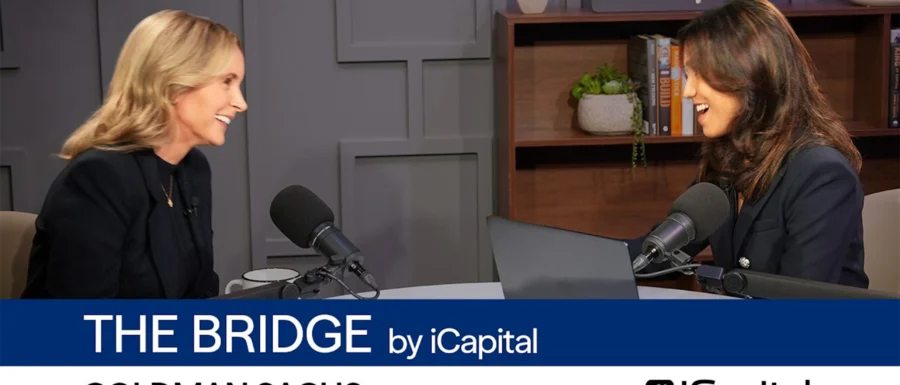
Welcome to the latest episode of The Bridge by iCapital. I am Sonali Basak. I am iCapital’s Chief Investment Strategist, and this is where we bridge you to the top investors in the world and the greatest voices in finance. And today we are joined by Rob Sechan. He’s the founder of NewEdge Capital. Thank you for joining us here because we’re sitting here at Goldman Sachs. It’s really a conversation about the wealth management industry. But it’s a complicated juncture in the macro while we’re standing at record heights in the S&P 500.
Rob:
Mm-hmm .
Sonali:
What’s on your mind, Rob, these days?
Rob Sechan (00:00:33 -> 00:03:09)
So, principally I run the business day to day. We have a wonderful, fantastic investment team that gets to think about all the things you’re talking about. I obviously do. I started my career as an advisor and still maintain clients on a day-to-day basis so, I know the things that they’re, they’re thinking about. And, uh, you know, right now on the business side, we’re thinking about how do we grow the business in an intelligent way and continue to support elite advisors wherever they are on their journey. Um, and right now that’s employing great technology, surrounding them with wonderful and intellectual capital in wealth strategy and investments. And then ultimately giving them access, uh, to unique and differentiated products, services, solutions. And, uh, you know, if you can do that, it creates some virtuosity that ultimately, uh, leads you to attract more and more advisors. I think we’ve been really successful at that in the last five years, growing from four to $5 billion all the way up to 100 plus billion dollars. Uh, I would argue we’re one of the faster growers out there. I’m very proud of that. The, the, the people that we have are exceptional. Um, from an investment standpoint on a day-to-day basis, we’re obviously looking at this disconnect between where valuations are and where enthusiasm is and what’s happening in the world. And, uh, you know, you can’t talk about what’s happening in the world, uh, without talking about what’s happening in the United States. So, the United States is kind of this island of hope, this island of prosperity that is not feeling the same strains and stresses that the rest of the world is. And so, you constantly watch for, is that going to spill over into what’s happening here? And ultimately something’s going to knock us off this trajectory. At the same time, I also worry about the narrowness of the market and when we’re going to start to see, uh, some broadening out. Now we’re seeing it in earnings, but we’re not seeing it in price performance, nor has it meaningfully, uh, impacted earnings enough, right so, I do believe in AI, we’re using AI very effectively in our company, and I see the productivity gains for us. I can only imagine in different industries where there’s, uh, force multiplier type effects that will, uh, will drive that forward. So, I spent a lot of time thinking about a lot of things.
Sonali Basak (00:03:10 -> 00:03:39)
Yeah. Well, this is where I wanted to go with this, because if you think about the, the clients that you do service at NewEdge yourself, right? Among the largest pools of capital, and, uh, want to get into how they’re thinking before we get to strategy at NewEdge and, and your plans for growth and scale. Um, but when you are a high-net-worth investor, ultra-high net worth investor, you look at this concentrated market, you, um, you want to diversify, I would imagine aggressively , no?
Rob Sechan (00:03:39 -> 00:04:01)
Well, you do want to diversify, but when you look at what’s happening fundamentally in these businesses, what’s happening kind of should be happening. They are driving everything right now. So, it starts out with this foundational layer that is being built out, and then the use cases will get built on top of it.
Sonali Basak (00:04:01 -> 00:04:04)
Do you mean the AI story that is driving this market?
Rob Sechan (00:04:04 -> 00:06:22)
Yes,
Sonali:
It’s hard to diversify.
Rob:
And the companies that are, that are laying the groundwork for this, the Nvidias of the world and all the hyperscalers and the like, and you know, at, at the same time, you got to wonder whether the market accepts them going from cap light businesses to cap heavy businesses, meaning they’re having to invest. And this is an absolute arms race. My personal belief is if you don’t fight in the arms race, you’re going to come be behind in the war. And so, they need to do it. And I realize they get challenged episodically. Meta right now is a great example of a, of a company that’s being challenged because of their spend. You can always pivot spend, which you can’t pivot is when you fall behind. So, I think they’re doing all, all, all these companies are doing the right thing. I do think that ultimately though we need to see the, the application and the benefits of that spread out. I believe they will. I think we need to have the energy infrastructure to support that. I believe we will. I know that a lot of people are worried about, you know, what happens to the jobs market, right? As a result of all this AI happening and what happens to entry-level white-collar jobs? We are great at retooling. There were no social media influencers before the internet . There were no web designers before the internet. And so, the economy is so dynamic, I can’t help but be enthusiastic about it. But I also, because I I’ve lived this a long time, know that sometimes we pull forward enthusiasm and price. And so, you have to look for inflection points. You have to look for changes in the rate of change. I, I, you know, we at NewEdge have brought on people far smarter than me to look for those inflection points, like Cameron Dawson and, and Brian Nick and Jay Peters. Um, they’re exceptional. And hopefully we can identify when the risk becomes too great, but right now, we’re comfortable that the concentration is well supported and hopeful that everything that’s built on top ends up being a, a force multiplier to that, that build out
Sonali Basak (00:06:22 -> 00:06:46)
What does it look like underneath the surface. It’s interesting to hear you say, well, yes, everything’s still underpinned by ai, so people want more exposure to it.
Rob:
Mm-hmm .
Sonali:
But what are some of the best ways? Because when we go around the country, we talk to a lot of clients, what’s hard for us is to listen to them say, I want more of the five big names that have already gotten large. How do you position your clients for the investment opportunities of tomorrow?
Rob Sechan (00:06:47 -> 00:09:07)
we definitely own those names. Not every single one of them, but we do own them. And we’ve only bought them when they were at reasonable prices, so we’re happy to hold them because we’re tax efficient investors. And so, uh, buying them at the right time when, when they, when they fit within our valuation parameters, and then holding them over time makes a lot of sense to us. We also believe that the, the semi theme is, is really strong. That’s outside the, the hyperscalers. We own a lot in that space and think that that was a great way to get that exposure. But then there’s, there’s other categories of beneficiaries, and if you can just look for quality companies, and everybody says that, but these are companies that have great profitability, high return on invested capital, they’re trading at reasonable valuations. Who do you think is going to be able to make those investments to use AI and become productive using it? It’s, that’s not the only story we do, there’s great businesses outside of AI. Um, we just, we just looked at our five-year track NewEdge is basically five years old. And we are both a wealth and asset manager. so, if you look at our assets, we’re probably running directly, uh, somewhere about six to $8 billion of the hundreds that we do. So, we allocate more than we run, but of those that we run, we are top 20% in every category in which we run money in, and top 1% in three of those. So, we run in five categories. So, we believe we have a, a secret sauce in terms of how we fundamentally value businesses that don’t need to reside in, in the kind of hyperscaler or semi space. We’ve, we’ve had success in energy, we’ve had success in healthcare, um, and international, which has, uh, you know, been a market that’s been challenging at times and has recently resurged with repatriation of assets back, uh, you know, to, uh, to, to those countries. And, um, I think if you follow a model of quality, you’ll be able to participate no matter kind of which cycle you’re in.
Sonali Basak (00:09:15)
So, I do want to get into this business model, uh, uh, the asset and wealth a bit, because I want to understand for the funds that you do manage, what would you say your edge is?
Rob Sechan (00:09:17 -> 00:09:17)
Uh,
Sonali Basak (00:09:17 -> 00:09:18)
Your new edge?
Rob Sechan (00:09:18 -> 00:10:33)
Yeah. So, listen, it, it, it’s, it’s a marriage of technology with great intellectual capital. Um, we are quantum mental investors, and the math never lies. Okay. So, if you can identify trends in the math, we are able to use those to help us have a decision framework and then put an intelligent overlay on top of that to drive the decision process. I think you also have to be fee efficient for clients, because this is effectively beta, right? So, if you’re going to charge more than the ETFs are, you have to bring some level of value, right? [10:08] And the value that we bring, I think is, is rooted in technology and execution on top of that technology. So, if I were to put our, our strategies, I put them between active and passive. Right in the middle, and I, they produce some of the best results available in the market as a result. Uh, I went to Carnegie Mellon University, both undergrad and business school. I’m a math guy at heart. When I look at the numbers, the numbers rarely lie.
Sonali Basak (00:10:33 -> 00:10:49)
So, the extent to which you allocate, you had mentioned you allocate more than you oversee
Rob:
Yep
Sonali:
when it comes to assets. How do you choose your managers? What are the qualities of the next fund that you would like to be putting clients in? And, and who oversees it? What excites you?
Rob Sechan (00:10:49 -> 00:11:59)
So, I don’t oversee it
Sonali:
your team.
Rob:
Yeah. The, the team is definitely focused on high caliber boutique managers that are vested in their businesses, that themselves have maybe a different edge than we have that are complimentary to the things that we do on a fee efficient, tax efficient basis, and are additive from a diversification standpoint. Um, sometimes we find that in traditional asset classes where they’re exceptional managers in a category, and other times we find them in alternative asset classes, where we really don’t have that capability directly. We’re, we’re allocators and so, you know, we are being pitched constantly. The RAA community has become the new darling, uh, to pitch. So, we, we, we have no shortage of opportunities from which to, uh, select. Um, you know, history is a great indicator to what may happen in the future, but you want to ensure that that performance wasn’t luck, it was skill. And how do you do that by doing deep dives on the process that drove those results.
Sonali Basak (00:12:00 -> 00:12:07)
So ultimately, when you’re talking to one of your own clients, right, this is kind of the holy grail
Rob:
mm-hmm .
Sonali:
And what, what are the types of opportunities you’re excited to bring them?
Rob Sechan (00:12:08 -> 00:15:38)
our core strategies are great. Think about them as an anchor tenants in the mall. But when you think about what is different today, I’m excited that we sit center. So, we can talk to Goldman Sachs, we’re at Goldman Sachs today. We can talk to JP Morgan. We can talk to all these firms and truly move to the same side of the table as the client and solve for them family client, make sure that they’re seeing the best of the best out there. When I think about the, the opportunity set, I like private directs for sure. That is something that has been a great market to invest in. We’ve invested in DuckDuckGo, xAI, OpenAI, SpaceX, Reddit, all kind of, I, I believe that’s become the new IPO market, right? So, clients getting into those strategies through our special purpose vehicles, um, doing co-investments with some of our private equity partners where there’s a ton of independent sponsors out there that are going after businesses, and they, they have a unique edge, and we’re doing one-off transactions. So, when you’re with a family and you’re bringing something different, that excites me because they don’t see that from many of the big firms. That, that, that’s one. Number two, I think steering into disruption. Forward returns go up when there’s disruption. I was kind of hoping there would be a little more disruption from the headline news and private credit, because I will tell you, some of our best outcomes have been driven by, let’s say ’22 we had that big, uh, tech drawdown, right. Forward returns in venture went up. We actually thought venture debt because they didn’t want to raise equity at that time, was a great opportunity. Turned out to be one of our best performers, right? So, uh, I, I call them eye of the storm assets. Sadly, things have been so good for so long, there’s not many ‘eye of the storm’ assets that are obvious. Uh, right now. I think real estate might be starting to emerge as an attractive asset again. I think infrastructure’s incredibly, uh, interesting, uh, from a yield standpoint and just a, a fundamental tailwind with investment in infrastructure, I think that’s going to be, uh, pretty exciting. Um, you know, non-correlated is pretty exciting. We’re doing a lot of, uh, things with one of our advisory board members, uh, Kyle Bass, uh, who, uh, is doing things in the defense space. He’s also doing things in the land space, uh, conservation land. Uh, those are interesting to clients. Uh, Tom Lee, who’s on our advisory board, you know, he’s, uh, he’s gotten us recently enthusiastic about the, uh infrastructure that underpins, uh, you know, the financial services industry, which will likely be built on Ethereum. So, there’s so many things to do, uh, that, you know, it can be overwhelming, but different clients have different objectives. And, you know, from my lens, what you need to do is start with a goals-based framework. What are we trying to achieve? And a lot of these exciting opportunities, if they’re not needed, why complicate things?
Sonali Basak (00:15:38 -> 00:15:58)
Yeah. I mean, the, the thing that I love about what you just said, it feels like we have not seen the eye of the storm for the next big opportunity. I love how you put it like that. But you have a lot of places where it’s time to sow a lot of seeds. Places that can become big once they become big very quickly. Would you say that that’s the idea?
Rob Sechan (00:15:59 -> 00:18:04)
Yes. I, I, I mean that’s why you ha you have to make sure that you’re focused on these kind of second derivative type type things, ‘if this, then that.’
Sonali:
Yeah.
Rob:
Um, I always say this and, and it’s, if you’re walking down the street and something’s falling from the sky, let’s say there’s a piano and it’s coming right at your face, it’s not, you’re not going to get hit by it ’cause you see it. pianos hit us in the back of the head. . Okay. So, by definition, something that happened should be a surprise. I can guarantee you it’s not going to be what we’re worried about today. Um, when I talk to clients and, oh, I’m worried about the war, I’m worried about this, I’m worried about that. No. No. markets desensitize the front burner issues the longer they’re on the front burner. So, Y2K is probably the best example of that. When I was young, I’m like, everybody’s worried about this thing. And it was out there, it was out there, it was out there, it happened, and it was like a, a candle burning out.
Sonali:
Yeah.
Rob:
You know, it, it is something that markets can adjust to over time. The longer it stays front and center, obviously, if there’s some cataclysmic ex escalation, then it could change things. Louis Bacon has a, has a great saying that I, I, I believe in from an investment lens, and that’s, you ride a wave and every now and then, or if something comes in and knocks you into a different atmosphere, and it’s at that point where you have to adjust your strategy, okay? It’s very rare when that happens. I think this AI is like a Manhattan Project for, uh, being knocked into the next atmosphere. And you got to stay in an athletic stance if you’re a client and be ready to read and react, but it doesn’t mean you have to throw out everything that has held true for a very long time. And one of those things is quality investing.
Sonali Basak (00:18:04 -> 00:18:32)
So, this is why I was asking a little bit earlier about diversification, because I think if you’re an investor today, it’s impossible to really diversify, because if you are weighted towards the AI theme and you’re looking at infrastructure, well, boy, energy prices are being impacted by this build out. If you’re looking at real estate, all of the biggest funds are headed right towards data centers. And so, do you think that people should be diversifying or just leaning a lot more heavily into AI knowing that it will be pervasive?
Rob Sechan (00:18:34 -> 00:20:52)
that’s an interesting question. Um, in any crisis, correlations go to one anyway. Um, diversification is, for purpose. It’s, not necessarily just to mitigate downside. One of the reasons to diversify is somebody may need more of an income stream than somebody else. Um, somebody may have enough, uh, exposure on their personal balance sheet and a certain asset class that you need to counter counter that. And so, and counter it in a lifestyle management way, a goals-based way versus just an investment way. And that’s why I think this industry has changed so much to marrying personal financial objectives through wealth strategy, trust and estate planning, philanthropy; simplifying complexity.
If you look at our family office business, which is something that’s really exciting that we’re doing right now. We are making significant investments in creating structural edges. One example is private placement life insurance, right? How do you have these diversified assets and wrap them in a way that they’re tax efficient because most of the time, if you’re using hedge funds and kind of volatility strategies and opportunities that with all the vol we have in the world that they can really take advantage of, well, you’re, you’re, you’re brutalizing clients from a tax standpoint. So how do we, how do we, how do we handle that? Another issue that kind of faces the, the industry and why alts aren’t always adopted as quickly as they should is the success that the public markets have had, have led to a lot of embedded gains. Okay? And so, it’s tough to sell that, re-rate the portfolio value down because of the tax obligation and then deploy again,
Sonali:
right
Rob:
so, you’re, your forward returns have to be higher because you’re, you’re taking a tax hit. Obviously, there’s strategies that are, have been created to mitigate some of that, but there’s many, many things that kind of govern what can be done versus utopia. If you had complete flexibility.
Sonali Basak (00:20:53 -> 00:21:30)
So, a little earlier, one thing you had said was that you wish people took a little more advantage of the disruptive moment that we’re in, or that, um, you know, there wasn’t as much disruption as really met the eye when it came to the private markets this year. Private credit in particular. I keep telling people this, I’m really curious to get your view on this, because the headlines were worse than the reality on the ground. And in the position, I sit in, at least a lot of people, were really looking at ways to chop around the edges and start to get into this industry at a time where realistically, to your point, disruption leads to opportunities. A hardening market could lead to better returns. So, how’d you play it?
Rob Sechan (00:21:31 -> 00:24:02)
So, listen, we have a number of providers that we’re invested with that we’re incredibly confident in their underwriting standards, the way they, the way they put out, uh, put out capital, and, uh, we underwrite that risk too and so, we’re confident in the underlying position. So, I think number one, picking a partner that can help you pick the right partner in that space makes a lot of sense. I think you also should have a basket of those type of managers. I wouldn’t put all my chips on, uh, on, on, on one horse. Um, you know, and there’s a lot of talent in, in that space, and it’s a necessary space. I also would understand that the industry has been, uh, impacted by, uh, a, an asset liability mismatch that has been created by evergreen funds. And I think, you know, we’ve never sold them as evergreen. They’re illiquid with liquidity in normal circumstances. Okay? So, um, you have to make sure that you’re guiding clients on the way in. So, there’s not this panic. Everybody reacts to headlines. That’s the nature of being a human being. Um, the, the ability to sort through the noise and, and make sure it’s not, uh, something more, more systemic, is important. I think we did that and we’re confident in the things that we own, that they weren’t going to be impacted, uh, quite as, quite as badly. But I got challenged. Uh, you know, I do TV shows just like, uh, just like, uh, Cameron and everybody. And I got challenged on my views on private credit. This, everybody was saying, this is the end of the world, or it’s the end of the Blackstones and the KKRs and their stocks. And listen, these are still mostly institutional investors that support these. Retail is coming up the curve. This is a learning experience for retail that we can’t get enormously excited. The structure of this market is one that the equity sits beneath this. So, to kind of get impairment, you have to have companies turn away. We’re seeing some of that. Thoma Bravo turned away from, uh, I think it was
Rob:
And obviously there’s going to be some sort of workout. I doubt that it’s going to be a donut, right? So, you know,
Sonali Basak (00:24:02 -> 00:24:07)
Right, people forget that even if you’re into the worst situations, the recovery value is usually not zero.
Rob Sechan (00:24:07 -> 00:24:36)
100% so, I, I think we’ve all just got to take the temperature down of those type of things. I think one of the things we’re good at and why, uh, advisors are an important asset, even in a world that’s evolving towards do it yourself and more technology to enable that, there’s no substitute for experience. And a calm hand can help you navigate through difficult environments.
Sonali Basak (00:24:36 -> 00:24:57)
So, interestingly enough, I mean, one, one question I really have about this is I’ve been soul searching a lot, you know, what was there to be learned from the first quarter of 2026, right? Um, I, I don’t know if you feel the same way, but you know, a lot has happened. Um, we’ve been getting so many questions from so many types of investors on, okay, well what next? What, what comes out of all this?
Rob Sechan (00:24:57 -> 00:24:58)
I’ll tell you what I learned.
Sonali Basak (00:24:58 -> 00:24:59)
Yes. Please
Rob Sechan (00:24:59 -> 00:25:00)
Don’t fight the White House
Sonali Basak (00:25:01 -> 00:25:02)
. Okay.
Rob Sechan (00:25:03 -> 00:26:31)
I I, I mean, every bet that has been made, you know, you could have made this an investment policy, frankly. The reality of it is, the desired outcomes have manifested themselves. Now, that could change, but they have, as it relates to markets. um, I’ve learned that also that the, uh, the Fed’s probably not going to be able to cut given what’s happening, uh, the way we all expected. But the economy is much more resilient than we would’ve ever thought. I’ve learned that our, uh, efforts in energy independence have been one of the most important things we could have ever done over the last several years. And so, um, I sit here only worried really about, uh, valuations. And, you know, John Waldron just gave a great talk on how we’re in a world with inflation that has moderated, earnings growth, that is accelerating, um, higher equity allocations by investors, and that should lead to high multiples. So maybe we’re in a persistently high multiple world. So maybe I’m wrong about worrying about valuation .
Sonali Basak (00:26:31 -> 00:26:34)
This is maybe the biggest debate on my desk.
Rob Sechan (00:26:34 -> 00:26:35)
Is that right?
Sonali Basak (00:26:35 -> 00:26:48)
Yes. Are, are we in a 21 times, 23 times headed towards 21, 25 times future? Does the American capital markets demand higher multiples because of the technological innovation? The jury’s out.
Rob Sechan (00:26:48 -> 00:27:07)
I I don’t know if it’s ’cause of the technology innovation. I just think households are holding higher amounts of equities. And what does that do? It pushes up price, and the amount of equities available are less. So, if you’re holding higher amounts and there’s less available, doesn’t that drive up multiples?
Sonali Basak (00:27:07 -> 00:27:10)
All it makes you want to do is hold hard assets, to be honest with you,
Rob:
. Alright.
Sonali Basak (00:27:11 -> 00:27:19)
But to your point on worries about valuations, right?
Rob:
Yeah.
Sonali:
I mean, the question is that these heights, do you keep on going overweight or do you find other places to be?
Rob Sechan (00:27:19 -> 00:27:40)
So, so, I, I think at the margin you find other places to be, and our incremental dollars are flowing elsewhere, but realize that our equity allocations if you’re not a trimmer, they’re increasing too. So, you don’t necessarily need to add. The challenge is when somebody comes into a new amount of capital,
Sonali Basak (00:27:41 -> 00:27:48)
Which is happening a lot these days, we’re about to have an enormous amount of wealth raining onto Silicon Valley in the wake of these IPOs.
Rob Sechan (00:27:48 -> 00:28:41)
And so, they’re going to be faced with a decision of how do I take some liquidity? Where do I redeploy that liquidity? And how do I go about doing that? And, uh, that’s a challenge. Uh, it’s not a challenge for us to give them the advice. It’s a challenge for them to go from cash to this with -what if it goes down? And the reality of it is, if you have the right time horizon and you create a structure on -this is what you need-, based on this outcome, you’re desiring. This is what you need to do. It becomes self-evident to kind of bucket the liquidity, you know, the lifetime investment, the, the long-term post-life in investment, and categorize them in a way that each of them has an objective. And therefore, you can obviously take on more risk than you think if you’re solving for each of those buckets.
Sonali Basak (00:28:42 -> 00:29:08)
So last topic for you. You started this conversation talking about the potential of AI in your business.
Rob:
Mm-hmm .
Sonali:
I’m wondering what kind of payoff you’re already seeing. Clearly this is a very important part of how the wealth management industry might grow moving forward. Um, I find that not a lot of firms are actually using AI, particularly not in a meaningful way. You’ve grown so much in just five short years. What role will AI play in the next phase of growth?
Rob Sechan (00:29:09 -> 00:31:51)
So, we didn’t pick some old person’s last name as our brand
Sonali:
.
Rob:
We picked NewEdge, and the reason we picked NewEdge is because we wanted to occupy different shelf space. Um, I don’t know if you know the history of the firm, but the firm was actually born out of a buyout. My partner, Parthenon Capital, a private equity firm, uh, bought a business that was what I would describe as a tech-enabled solutions business for the 401k industry. Um, this is a business that we announced the sale of yesterday. Um, but what a great foundation. The reason we grew so fast is we started halfway up the mountain. We had this great institutional grade infrastructure that was the infrastructure for Paychex and, uh, John Hancock and Creative Planning and all these firms for their 401k businesses. So, it was bulletproof. Okay, but what were they good at? It was tech enablement. So, it was like the iPhone. They, they were taking different technologies, integrating them into an ecosystem that created advantages. And so, the way we thought about it is, if we can embrace tech- NewEdge, always be on forward thinking and bring advisors and their clients the greatest technology that’s available, that will drive a structural advantage. And so we are, if not the first, one of the first to announce using Enterprise Claude. So, everybody has it on their desktop, everybody’s able to use it. We’re in a firm wide relationship and we encourage our advisors to use it. We encourage it, to use it in email, in analytics and all these things. And obviously we have all the safety protocols because our DNA is in tech enablement. And ultimately what I think that leads to is use cases are born out of users. And I’ll give you an example for me. We’re working on a pretty large acquisition. Um, I would, when I was an investment banker long, long ago, uh, junior investment banker, an MD would hand me something. I’d run off and, and do analysis and come back to them the next day. I sat at my computer with my spreadsheet, my Anthropic next to me. I would say, what if we do this? Two minutes. You could iterate back and forth, and it gave me an ability to make a decision that should have taken months, in a week.
Sonali Basak (00:31:51 -> 00:31:54)
It feels to me like Anthropic is the advisor to the advisor.
Rob Sechan (00:31:54 -> 00:33:14)
it’s a, and I’ve used this word many times, it is a force multiplier. listen, I don’t think it’s going to replace our, our, our, our people. What I think it’s going to make our people so much more efficient that maybe we have to hire less people. But this is still a people business. I think people want to talk to somebody that understands that use case. And I think where the disruption’s going to happen is if you have employees that are scared to, to use it. So, the reason we at the top of the firm, like James Jesse, who’s our CEO, Alex Goss, who runs our, our, uh, Powered By business, our 1099 channel, he, he’s unbelievably passionate about this. If you have the leadership team of the organization, hell bent on making sure they’re using it, it starts to spread throughout the whole organization. And it creates, I, I think a, a culture of using technology to be the connective tissue, not the disruptive tissue, the connective tissue between you and clients and you. And you in being smarter, it takes good employees and makes them great. And it takes great, great employees in, turns them into super people.
Sonali Basak (00:33:15 -> 00:33:27)
What does this mean for you in terms of scale? I mean, this is an industry that has been very desirous of scale. Does this help you amplify that scale in a meaningful way? Or is that not something you worry about?
Rob Sechan (00:33:28 -> 00:34:31)
Um, what I worry about is quality. So, and I worry about culture and I worry about the fit of the people that we’re allowing to join us in our wonderful journey. Um, and the thing that I’ve promised every partner that joins this company is that I will not compromise on the quality of people that they would want to call their partners. So that’s what governs our scale, is that. If we can find 10,000 great people and be an organization like Goldman Sachs someday, I want to be that. I think there’s going to be five RIAs that occupy hallowed ground in terms of size and reputation. I think we will be the McKinsey, the Blackstone, the KKR, the Goldman Sachs of that world. And we’re going to do that, not because we embrace technology, but because of our people.
Sonali Basak (00:34:33 -> 00:34:46)
Rob, it has been so nice to talk to you, and it’s been really nice to follow you on this journey and looking forward to more of it. That is Rob Sechen. He is the founder of NewEdge Capital Group. And you’ve been watching The Bridge by iCapital.
END