

As the conversation around AI spending shifts from adoption to ROI, Spaht believes that proprietary data and years of customer context will become increasingly important competitive advantages. Enterprise software companies are evolving into intelligence platforms that support, rather than replace, the last mile of decision-making; Spaht believes the most successful companies will prioritize outcomes over technical sophistication for its own sake.
His central message: the biggest beneficiaries of AI may not be the newest entrants, but the companies with the deepest customer relationships, strongest domain expertise, and most valuable data.
The Bridge EP 22, Holden Spaht/Thoma Bravo – Transcript
Sonali Basak (00:00:00 -> 00:00:04)
Is there a single company that Thoma Bravo is invested in today that doesn’t involve ai?
Holden Spaht (00:00:06 -> 00:00:06)
No.
Sonali Basak (00:00:08 -> 00:01:18)
We’re about to talk to Holden Spate, who is a managing partner at Thoma Bravo, which is one of the largest private equity software investors on the planet. You ready to talk about AI ?
Holden:
Of course.
Sonali:
Very interesting time to talk about software, and Holden is on the board of 10 different companies, so he can talk to you from the perspective of an investor, but also as an executive who is watching companies go through change in the age of AI.
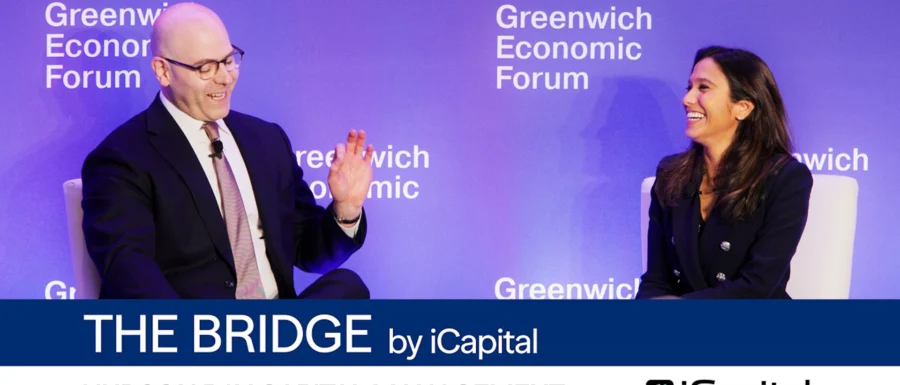
Welcome to the latest episode of The Bridge by iCapital. I’m Sonali Basak, the Chief Investment strategist at iCapital, and today I am joined by Holden Spaht. He is managing partner at Thoma Bravo, which is one of the preeminent private equity firms in the space of software of artificial intelligence. What a time to talk to you, because we’re getting past 2026 and the psychology is changing around artificial intelligence. What are the biggest things investors need to know about what 2027 shapes up to look like?
Holden Spaht (00:01:18 -> 00:02:10)
Yeah, well thank you first of all so much for having me. It’s great to see you again. I’d say the, the mood, you know, we have, first of all, we have about 70, over 70 companies, enterprise software companies that mainly sell to enterprise customers, so complex enterprises. And the mood has definitely changed at the customer level. So, the mood at the beginning of the year was very much about just use as much AI as you can. Everybody, right? All the employees, everybody’s talking about, let’s use as much AI as you can. We told our investors in March at our annual meeting, we said, you know, at some point the bill will come due and, and I think customers are going to start to focus more on outcomes and what are they really getting for all this spend and all these, you know, or they’ll realize how much they’re spending and that moment is upon us. So, the way we say we’re moving from trials to outcomes.
Sonali Basak (00:02:11 -> 00:02:27)
You know, that that has been the case, that it’s been actually kind of expensive for a lot of companies to be using AI just in mass form, right? Um, to the extent that they wanted to. But token costs are coming down. Do you think that this will still be this expensive of a proposition?
Holden Spaht (00:02:28 -> 00:04:03)
Token costs are coming down, but I don’t think people are using it very…token calls are coming down, but the, but the cost of the frontier seems to continue to go up, right? So, tokens are becoming much more efficient, but people are using a lot more of them, right?
Sonali:
Right.
Holden:
And so, I think the bottom line is I think people are realizing midyear that they are, they’re, they’re to, they’re over their token budgets. They’re wondering what they’re getting for all this, for all this spend. And I think, um, our companies are now realizing like, we can do 80 to 90% of what we need to do to deliver value using open weight models. You just question like enterprise customers, why would, like, Anaplan is a company that we have that does a lot of planning and it makes deterministic calculations about inventory, they have supply chain use cases and other – why would a company pay per token to use a language model to do a calculation that Anaplan can do for zero marginal cost? These are the kind of conversations that we’re now having and and CFOs are in the room now and CIOs and there’s, they’re getting very little predictability too, they don’t really realize. So, there’s a lot of software that’s being developed sitting around these models to help people understand their spend to help it become more predictable. And frankly, what we really lean on and what we think is really important is to have deep domain knowledge. We’ve been talking about that for a long time, but because we have that in our workflows, we think we can deliver inference to customers much more efficiently and less expensively than what’s happening right now. And that’s kind of the breakthrough that we’re expecting to see going into 2027.
Sonali Basak (00:04:03 -> 00:04:20)
Yeah, let’s Double click on that in just a second here. But first I want to talk to you about what 2026 looked like from inside the SaaSpocalypse,
Holden:
Yeah.
Sonali:
because realistically, yeah, a lot of things jumped back. So, in this new AI world in software, what works, what doesn’t work?
Holden Spaht (00:04:20 -> 00:06:12)
Yeah, I mean, I first, I hate that term , but you’re right, that was the term. And, and I think the idea, and nobody had a crystal ball, right? And this stuff is moving very quickly, but the idea when that happened in February or March is that all enterprises are just goanna be vibe coding their core systems of record. They’re going to be vibe coding, Salesforce, Workday, and there’s no real need that, which is a really a misunderstanding of what software is. It’s not just code -it’s understand your business processes, your compliance obligations, it’s understand your employees, your customers… years and years of, of context that sits inside these systems. Um, but it was a, it was a scary time. I mean, we tried to frankly, uh, buy a lot of things because having over 70 companies gives us a pretty unique perspective into what’s happening. Like most of the software universe is private, not public.
Sonali:
Mm-hmm .
Holden:
And so, we tried, but you know, most boards understandably, were not that excited to engage with us when the stocks were down 50% or 60%. I think that sentiment is largely behind us, right? And I think when Salesforce makes an announcement with Dario and Anthropic, it’s an acknowledgement that LLMs aren’t going to own every domain. Technology has never done that. When, when we started in the cloud, everybody thought Amazon was going to own all SaaS and cloud, and that’s just not how things work. So, I think that sentiment is largely behind us, which is why you see these stocks go up. I mean, Workday, Salesforce, SAP, ServiceNow, they’re having very good earnings announcements. There still are some lingering questions about how this stuff gets priced, but I think the days of, you know, nobody’s going to, uh, you know, own or they’re all going to vibe code, new systems of record those days are behind us.
Sonali Basak (00:06:12 -> 00:06:32)
What makes a software company sticky? Realistically, what’s cool about your perspective is not just that you’re talking about this from an investor’s point of of view, you’re also on the board of 10 companies. I mean, no one’s on the board of 10 companies all then .
Holden:
It’s a lot. It’s a lot
Sonali:
It’s a lot of companies so you see a lot about how these companies are changing to meet the moment. How are they changing most?
Holden Spaht (00:06:32 -> 00:08:43)
Yeah. Well, that’s a great question. I mean, in the past, and we’ve been in, we’ve been at this for over two decades now as a small team. And we started in sales and services and optimizing that. Then we went into R&D and then when the cloud happened, we had to get much smarter about hosting and cloud costs and gross margins and things like that. And now if you sat in our board meetings, you know, 90% of the discussion is about AI, which we have a pretty unique, again, because we have so much data coming in. And what we’ve started to realize is the real value over time, um, um, the model layer is just an API call. I mean, that’s not, that’s pretty straightforward and it can do a lot of, you can build, and we have companies building agents that are simple and sit on simple workflows like, if I want to sort the leads I get from my marketing automation system and figure out which were the best leads, we can build that on Bedrock or Amazon using that. But context and domain knowledge are really hard to replicate. You know, and I I would just use a couple of case studies like Jeppesen, which is a company that has been helping commercial airlines fly planes safely for like 90 years. Like, that’s a lot of context. So, if you’re a dispatcher for United and you’re trying to decide whether a crew can fly from Heathrow to New York, I’ll use a real example that hopefully listeners can understand a general model. If you ask that question, they’ll, they’ll look in, they’ll connect via API to the flight record and they’ll look and they’ll have some general aviation knowledge from scraping the internet and give you a general answer. But if you use Jeppesen’s AI, they’ll look at the exact FAA regulation that it governs, which is not normal language to read the FAA documents. They’ll look at the weather, um, patterns, they’ll look at how long you have to be on the tarmac. Um, they’ll look at what’s happening at the home, they’ll look at your union contracts. They, they look at all that to deliver an answer that’s auditable, that the regulators will accept. And we’ve started to realize that is really the barrier for all these companies is the context and domain, which, you know, the reality is these general LLMs can’t own all that.
Sonali Basak (00:08:44 -> 00:09:13)
Well, it’s interesting, uh, you write about this quite a bit as well, and recently I was looking on LinkedIn at a piece that you had written about how there’s kind of a limit, right? The example that you gave was with the transportation industry where you could have AI to explore route optimization, explore traffic, but it gets a lot harder when you put it into practice. Explain that, you know, how far does the AI actually go? And Jeppesen’s an interesting example because you’re on the board there too.
Holden Spaht (00:09:13 -> 00:10:50)
Obviously, we’re moving from systems of record to now systems of intelligence to systems of action. And that last part is really hard. I mean, because it involves automating human judgment in some ways. So, we have companies like Jeppesen that are releasing in intelligence platforms, which are kind of being released now, but it takes a while to get them production ready because you’re dealing with highly regulated industries where the answer has to be absolutely, um, precise. Um, and and the right answer is generally the the cheapest correct answer, right? So, we’re releasing these, um, intelligence platforms, but the last 20%, you know, you need a human in the loop to really understand the, the business context of what, right there, there are a lot of decisions that are made. You get a lot of information, but somebody’s deciding whether to reroute a supplier order to a customer based on the value of that customer, based on how risky it is, whether they have inventory nearby. And so, we we’re delivering basically all the software around the model is what’s hard to replicate. It’s the harness, it’s the permissions, it’s the compliance, that’s what we deliver. But that last 20% customers we’re going to get a lot more value as customers start to make those decisions and then the context, our software will record those decisions, so it gets smarter every time. But the bottom line is, you know, Jeppesen flies, helps planes and 60 million flights a year. You know, day Dayforce pays hundreds of thousands of hourly employees across different regulatory bodies and different jurisdictions.
Sonali Basak (00:10:50 -> 00:10:51)
Another company, you’re on the board of.
Holden Spaht (00:10:51 -> 00:11:03)
another company I’m on the board of. And so, we think these intelligence platforms are the next big breakthrough. And we think our software companies, because of the domain and how long they’ve been doing this, are uniquely positioned to capture value.
Sonali Basak (00:11:03 -> 00:11:17)
Well, I mean, is there a relationship there between intelligence companies, you’re calling them now, it’s a kind of a category it sounds like that’s really building within this space where, uh, it’s the data that also makes them valuable and to your point, the domain expertise in that specific
Holden Spaht (00:11:17 -> 00:12:28)
Exactly. Exactly. And we have so many examples of that. We have a general framework, but it’s like it leans on workflow complexity and embeddedness, it leans on stakes in precision, right? How important is it that this answer be a hundred percent accurate and then it leans on proprietary data and domain knowledge, right. And I think of, to use one more example, sorry, I’m on so many boards and we have so many discussions, but I’ll use Coupa, which is a company we’ve talked about in your prior, uh, life. But they are a network that connects buyers and suppliers. And over 25 years, the company has accumulated $10 trillion of transactional data, um, around those transactions. So, we have over 3000 buyers. We have hundreds of thousands of, of suppliers on the network. You know, if you’re a head of procurement at an enterprise company, a general model can probably tell you what a good procurement contract looks like and how to get a contract done with a supplier, but Coupa can tell you whether you’re overpaying by 10%, you know, and whether that supplier delivers on time or is generally late, right? So, it’s got so much intelligence from this data, and they have really broad and good data rights, which is also quite unusual.
Sonali Basak (00:12:28 -> 00:12:48)
So, you mentioned something earlier about how, you know, there’s that trade off being made in terms of how much a company spends on ai. Um, that’s I’m sure true if you’re a software company, many types of enterprises. But being in the boardrooms, how do you feel that executives are making that tradeoff between human talent and, and, and, and intelligence?
Holden Spaht (00:12:48 -> 00:14:20)
Talent is critical, you know, and I think one thing that we’ve, we’ve seen. I mean for one, one broad comment I would make is that the sale itself, especially in this time of more scrutiny and the CIO regaining power and people now starting to worry about data sovereignty and data privacy, um, the sale itself has become more technical. And so, customers now, they’re waking up, as we talked about earlier, and they want to know they have no predictability. They’re like, how do I predict what I’m spending on this stuff? How can you show me? And they want to see the AI work with their data in their environment. And so not only is there more software that we’re building and making because of AI internally, and, but we also, the sale itself is becoming more technical. So, there’s a whole change management reorganizing of the way go-to markets work, which is happening right now and it’s really at the early stages. But we, we thought counterintuitively that, you know, oh, we got all this incredible, these incredible coding tools, we’re going to reduce our engineering capability, our engineering talent over time. And it’s almost like the opposites happen. There’s more software that we’re building, there’s more software that we’re selling, but we also want, we need like the CIO of a big company wants to have a technical person in there to show them how it works, um, which is sort of the Palantir model, right? The four deployed engineers, and that’s kind of the go-to-market transformation that’s happening also. So, there’s, there’s a lot in flight right now, but we think it’s really encouraging for companies that are long on domain knowledge.
Sonali Basak (00:14:21 -> 00:14:54)
So, let’s go back to where we started a little bit here because I want people to really understand what’s ahead when it comes to AI and software.
Holden:
Yeah.
Sonali:
Well, we’ll go ahead then we’ll go back and then we’ll go ahead again. But 2027, why is it, what, what changes really are we going to continue to go on the path that we have been, you know, a little bit of fear on the edges of software, um, AI changing and the value of the frontier labs changing? Or is there kind of something more fundamental underway in terms of how enterprises adopt software or AI enabled software
Holden:
Yeah.
Sonali:
And the future of AI in corporate America. That’s really what we’re talking about here.
Holden Spaht (00:14:54 -> 00:17:09)
Yep. And I think the reason we’re, first of all, I would say, and I’m, I am very bullish on software, but I should be very clear that I’m very bullish on the right types of software companies, right? The kinds that we’re talking about earlier, proprietary data, deep workflow complexity, embeddedness, and also those that are innovating in speed, right? It’s true that it’s easier to make software and other companies or AI native startups that can build workflows to get into the workflow and start to accumulate data. And so, you don’t have as much time as you used to. Um, and I think the markets at first, were not very smart on this. The debt markets, in some ways, as I look at how they’re differentiating, when you look at the different spreads and the yields on different credits, they’re actually pretty good at figuring out whom we think the winners are and who the losers are going to be. Our portfolio, because we focus so much on quality of revenue, I think is really well indexed to AI opportunity. But I think what, what we’re seeing right now, it’s so exciting, right? It’s like, I think what’s happened is the technology is unbelievable, right? And it’s probably under, you know, under marketed how incredible it is. But enterprise transformation takes a long time and is slow and enterprise workflows are cross-functional, they’re complex. And so really right now, all the revenue from these frontier labs generally is coming from coding or like chatbots and the customer support and things like that. The real breakthroughs are when you start really automating human judgment. And when an agent can safely and in a permissioned and auditable way look across different workflows and make a decision as to whether a supplier delay- how to make that decision, right? And there’s years of context and years of human judgment and those things take a long time. And so, I think what’s happening is in the coming years we see this shift back to, it went from let’s just use AI to now it’s, people are now talking about they want, they want to know they want, they’re sensitive about their data, they’re sensitive about, um, it’s about data sovereignty, it’s about data privacy. And it’s about really this next phase is all about outcomes. And I think that’s what, that’s a 2027, 2028 even story. It takes time.
Sonali Basak (00:17:09 -> 00:17:12)
Yeah. To your point, outcomes might be harder to achieve than meets the eye.
Holden Spaht (00:17:13 -> 00:17:35)
I think so far, it’s proving that way. I think we’re in this moment, which we think look, deal cycles and software have probably, they take a little longer now. People want proof of concept they want, but all that pivot, I think it’s kind of like back to the eighties and nineties, it’s like on-prem and data sovereignty and show me before I buy. And I think that’s a good shift for the right types of software companies.
Sonali Basak (00:17:35 -> 00:17:35)
It’s a disciplined market.
Holden Spaht (00:17:36 -> 00:17:36)
It is.
Sonali Basak (00:17:37 -> 00:17:57)
So, you know, let’s talk about 2026 a little bit more here because Thoma Bravo had a very, uh, headline grabbing deal that a lot of people paid attention to. Medallia, um, didn’t go well this deal. What does that say though about what happened this year? I mean, is this a one-off deal or was it under the cloud of the SaaSpocalypse?
Holden Spaht (00:17:57 -> 00:19:05)
Yeah, so look, we’ve been very fortunate. We’ve done almost 600 software and technology deals over 25 years. And you can count on a handful of those that didn’t go, you know, well for our investors, that is one of them. And it was done at a time where, you know, prices were very high. But to me that’s not an excuse and, and frankly, um, it’s not for us, it’s not a 2026 story. You know, our investors, we’ve been very transparent with them that this company is a problem starting in like 2023 and it’s not because of AI. We, um, overestimated, you know, the revenue growth of the company, we underestimated how competitive that industry is. And sometimes the industry structure does change a bit. We also made one self-inflicted probably leadership mistake. Um, you learn a lot, you move on but that is not an AI or SaaSpocalypse story. That is not, that’s news to people who read the media, but it’s not news to our investors. That’s been a long time coming.
Sonali Basak (00:19:05 -> 00:19:13)
Yeah, that’s interesting. I think a lot of people saw AI and said, you know, what is exposed to this in the software world, but you’re actually saying this was not an AI story.
Holden Spaht (00:19:13 -> 00:19:59)
It was not an AI story. And in fact, you know, I mentioned this to, to others and I really do believe it, and we have to be sensitive to vintage years, and we think this is going to be a great vintage 2021, 2022 is clearly not going to be the best vintage for enterprise software. But we did some of our best deals at the peak of the public software market. You know, when you’re buy us, you’re not buying an index, you’re buying alpha, right? And, and a bunch of years in domain that we have too. So Adenza, which we put Axiom and Calypso together in the middle of 202. Bottom line, which we priced late December of 2021. Those look like you bought at the peak. And those have been incredible deals. One we’ve already gotten liquidity on, and as you know, we sold it to Nasdaq. We took a bunch of stocks out on the board. Adena did an incredible job at delivering more value.
Sonali Basak (00:19:59 -> 00:19:59)
I think it was one of your best deals ever.
Holden Spaht (00:19:59 -> 00:20:17)
It was a great deal. Yeah, it was a great deal. Uh, we made a, so I still think business quality, um, and, and good business plan and good leadership trump, you know, when you buy. Um, but we, we made, you know, Medallia was not the same revenue quality that we frankly are used to. So, um, we learn and we move on.
Sonali Basak (00:20:18 -> 00:20:53)
I’m glad you brought up how to think a bit more about that 2021 vintage because if you look across the industry software or not, there are a lot of private equity firms that were buying in that market. So, the, the idea of deals coming back, it’s interesting ’cause to your point on deals, they’ve actually kind of been slow outside of AI. And it’s interesting, I’d be curious to know, you know, if I were you this year, I would also want to be buying software companies too, right? I mean, you did see the valuation come down. Where are we now? I mean, are you seeing interesting opportunities and are they in the public markets where we’ve seen a lot of pressure on prices, or are they in the private markets actually?
Holden Spaht (00:20:53 -> 00:21:02)
Yeah. Well, like I said, at the beginning of the year we were, we were trying to engage anybody who would engage with us , which we were unfortunately largely unsuccessful
Sonali Basak (00:21:02 -> 00:21:03)
Because things got so cheap, things
Holden Spaht (00:21:03 -> 00:21:29)
Got so cheap. And you’re like, look, if we’re, if we believe what we’re saying, we should be buying companies. And now a lot of those stocks, I mean Workday, we have up 50, 60%. I mean, I go to all the middle market companies, they’re all up 30, 40%. And so, the premiums we’re offering don’t look quite as interesting. And in our large business, you know, our, our largest fund is $24 billion. We raised $35 billion in new equity early last year across our large, middle and and small market fund.
Sonali Basak (00:21:29 -> 00:21:30)
So you’ve got some dry powder,
Holden Spaht (00:21:30 -> 00:23:15)
We have a lot of dry powder, but we also do a lot of take privates.
Sonali:
Yeah.
Holden:
Um, because of the size in, in our large fund. And those, frankly I would say the public markets from where we sit are pretty fairly valued. I mean, it’s transactable you know, leverage is not quite as available or as good. Um, so for the first time in a while we’re seeing more divestitures and more private market opportunities because there are, I mean, look, there are a lot of private equity companies with a lot of inventory and really good companies, and the prices have kind of been stable enough to where I think people have a rational view of what companies are worth. And so, it’s changed a lot. Two months ago, we’d had this conversation. I’d say we’re all over all these public companies now. I, it’s shifting more to private companies, and I’d say what’s in for us at the moment is, uh, domain product centric leaders and founders, right? I mean that’s, you know, it’s good to be a go-to market CEO we used to have a lot of success with that. But right now, the way the world is moving, it’s really nice to have a product centric leader who really understands and who, like, you know, we have leaders who code at night and send us thing. I mean, those are the kind of people you, you want right now. And customer and, and customer intimacy companies that really own the customer relationship. We just did a deal Accelerant for our discover fund that was a multi-billion dollar take private. So, we’re still active, but you’re right, we’re 80% or so is is uninvested in our funds. So, we’re, we’re, we’re actively looking, but liquidity needs to start happening to unwind some of this, right? There’s too much inventory, um, out there right now
Sonali Basak (00:23:15 -> 00:23:16)
In the hands of other private equity firms you mean
Holden Spaht (00:23:16 -> 00:23:34)
In the hands of other private equity firms? Um, it, it’s not for our companies that, you know, it’s not diminishing the IRRA lot because most of our companies are growing EBITDA, you know, 20% or so or more. So, it’s not hurting our IRR to hold on the other hand, you know, investors are, you know, they want money back , right
Sonali Basak (00:23:34 -> 00:23:40)
Yeah. This has been a years long, but we’re, but there are green shoots. There’s certainly, there are green shoots. They’re definitely green shoots.
Holden Spaht (00:23:40 -> 00:23:40)
There are green shoots.
Sonali Basak (00:23:40 -> 00:24:04)
And so, it’s an interesting time too because, you know, we were talking about Medallia, but there’s actually a whole flip side story with Thoma Bravo here because you guys also have a private credit strategy. , how does that work, right?
Holden:
Yeah.
Sonali:
Because on one hand, you know, you, you see the way that private credit has been treated around software, but on the other hand, you’re in a ripe opportunity to capitalize on these dislocations.
Holden Spaht (00:24:05 -> 00:25:17)
We are, I’m glad you mentioned that because frankly, as you look across our platform, we’re, I don’t know, we’re 90 something percent private equity, right? That’s our thing. We buy companies, we operate them best of breed. We always have, we’ve gotten better and better and smarter and smarter, but we are underweight private credit, and we have incredible data that would be, that’s beneficial, right? We see all these companies and they’re not just software company, right? They sell to end markets. So, we have a great purview into what’s happening in the global economy because we have so much data coming in from our portfolio companies. So, we hired a new leader to run our private credit business, you know, a year ago and he’s been amazing. So, Jeff Levin is a great leader, and you’re right, we, this, there’s, there’s been a rotation out, right? People feel overweight, uh, software at the beginning of the year, so especially in these private BDCs where there’s less liquidity, um, and there’s some big holders and there’s companies that we know well, we’ve actually capitalized on that already. So, we’ve been buying some really good credits for equity-like returns and companies that we really like. And so, and we’re getting more and more money into that strategy, and we’re really excited about capitalizing on that.
Sonali Basak (00:25:17 -> 00:25:37)
It’s interesting, you, you made a comment a little earlier about software you like versus don’t like, um, bring us into your head on that because how do we think about winners and losers in the age of AI? You know, if you look at the whole landscape of software, do you like 50% and the other 50% either gets bought or goes away? You know, what, how does this whole thing play out?
Holden Spaht (00:25:38 -> 00:27:27)
Yeah, I think, and and I, like I said, the market I think is starting to, you know, understand it. First of all, all-software companies. I mean their existing vendors, um, they serve companies. If companies are happy with their existing vendors and they can provide AI solutions that work, I think most companies want to buy from their existing vendors. So, everybody has a chance to be successful. But you know, if you’re, if you don’t have real proprietary data, if you’re not deep in workflows, if, you know, we buy companies that tend to have 95% plus gross retention rates. So, they lose very little revenue every year, which tells a lot about the kind of software they’re providing. If you don’t have those things, you know, and you don’t have a, I would say leadership is critical right now. If you don’t have a leader who’s, you know, I talk to a lot of public companies too that aren’t our companies because we’re obviously looking to buy companies. And I do hear a lot of, there are some old school thinkers that expect, hey, we sell this the way we sell it, and we have really good renewal rates. And there’s no, there’s not that urgency to say, hey, the world is changing. I’ve got to get an AI platform at least fast. I need people using my AI. And so companies that don’t have those things, right, they’re light on workflow. They’re, they maybe don’t have a product centric founder. They don’t have real proprietary data. And I think as some of our companies, you know, that we see too where they’re building agents, a lot of them, the front end of technology, when I say front end, like things that are involved in the customer workflow, so on top of Salesforce or something to sort leads or route calls or do things that are not, the stakes aren’t super high in the precision, but you can build it pretty easily.
Sonali:
Yeah.
There are a lot of software companies that do those things. I would, I would, um, I would be aware of this.
Sonali Basak (00:27:27 -> 00:27:32)
Holden, is there a single company that Thoma Bravo is invested in today that doesn’t involve AI?
Holden Spaht (00:27:34 -> 00:28:18)
No, no. I mean these story, now the diligence even when is, is all about AI to be honest. I mean, it’s, it’s all, it’s, I think we’ve gotten very smart about it. ’cause we’ve had so much, you know, our Slack channels have never been more active. . I think we’re working harder in the last 12 months than we’ve worked as a partnership in a long time. And even on the diligence side, having sitting in all these board meetings, I mean, the one thing we’ve always emphasized is we don’t have a ton of people for the amount of assets we have. Part of that’s because we lean so much on pattern recognition, right? What do I hear? What am I hearing from the portfolio? Am I hearing the same thing from this new prospect and this new company? But AI is, is is the diligence story too. That’s pretty much the where we start and where we end.
Sonali Basak (00:28:19 -> 00:28:29)
So, it’s interesting because you were talking about what AI is and isn’t, you mentioned agentic solutions for a while. Can you have agentic solutions that are human intelligent without getting to AGI?
Holden Spaht (00:28:32 -> 00:28:37)
Um, can you have a human, I mean, we’re not there yet. Clearly, I think
Sonali Basak (00:28:37 -> 00:28:38)
There’s some work to do here.
Holden Spaht (00:28:38 -> 00:29:34)
There’s some work to do. It’s complex. I mean, all our companies would say the last, it’s like, to me that’s the last mile, that’s like the last 20%, right? Is like, I can give somebody, we can give, we can deliver software with a ton of context because we understand what it, what NERP database means and practice for certain companies and Jeppesen with all of its flight knowledge. And we have a bunch of pilots on the staff. I mean, they know the KPIs for all the individual users, the dispatcher, the flight operator, they know all those things. But the last 20%, which is sometimes judgment related, right? Like, why did I make a certain decision, right? I had all this data and the, and, and we’re going to serve up AI that gives a recommendation, but you know, ultimately a human’s going to say yea or nay, right? And then, and then we’ll capture that and get smarter. So, I think we’re, we’re, we’re a ways away from that still in the enterprise.
Sonali Basak (00:29:35 -> 00:29:56)
Um, before I let you go, I just want to talk a little bit more about capital markets too. You were talking about exits and opportunities. You’re actually buying private markets, right? Not out of the public markets as of now. When does this IPO market open up in a bigger way, the M&A market for companies that are not just giant Frontier Labs or related AI companies?
Holden Spaht (00:29:56 -> 00:31:14)
Boy, wouldn’t I love to know. Um, we have, because we have a lot of them. And I think, look, I, I think investors right now, I mean AI is the thing and I think everybody’s waiting for Anthropic and OpenAI. Um, and people have been rotating out,
Sonali:
seeing how they perform
Holden:
And they want to see how they perform too, and I think people there is still from investor accounts, probably some lingering skepticism about the sustainability of software revenue. And what happens if we start pricing on outcomes and actions is that going to be a success story? We think it opens up a massive TAM. And I think people, if you, I mean if Anaplan can automate 40 to 50% of the labor in Fortune 500 CFO offices, you know, we should find a revenue sharing arrangement that really works for us. I mean, it’s a massive amount of TAM but there’s not a lot of proof yet on that. And so that’s also why I think 2027 will be a good year. I think people will get more and more comfortable that these companies are sustainable. They have revenue models; general language models are not going to do everything. These other companies will be out. And so, we’ll see how they work. And I think compounding 20% EBITDA growers and great spaces, I think are going to be in vogue again.
Sonali Basak (00:31:14 -> 00:31:17)
Is that generally what we’re looking at at a software company today?
Holden Spaht (00:31:18 -> 00:32:06)
I think our, our portfolio at scale is, that’s about right. I mean, nothing, it’s, it’s pretty much business as usual. And you see it from the earnings announcements. Companies aren’t, and that’s one of the, the interesting things and maybe frustrating things from, from our seat is that people index so heavily to what’s happening in the public markets. And most all of software companies are private. So, we see all these companies, they’re all performing just as we expected. I mean, Jeppesen, you wouldn’t, people wouldn’t believe the numbers that they saw Jeppesen and Dayforce today, what they’re going to do this year and revenue growth is accelerating, not decelerating. People are finally seeing that in Salesforce, Workday, ServiceNow, they go, oh, they’re not decelerating. So that’s part of the reason for the big bump. But I think that story, the more time goes on without some big deceleration, I think the better for, for our companies.
Sonali Basak (00:32:06 -> 00:32:23)
Well, is there a chance also that margins actually improve meaningfully? Because if people were so worried about token costs before and token costs are declining and you have more discipline in the boardroom, then doesn’t that mean that actually you have kind of a really nice cocktail for software companies who are buying the tokens?
Holden Spaht (00:32:23 -> 00:32:31)
It’s True.
Sonali:
Is that odd?
Holden:
It’s true. No, no. I think people, that’s been a big question, you’re right. Is that how can what, what are our gross margins going to be on tokens?
Sonali Basak (00:32:31 -> 00:32:39)
Just feels like the first beneficiary that software companies
Holden:
Yes.
Sonali:
The ones that everyone left behind the first part of 2026 are going to win first.
Holden Spaht (00:32:39 -> 00:33:07)
Yeah, from lower cost. We think we can make really good margins on inference. Basically. That’s what, and we can host that and we can do it in a way that customers have predictability. They know what they’re going to spend, they see it. But we think that that story also is overblown. Like we think we can make really good money, especially as, right, like you said, we’re, we are a, a route to market for tokens and those are getting cheaper and we can do, and models are getting better and they’re getting less expensive. And so, we’re beneficiaries of all those trends.
Sonali Basak (00:33:07 -> 00:33:24)
Yeah. And, and the last note on that too, it’s like, you know, if you’re sitting there looking at the future of AI and you’re thinking about the future of software, then isn’t it not such a bad thing that the capital markets are just kind of holding on for a minute and exiting at a better price down the road?
Holden:
Yeah.
Sonali:
As people catch onto this.
Holden Spaht (00:33:24 -> 00:34:05)
I love it. I love it. No, you’re, it’s like you’re sitting in the boardroom with us. I mean that’s, that’s right. And again, because we’re compounding at these nice growth rates and EBITDA’s growing faster than, so we really, I mean I look at my portfolio, this is really, really nice. I mean, you know, mid-teens kind of top line growth on average with 20 plus percent EBITDA growth and more net income growth. It’s not diluting our IRR. And so, having multiples continue to rebound as people start to realize, wow, this stuff still has real terminal value, and you know, there’s a really, it’s as much opportunity as risk, right? That’s what we’ve been saying. And again, I think as that becomes more evidence in the numbers and the more time goes by, probably the better for multiples, which is great for us.
Sonali Basak (00:34:05 -> 00:34:23)
Well, that’s the thing, our investors having to just expect different things of their private equity investors today because it is a complex environment and actually the technological landscape is completely being overhauled in front of us and the exit opportunities are different than they were maybe a few years ago.
Holden Spaht (00:34:23 -> 00:35:09)
Yeah, I think, look, I joined this firm, you know, 22 years ago because I believe, and I still believe very much that being a sector specialist matters a lot. I mean, that’s how you deliver alpha. We’ve always looked at not just are we, how are we performing in private equity generally, but how are we performing against a basket of public software stocks or however you measure alpha. We’ve always been really sensitive to that. And I just, as I look out at the world and see all that’s happening, we have such an advantage by being in all these meetings with all these companies, delivering with all this customer feedback that we’re getting in terms of not just how we operate the portfolio, but how we make new investment decisions. And so, I think that’s still the formula for, for alpha
Sonali Basak (00:35:09 -> 00:35:17)
Holden, it’s been so nice to talk to you today. That is Holden Spate. He is managing partner at Thoma Bravo. And you’ve been watching The Bridge by iCapital.
END